
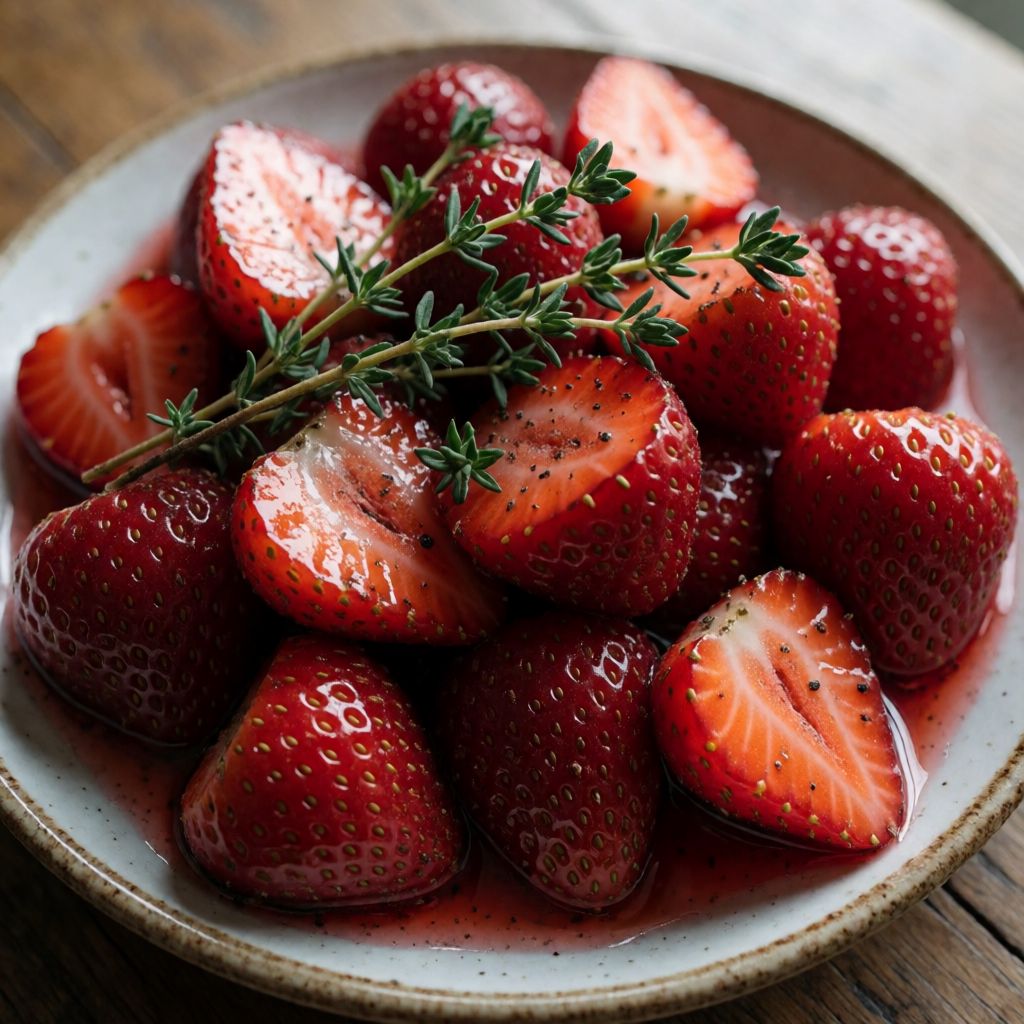
 AI photo
Marinated Strawberries
Fresh strawberries steeped in a warm vanilla and black pepper syrup, then left to infuse.
Labels are worked out automatically from the ingredients and can be wrong. Check the packaging if it matters to you.
Ingredients
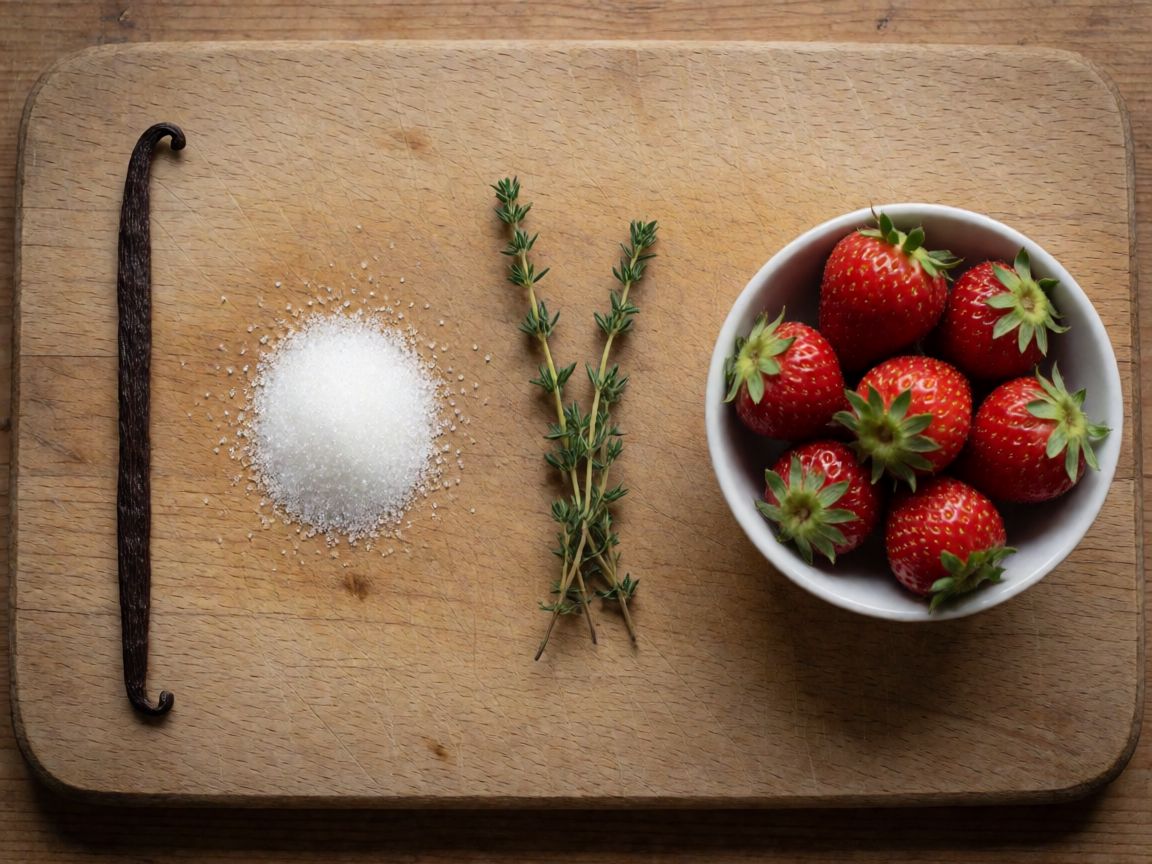
- 1 pcs Vanilla Pod
- 60 g Caster Sugar
- 1 pinch Black Pepper freshly ground
- 150 ml Water
- 250 g Strawberries
- 2 pcs Thyme fresh sprigs





Steps
Split the vanilla pod lengthways and scrape out the seeds. Mix the seeds with a little of the sugar.
Put the vanilla seeds, freshly ground black pepper, the vanilla pod, sugar and water into a saucepan.
Bring to the boil and simmer for about 10 minutes, until the liquid has reduced slightly.
10 minCut the strawberries into quarters and place them in a preserving jar with the thyme sprigs.
Pour the hot vanilla-sugar syrup over the strawberries and seal with a lid.
Leave to infuse for a few hours.
This isn't jam and it isn't a fruit salad with syrup poured on top. It's closer to a quick pickle, minus the vinegar: raw fruit gets hit with something hot and flavoured, then left sealed to work on itself. The heat comes once, in the syrup, never near the strawberries directly — that's the whole trick.
What decides whether this turns out right happens at two moments, both easy to rush. First: how far you reduce the syrup. "Reduced slightly" is the cue, not a clock — you want it just starting to coat the back of a spoon, still pourable, not sticky. Go further and you've made a thin caramel that will shock-cook the fruit the second it lands. Second: how long the jar sits after sealing. A few hours isn't a vague shrug — it's the time osmosis needs to pull sugar and aromatics into the fruit and pull juice back out into the syrup. Open it in twenty minutes and you've got pretty strawberries in flavourless warm water. Leave it overnight by accident and you've got soft, slightly tired fruit that's given up too much of itself — still good, just a different dish.
Some say pepper on strawberries is a chef's party trick, there to make you notice the plate. No — pepper doesn't make strawberries spicy, it makes them smell more like themselves. Black pepper's aromatics sit right next to the ones in ripe strawberry, the way salt doesn't make a tomato salty, it makes it taste more like tomato. A pinch is doing a real job here, not showing off.
Vanilla does two jobs here, and the recipe splits it accordingly. The seeds, mixed into a little sugar first, are there because vanilla seeds are sticky and clump — rubbing them into dry sugar breaks them up so they distribute through the syrup instead of sitting in one gluey patch at the bottom of the pan. The scraped pod itself goes into the water to simmer — it still holds plenty of flavour even once the seeds are out, and simmering it is what actually gets that flavour into the liquid; the seeds mostly give you the visual (the little black flecks) and a last top-up of aroma. If you've only got vanilla extract, use it off the heat, right at the end — boiling it burns off the alcohol-carried aroma before it has a chance to do anything. Skip the vanillin-flavoured stuff sold as "vanilla sugar" if you can; it smells like vanilla the way a photo of bread smells like bread.
The sugar-to-water ratio (60g to 150ml) gives you a syrup, not a glaze — thin enough to actually soak into cut fruit, not so concentrated it just sits on the surface. This is also, worth saying, how sugar syrups have preserved fruit for centuries before anyone had a fridge: sugar pulls water out of cells by osmosis and replaces it with a solution the fruit's own enzymes and surface bacteria can't easily work in. You're not preserving anything for weeks here, obviously — a few hours in a sealed jar in a UK kitchen, fridge or not, is well within safe territory — but the mechanism pulling flavour in and juice out is the same one jam-makers and picklers have leaned on forever.
Strawberries: buy them for weight and give, not just colour. A strawberry that's deep red outside and pale, almost hollow, inside — the kind too common from supermarket punnets out of season — won't hold a shape once hot syrup hits it; it's mostly water with very little cell structure left to resist softening. You want ones that still feel slightly firm when you press a thumb against the shoulder. Quartering them (not halving, not leaving whole) is about surface area — more cut face means more syrup contact, means the maceration actually reaches the middle of the berry within a few hours instead of just lacquering the skin.
Thyme is doing a job basil or mint could also do, as long as whatever you pick has its own clean, resinous smell and isn't going to fight the vanilla. Don't reach for dried thyme — dried herbs want heat and time to rehydrate and release anything, and this dish gives them neither.
On kit: you don't need an actual preserving jar with a rubber seal and a clip — any clean jar with a lid that closes will trap the steam and heat long enough to do the infusing. A wide pan rather than anything deep is the right choice for the syrup too; wide means faster, more even evaporation when you're trying to judge "reduced slightly" by eye, rather than guessing at the bottom of a narrow saucepan where you can't see what's happening.
One honest note on the serving size: this is written for one, which is a touch indulgent as desserts go — most households making this after a Sunday roast will want to double it for two, maybe treble for a table of four, and the ratios scale cleanly since nothing here depends on pan size the way a sauce reduction might. What won't scale is patience — a bigger batch doesn't infuse faster just because there's more of it waiting.