
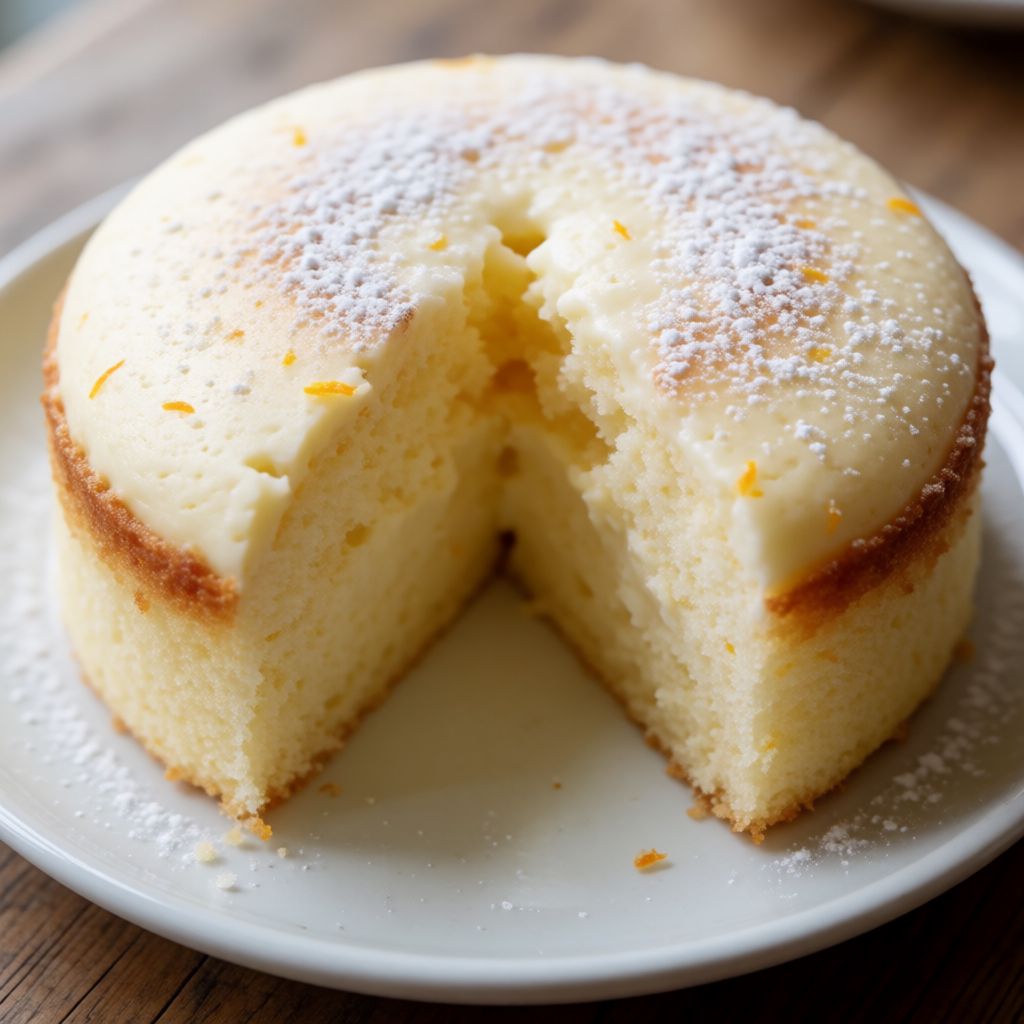
 AI photo
Mascarpone Cake
A light, creamy mascarpone cake flavoured with orange zest — simple to make and lovely with afternoon tea.
Labels are worked out automatically from the ingredients and can be wrong. Check the packaging if it matters to you.
Ingredients
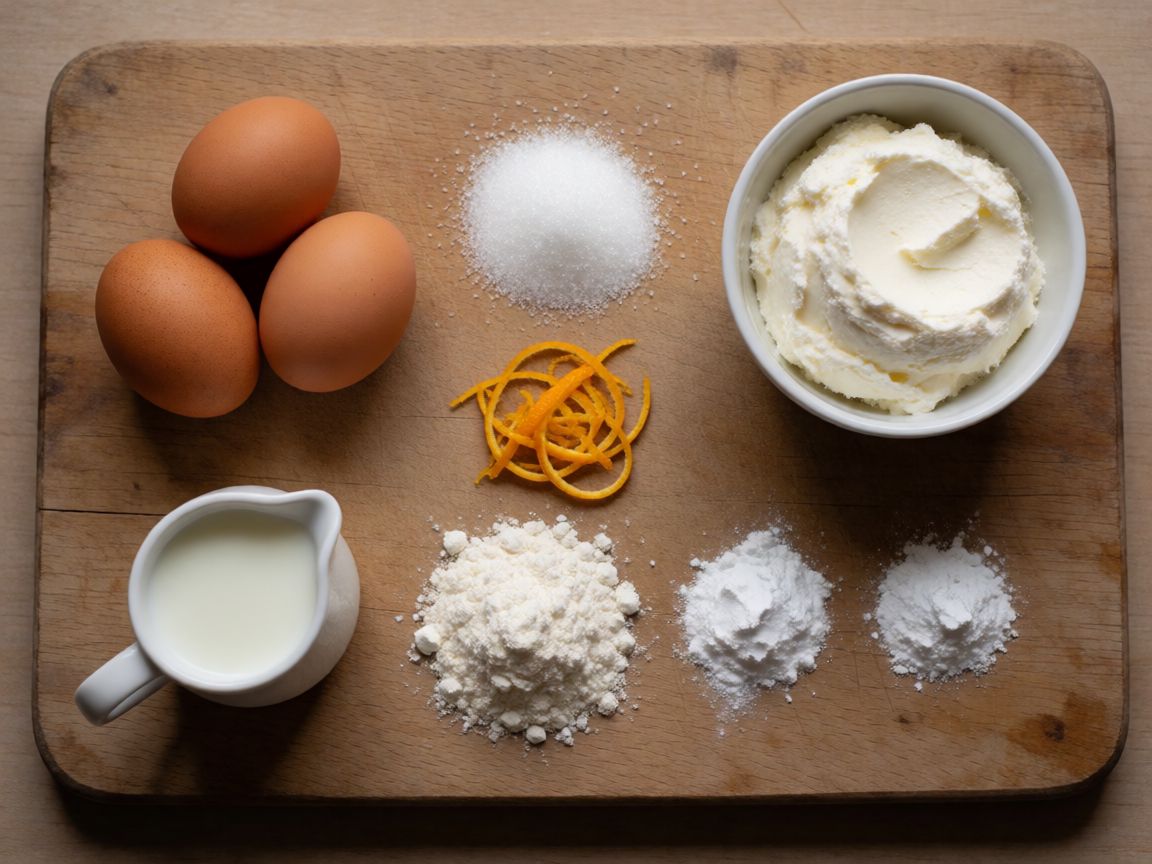
- 3 pcs Eggs
- 150 g Caster sugar
- 250 g Mascarpone
- 120 ml Milk
- 1 pcs Orange zest or the zest of 1 lemon
- 250 g Plain flour
- 150 g Potato starch
- 16 g Baking powder
- Icing sugar to taste








Steps
Beat the eggs with the caster sugar using an electric mixer until light, pale and creamy.
Add the mascarpone to the mixture, softened beforehand with a spoon.
Flavour with the grated orange zest, keep beating, and pour in the milk in a thin stream.
Sift in the flour and potato starch, and finally add the baking powder.
Mix with the electric mixer so all the ingredients combine well.
Pour the batter into a 22 cm tin, greased with butter and dusted with flour beforehand.
Bake in a fan oven preheated to 165°C for about 50 minutes.
50 minCheck it is done with a wooden skewer.
Let the cake cool, and dust with icing sugar before serving if you like.
This is a cake that leans on mascarpone instead of butter for its fat, and that one swap decides everything about how it behaves. Butter cakes get their softness from creaming butter and sugar together, trapping air in a solid fat that then melts in the oven. Mascarpone is already soft, already half-cream, so you're not creaming for aeration here — the eggs are doing that job, beaten with sugar until they're pale and thick enough to hold a ribbon. Skip that stage, or rush it, and the cake comes out dense and flat-topped instead of light.
The starch is the other quiet decision. Potato starch alongside plain flour isn't a gluten-free gesture — it's there because starch doesn't form gluten strands the way flour does, so the crumb stays tender and short rather than chewy. Some say you can just use all flour and it'll be "basically the same" — no, because the bite changes: more flour-only means more gluten development once the batter's stirred, and this cake wants a crumb that gives rather than one that springs back.
Doneness is the skewer, not the clock. Fifty minutes is where to start checking, not where to stop baking. The skewer comes out wet with raw batter, or it comes out clean — there's no useful middle reading to chase. A fan oven at 165°C gives gentle, even heat without a hard crust forming before the centre sets, which matters because this batter is heavier and wetter than a plain sponge and needs time to set through without the outside racing ahead.
Eggs here aren't just binding — they're the lift. Beating whole eggs with sugar until pale and creamy works air bubbles into the mixture and the sugar helps stabilise them, so when the batter hits the oven those bubbles expand and give you rise, since there's no creamed butter doing that work. Use eggs at room temperature if you can — cold eggs resist whipping and you'll beat for twice as long for half the volume.
Mascarpone is the cake's structure in a softer form than butter. It's an Italian triple-cream cheese, barely cultured, closer to very thick cream than to a cheese like cream cheese — which is why it folds into a batter smoothly instead of curdling it. If you've only got cream cheese, it'll work, but expect a slightly tangier, denser result; you could loosen it with a spoonful more milk to compensate for cream cheese being firmer and less fatty.
The milk goes in last and in a thin stream for a reason — pouring it slowly while the mixer runs keeps the emulsion from splitting, since you're adding a watery liquid into a fat-and-egg mixture that's been built up carefully. Dump it in fast and you risk the batter looking curdled, though it usually recovers once the flour goes in — just don't count on that as your method.
Orange or lemon zest isn't decoration, it's the whole flavour of the cake — mascarpone itself is mild, almost neutral, so the citrus oil in the zest is doing the job butter-vanilla cakes get from browned butter or real vanilla. Zest only the coloured skin, not the white pith underneath, or you get bitterness instead of brightness. No citrus in the house — a teaspoon of vanilla extract or a few drops of almond will do the same job of giving the crumb a background note.
Potato starch and plain flour together: the starch has no gluten-forming proteins at all, so it dilutes the gluten the flour would otherwise build when you mix. This is what keeps a mascarpone cake from turning rubbery — mascarpone and eggs are both wet, heavy ingredients, and a crumb needs some structural give to not feel dense under all that moisture. No potato starch — cornflour behaves the same way and is the easier substitute in a UK kitchen; just don't swap in more plain flour to make up the weight, or you lose the whole point of the starch.
Sixteen grams of baking powder is added last and not beaten for ages — baking powder starts reacting with moisture and heat the moment it's wet, so you want it in near the end and the cake into the oven reasonably promptly, not left sitting on the counter while you wash up.
Icing sugar at the end is for after it's cooled, not before — dust a warm cake and the sugar just melts into a wet patch instead of sitting as a visible, pretty layer. A cup of tea with milk alongside — the cake isn't sweet in an aggressive way, it'll hold its own against a strong brew.