
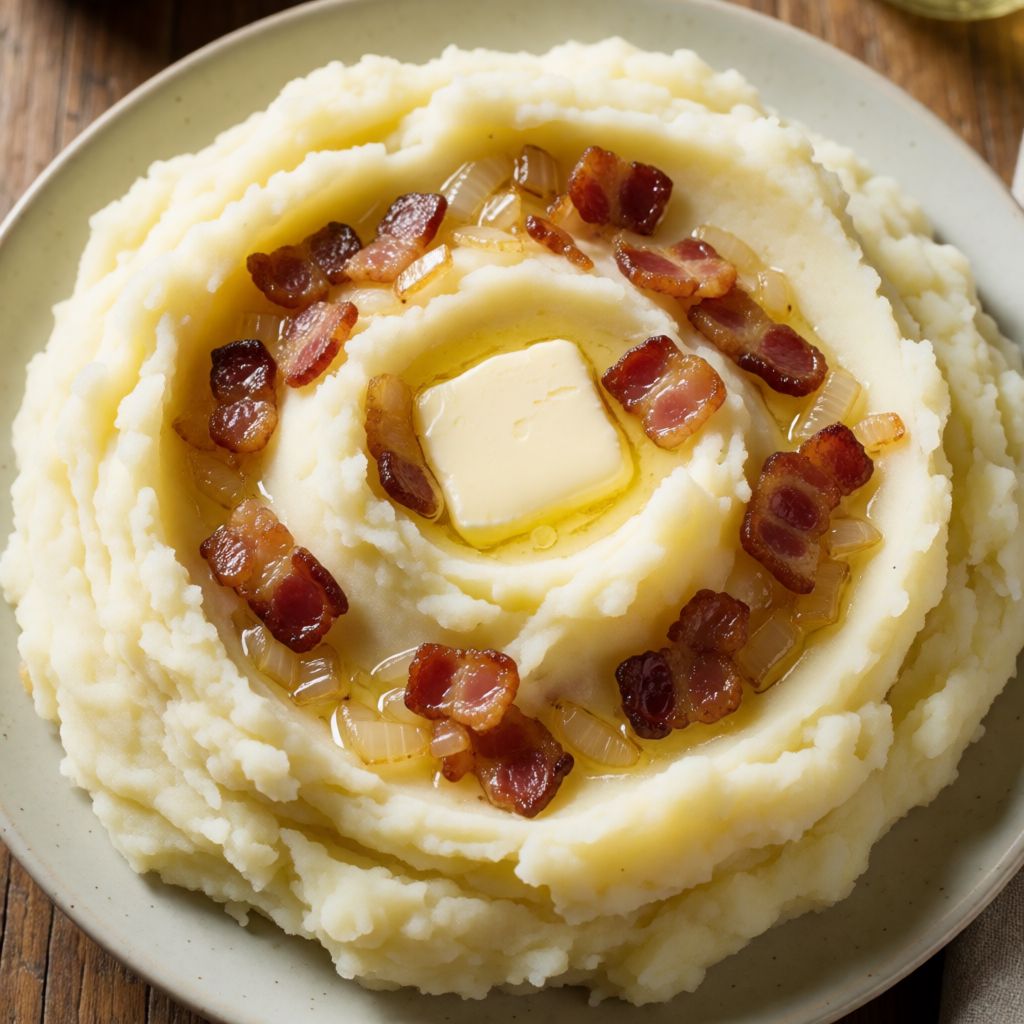
 AI photo
Mashed Potatoes with Bacon and Onion
Creamy mashed potatoes topped with a savoury bacon, onion and chilli topping, served with pickled beetroot and fresh herbs.
Labels are worked out automatically from the ingredients and can be wrong. Check the packaging if it matters to you.
Ingredients
- 1.5 kg Potatoes
- 100 g Butter
- 100 ml Milk
- Salt to taste
- Black pepper to taste, freshly ground
- 1 pinch Nutmeg
- 100 g Pickled beetroot diced
- 1 bunch Chives finely chopped
- 1 bunch Parsley finely chopped









Bacon and onion topping
- 350 g Bacon
- 3 pcs Onion finely chopped
- 1 tsp Red chilli finely chopped
- 50 g Butter
- Black pepper to taste, freshly ground


Steps
Boil the potatoes in plenty of unsalted water until soft.
20 minDrain and mash the soft potatoes with the butter, whisking with a mixer on the lowest speed, then pour in the warm milk.
5 minSeason the mash with salt, pepper and nutmeg to taste.
Fry the bacon in a pan over medium heat until crisp, remove and set on a paper towel.
8 minFry the onion in the bacon fat and butter until soft, adding the red chilli if you like.
5 minSeason with freshly ground pepper to taste.
Serve the mash with pickled beetroot, bacon, onion and fresh herbs.
This is mash wearing a proper coat: the potato underneath, bacon fat and fried onion on top, a jab of pickled beetroot and chilli to stop it being polite. What decides whether it works is not the mash recipe — that part is almost foolproof — it's whether you let the potato dry out before you touch it with butter, and whether the onion goes from soft to ginger-brown or you pull it too soon and leave it merely translucent and sweet with no backbone.
Some say you must mash potatoes while they're boiling hot or they go gluey. No — the glue comes from agitation, not temperature. Potato cells are full of starch, and if you thrash them hard with a mixer on anything above the lowest speed, you rupture the cells faster than the starch can relax, and you get wallpaper paste. Low speed, patience, and the same amount of mash comes out silk rather than slime whether it's piping hot or ten minutes off the boil.
The mechanism holding the whole dish together is fat doing two jobs at once. The bacon renders its fat in the pan, and that fat — salty, smoky — becomes the cooking medium for the onion. You're not frying onion and bacon separately and combining them at the plate; you're using one to flavour the other before they ever meet the potato. That's why the extra 50g butter goes in with the onion and not before: butter alone scorches past a certain point, bacon fat buys it a bit more headroom, and together they let the onion go dark gold without catching.
Potatoes: use a floury variety — Maris Piper or King Edward, the two you'll find in any UK shop, are built for mash because their starch granules are loose and swell apart cleanly when cooked, rather than staying waxy and gluey like a Charlotte or new potato. Boil them whole or in large chunks in unsalted water — salt the water and you season the outside skin of the potato more than the inside, and anyway you're salting properly later. Drain them well and give them a minute to steam off in the colander; wet potato dilutes the butter and milk you're about to add, and that's the real reason "watery mash" happens, not some fault in the potato itself.
Butter, split two ways: 100g goes into the mash cold-ish, beaten in before the milk, so it coats the starch rather than just melting into a puddle at the bottom of the bowl — that coating is what gives mash its sheen rather than a dull, thirsty look. The other 50g goes into the onion pan alongside the rendered bacon fat, there to raise the smoke point a touch and round off the saltiness of the bacon fat with something creamier. If you're dairy-light, any neutral oil can stand in for the mash butter, but you lose the gloss; for the onion pan, there isn't a good substitute — the butter's job there is flavour, not just lubrication.
Milk: warm it before it goes in. Cold milk against hot potato and butter shocks the mix and can make it seize slightly, going from smooth to grainy in seconds — the same reason you don't throw cold milk into a white sauce off the heat. Whole milk is standard; if you've only got semi-skimmed, it'll do, the mash will just be a shade less rich, which nobody at the table will complain about.
Bacon: streaky, smoked if you can get it, because you want fat content and the smoke carries through into the onion. Back bacon will work but renders less fat, so you may need to top up the pan with a touch more butter to get the onion frying properly rather than steaming in its own moisture. Fry it until it's properly crisp, not just cooked through — a limp rasher on top of soft mash is a textural dead end, you want something to bite against.
Onion: three onions sounds like a lot against four servings of mash, but onion shrinks hard when it softens, losing most of its water weight, so what looks like a mountain in the pan becomes a modest, sweet pile by the time it's done. Chop it finely and evenly — uneven pieces cook at different rates, and you end up with some pieces caramelised and others still raw-tasting, which reads as a mistake rather than texture.
Pickled beetroot and herbs: diced pickled beetroot is sold ready-made in most UK supermarkets, which tells you something about why this dish fits a British kitchen — it's built around a convenience ingredient, not a fresh one, no shame in that. Chives and parsley go on raw at the very end; their job is to stay green and sharp against all that cooked fat, and if you add them any earlier the heat off the mash will wilt them into looking tired before the plate even reaches the table.