
 AI photo
Meat Pizza
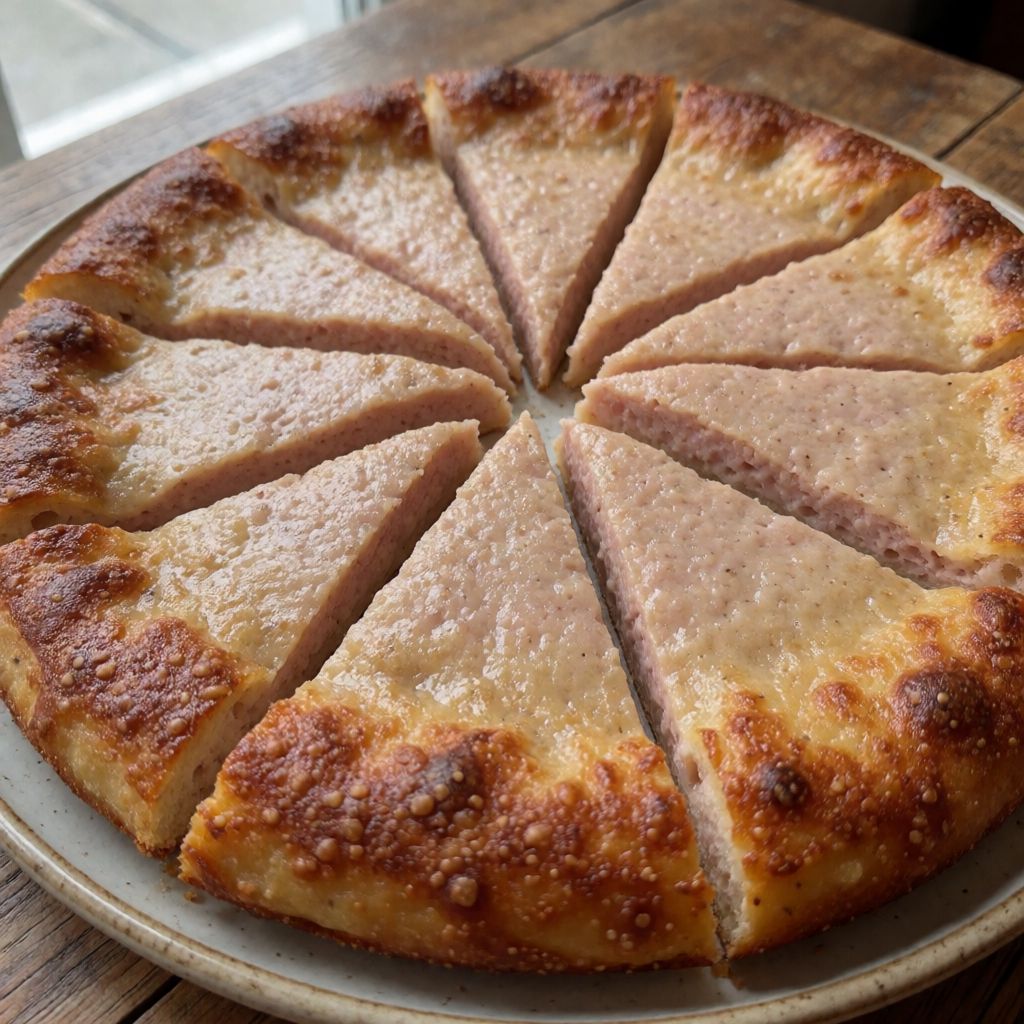
A pizza with a meat crust, topped with tomato passata, melted mozzarella and oregano.
Labels are worked out automatically from the ingredients and can be wrong. Check the packaging if it matters to you.
Ingredients
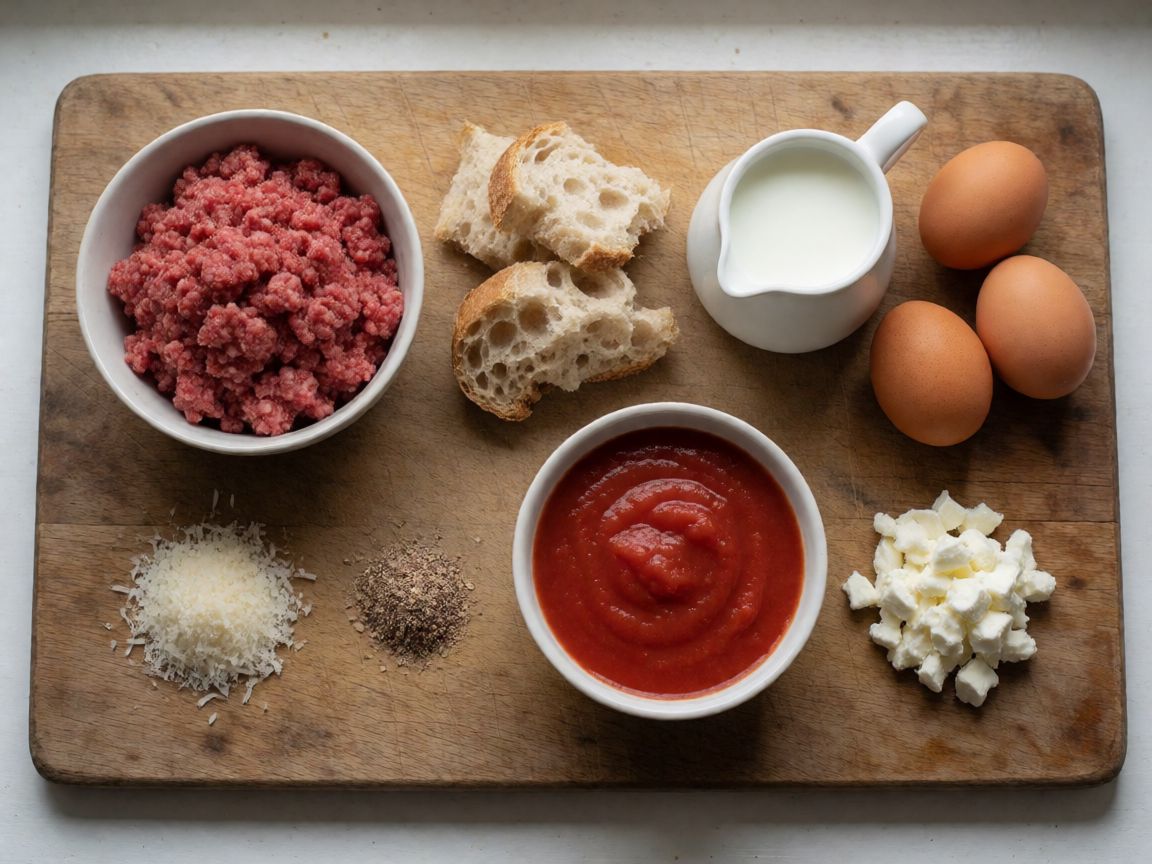
- 600 g Beef Mince
- 100 g Bread stale
- 200 ml Milk
- 2 pcs Eggs
- 100 g Parmesan
- Salt to taste
- Black Pepper to taste
- Nutmeg to taste
- Tomato Passata to taste
- 100 g Mozzarella
- Oregano to taste










Steps
Cut the stale bread into small pieces, removing the hardest crust. Soak it in the milk, squeeze out the excess, then mash it with your hands.
Add the beef mince, eggs and Parmesan; mix well. Season with salt and pepper, add the nutmeg and knead thoroughly.
Transfer the mixture to a 28-30 cm tin lined with baking paper and press it into an even, compact layer.
Spread the tomato passata over the top and bake at 180°C for 20-25 minutes (fan) or 25-30 minutes (conventional).
25 minContinue baking until the meat reaches an internal temperature of 71°C.
Scatter over the sliced mozzarella and oregano, then return to the oven for a few minutes until the cheese melts.
Serve the meat pizza hot.
What's in the tin isn't pizza dough under tomato and cheese — it's a meatloaf, pressed flat to the width of a cake tin, finished off the way a pizza finishes: sauce, then melted mozzarella. The shape and the toppings borrow the vocabulary, nothing else. This is what Italian households did with stale bread and mince that was cheaper than a Sunday joint — press it flat, cover it with whatever's open in the fridge, call it something the children will actually eat without complaint. Economics, not invention for its own sake.
What decides whether it holds together, or falls apart in slices on the plate, is the bread-and-milk paste you mash in before the mince ever joins it. Some say a meatloaf only needs meat and egg to bind — no, because pure mince, packed dense and put straight into a hot oven, tightens into a disc you could bounce a coin off. The soaked bread dilutes the protein, carries water into every bite, and keeps the crumb soft instead of springy. Mix it in by hand, enough to combine and no more — overworking mince lines up the protein strands the same way kneading bread lines up gluten, and a meatloaf doesn't want that elasticity, it wants to stay tender and give under the fork.
Mince: don't reach for the leanest pack on the shelf. Something close to 80/20 carries enough fat to baste the inside as it bakes — go too lean and the bread-and-milk trick has to work twice as hard to stop the whole thing drying into something closer to a biscuit.
Bread: it has to be properly stale, dense, white crumb — the kind that's gone hard enough you'd normally think about the bin. Fresh bread turns to paste the second it meets milk and adds nothing but gumminess; stale bread has already lost its moisture, so it drinks the milk in and holds it, which is the entire point. Cut away the hardest crust because crust doesn't take up milk the same way the inside does, and you'll bite into a dry fragment in an otherwise soft disc. No stale loaf in the house — dried breadcrumbs with a touch less milk do the same job, you're just managing the ratio by eye instead of by squeeze.
Milk: carries the water and a little fat into the crumb. If you've only got cream or stock open, either works — the job is moisture, not a particular flavour of milk.
Eggs: this is the part that actually sets. Egg protein firms up as it heats and locks the whole mixture into one piece instead of a pile of cooked crumbs — without it, a sliced wedge would simply fall apart on the plate.
Parmesan: salt, savoury depth, and because it's ground fine it melts straight into the mixture rather than sitting as lumps. Any firm, aged, salty hard cheese does the same work — Grana Padano, Pecorino if you want it sharper, mature Cheddar at a pinch, though it'll pull the flavour toward something more British than Italian, which isn't a crime.
Nutmeg: a small, old habit in Italian meat mixtures, the same instinct that puts it in a British bread sauce at Christmas — a spice trade leftover that stuck because it rounds off dairy and meat together rather than fighting either.
Passata over fresh tomatoes: passata has already given up most of its water in processing, so it sits on top as a layer instead of soaking down and turning your meat disc soggy underneath — fresh chopped tomatoes would leach juice straight into the crumb before the heat's had a chance to set anything.
Mozzarella goes on last, and that timing is the whole trick with it. Put it on too early and it just weeps water onto the surface over a long bake, so you get a pale, wet puddle instead of melted cheese. Low-moisture mozzarella behaves better here than the fresh, wet-in-the-bag kind, because there's less water to shed in the first place — if fresh is what you've got, pat it dry on paper before it goes anywhere near the oven.
Oregano: dried, not fresh, and that's not snobbery. Some say fresh herbs beat dried every time — no, because fresh oregano's oils are delicate and cook straight off in oven heat before they've perfumed anything; dried oregano's oils are concentrated and release slowly, which is exactly what a few more minutes under heat calls for.
Let it stand a few minutes once it comes out, before you cut it. Patience is the ingredient nobody lists — cut it straight from the oven and the juices that should hold the slice together run out onto the board instead, and what you serve collapses rather than lifts cleanly as a wedge. A 28–30cm tin, cut like a pizza, feeds four generous dinner-plate portions — nobody's starving after a slice of this.