
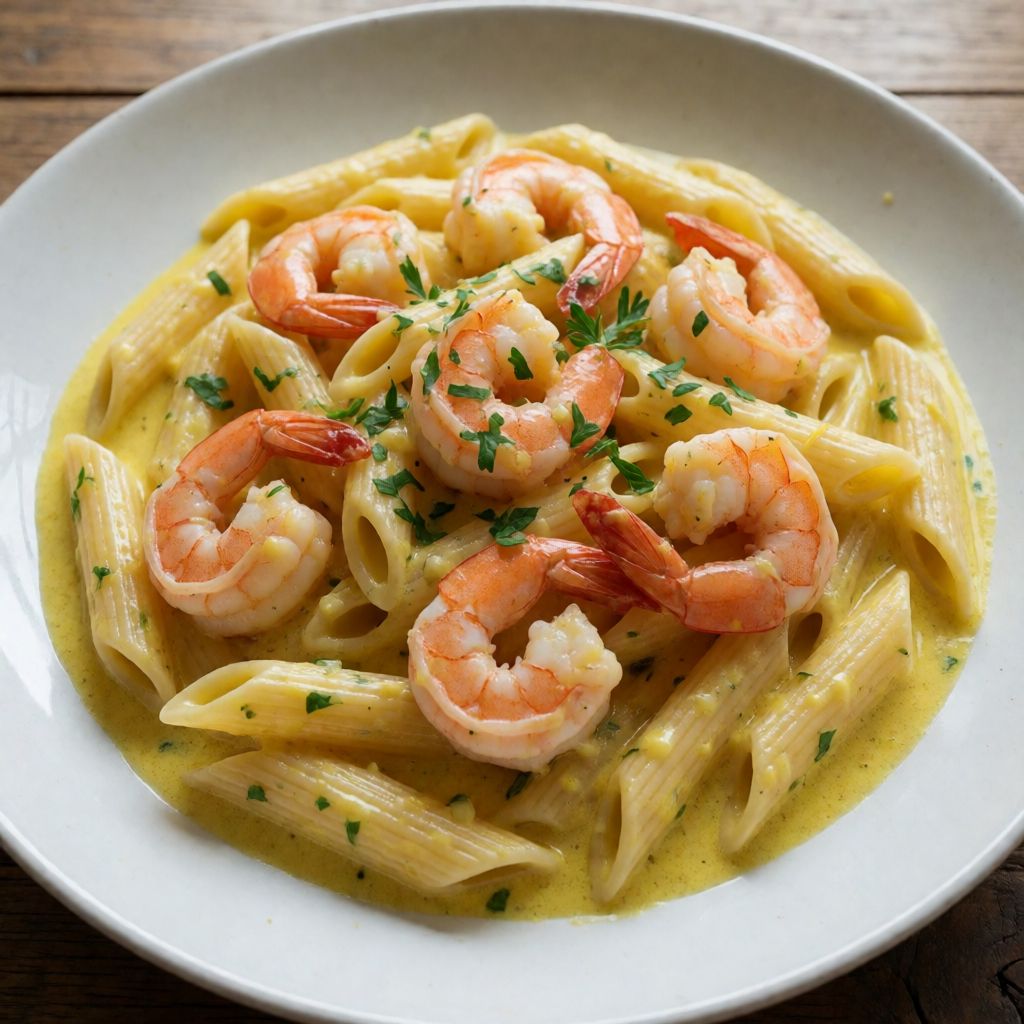
 AI photo
Mezze Penne with Prawns and Saffron
A creamy pasta dish with prawns, saffron and a splash of white wine.
Labels are worked out automatically from the ingredients and can be wrong. Check the packaging if it matters to you.
Ingredients
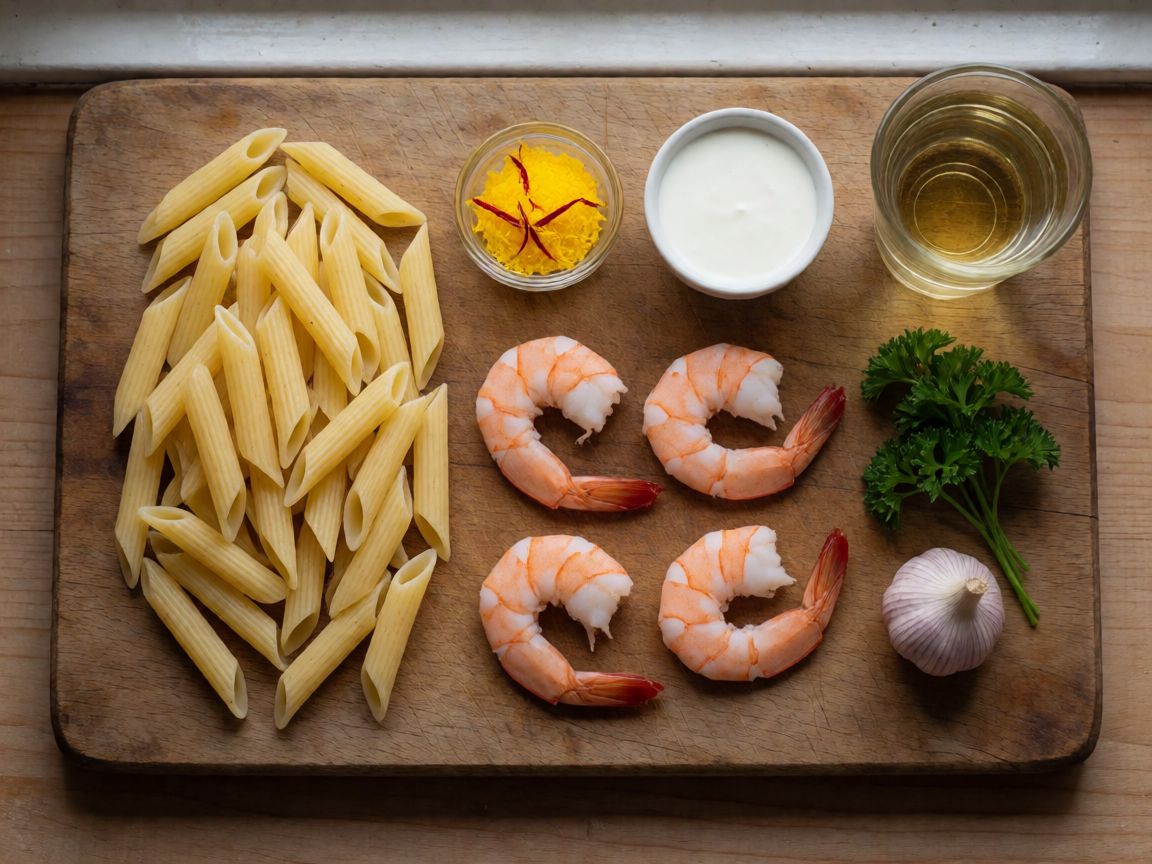
- 300 g Mezze Penne
- 300 g Prawns frozen
- 1 package Saffron
- 3 tbsp Double Cream
- Garlic to taste
- Parsley to taste
- White Wine to taste
- Olive Oil for frying, to taste








Steps
Fry the garlic in olive oil, add the frozen prawns and cook until the excess moisture has evaporated.
Pour in the white wine and let it evaporate.
Add the double cream, saffron and parsley, stir and cook until the sauce reaches the right consistency.
Cook the prawns until pink and until they reach an internal temperature of 63°C.
Meanwhile, boil the penne, drain and add the pasta to the sauce.
Stir well over the heat for a little longer.
This is a fifteen-minute seafood pasta built on timing, not on technique. Nothing here is hard to do — frying garlic, boiling pasta, reducing cream. What decides whether it's good or sad is how much water you let into the pan, and how long you leave the prawns in the heat after they've already finished cooking.
Frozen prawns carry ice inside them, and ice is water waiting to happen. The first step — fry until the moisture has gone — isn't decoration, it's the whole fight. If you skip it, or rush it, you're not frying prawns, you're poaching them in their own meltwater, and a poached prawn never gets that short bite you're after. It goes straight to rubber, because by the time the water's finally cooked off, the prawn's been in the pan twice as long as it needed.
Saffron does almost nothing on its own and everything once it meets fat and warmth — the cream here is the carrier, not the flavour. Pinch too much in and you get soap and dust; too little and you've paid for colour with no smell. There's a widespread idea that saffron threads are the "real" saffron and powder is a cheat. I won't pretend to have run a side-by-side test, so I won't rule either way — what I will say is that whatever form you use, it needs time steeped in something warm and fatty to open up, not a thirty-second stir at the end.
Garlic goes in first because oil needs something to carry flavour, and garlic releases its sulphur compounds into fat faster than into water — that's the actual reason you fry it rather than boil it with the pasta. Crush or slice it, don't leave it whole, and watch colour rather than a clock: pale gold smells sweet, the moment it tips toward brown it tips toward bitter, and bitter garlic will sit under everything else in the dish and sour it. There's no useful heat number here, your nose is the instrument.
On prawns: 300g frozen is the honest British kitchen reality, and that's fine, but thaw them in the fridge overnight or under cold water in a sealed bag, never under the hot tap and never straight into the pan rock solid. Thawing slowly means less structural damage to the flesh, which means less of that mushy give you sometimes get from supermarket prawns. If you can get fresh raw prawns, peeled and deveined, use them — less water to fight, less waiting at step one.
The wine's job is acid, not flavour as such — it cuts through the fat of the cream later so the sauce doesn't sit heavy and flat on the tongue. "Let it evaporate" doesn't mean boil it to nothing; it means cook off the raw alcohol sting, which you can smell leaving the pan, and stop once what's left smells like wine rather than like a bar. No wine in the house is not a disaster — a splash of water with a squeeze of lemon does the same acid job, just without the aromatics, because the mechanism you need is acidity meeting fat, not grapes specifically.
Double cream is doing structural work: its fat content is high enough that it won't split when it hits a hot pan with wine and lemon-adjacent acidity already in it. A thinner cream, or milk, will curdle under exactly those conditions — so if double cream isn't to hand, crème fraîche or a cream with a similarly high fat percentage is the substitute, chosen on that criterion, not on brand. Reduce it slowly until it coats a spoon rather than running off it; that's your consistency cue, not a timer.
Parsley goes in near the end because its flavour is volatile — cooked too long it turns grassy and flat, so it's there for lift at the finish, not for the full cooking time. And the saffron-with-seafood pairing itself isn't mystical, it's geography and trade: coastal kitchens near old spice ports had cheap fish and expensive saffron side by side, and a little of the rare thing stretched into a sauce for the plentiful thing made a feast out of a Tuesday catch. Nothing more occult than that.
Last thing — 300g of pasta and 300g of prawns is not really a dinner for one, whatever the card says; that's closer to two generous portions or three modest ones, which matters if you're only cooking for yourself and don't want prawns for breakfast. Boil the mezze penne in well-salted water, keep a cupful of that water back before you drain, and if the sauce looks tight when the pasta goes in, loosen it with a splash of that starchy water rather than more cream — the starch helps the sauce grip the pasta instead of pooling at the bottom of the bowl, which is the whole point of marrying the two in the pan at the end rather than just ladling sauce on top.