
 AI photo
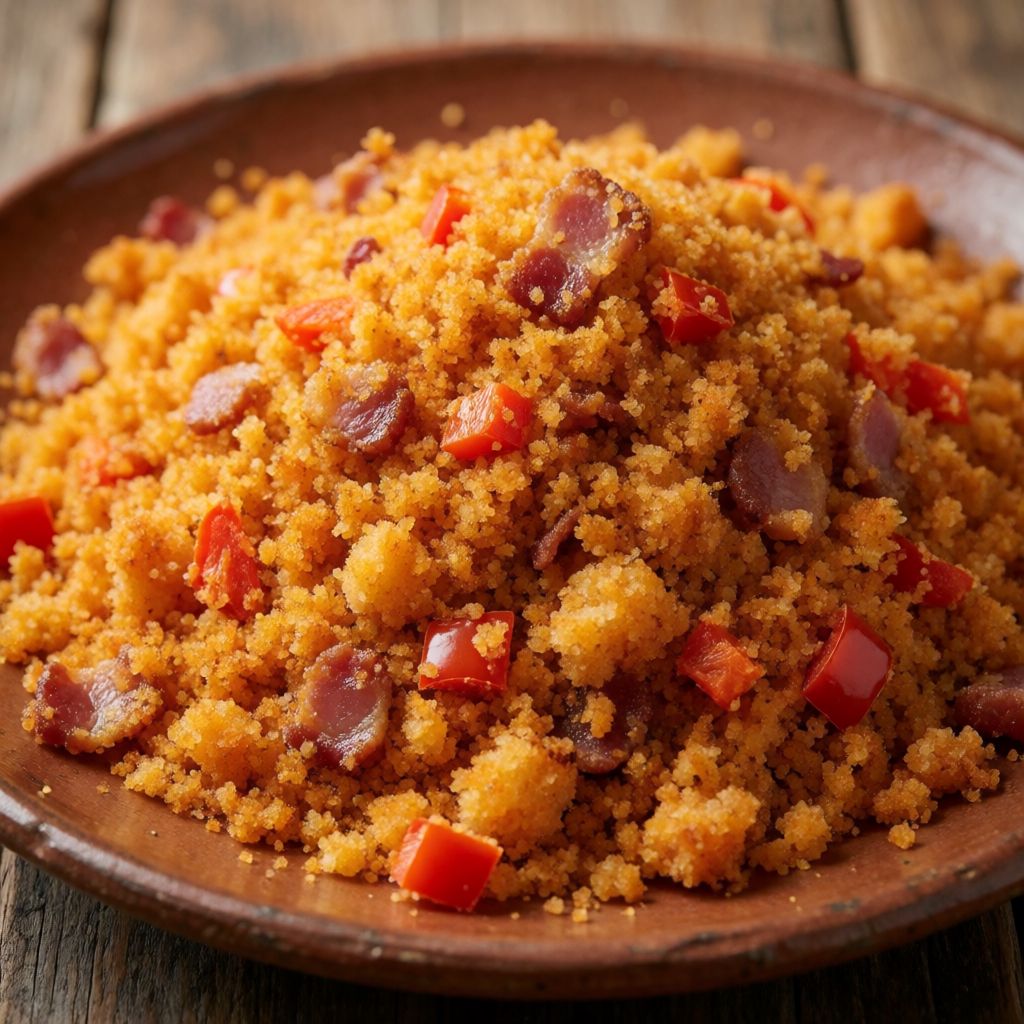
Extremaduran Migas
A traditional Extremadura dish of fried stale bread with peppers, garlic and bacon.
Labels are worked out automatically from the ingredients and can be wrong. Check the packaging if it matters to you.
Ingredients
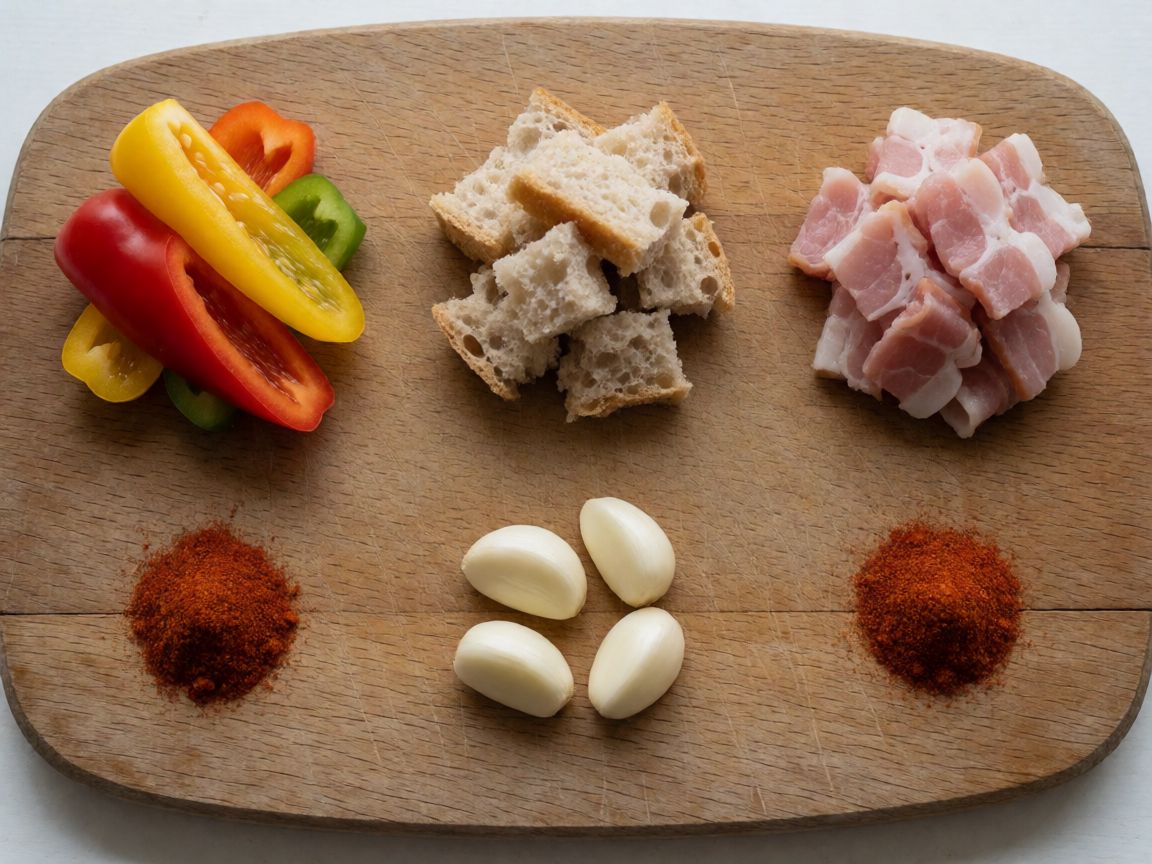
- 300 g Bell Pepper
- 150 g Stale Bread
- 100 g Bacon or guanciale
- 4 clove Garlic
- 1 tbsp Paprika
- 2-3 tbsp Water salted
- Olive Oil to taste



Steps
Heat the olive oil in a frying pan and fry the garlic until golden.
Add the bell pepper, cut into medium-sized pieces, and cook for about 10 minutes.
10 minSet the pepper aside, then remove the garlic cloves from the pan and keep them.
In the same pan, fry the diced bacon until cooked through; the internal temperature should not be below 70°C.
Cut the stale bread into small pieces and moisten it with a few tablespoons of salted water.
Return the garlic to the pan with the oil, add the paprika and mix well.
Add the bread and fry for a few minutes so it absorbs the flavours.
Add the bacon and pepper, and mix everything together.
Serve immediately.
Migas is not bread with vegetables mixed in — it's a bread dish, full stop. Everything else in the pan exists to flavour the fat that the bread will then drink. That's the order of operations and it's not negotiable: garlic flavours the oil, pepper and bacon flavour the fat further, and only then does the bread go in, last, to soak up all of it while it crisps. Reverse that order and you just get fried bread next to cooked vegetables sharing a plate.
What decides whether this works is moisture — twice. First, your bread has to actually be stale, meaning dry and a bit stubborn, because stale crumb has tiny open pockets that pull in liquid instead of just sitting on top of it wet. Fresh bread doesn't have that structure; it goes gluey. Second, the salted water you add isn't a splash for drama, it's the only direct seasoning the bread gets from the inside, and you want it absorbed, not pooling — press a piece between your fingers, it should feel damp through, not slick.
The paprika step is where most people lose the dish without noticing. Paprika scorches fast and goes bitter the second it sits in oil that's still carrying high heat from frying bacon. Some say a burnt taste in migas is 'just how paprika is' — no, that's scorched paprika, and it tastes like ash, not smoke. Pull the pan back from the heat, or let it settle a moment, before the paprika goes in; you're blooming it in warm fat, not frying it.
Start with the bread, because the whole dish is an argument about not wasting it. This is shepherd and field-worker food from Extremadura — bread baked once a week, going hard by day three, and rather than throw it out you tear it up, wet it back to life, and fry it in whatever fat and scraps you had that day. That's the economics under the dish: poverty cooking that got good enough to outlive the poverty. So don't buy bread specifically for this — use the heel end of a loaf that's two or three days past its best, open crumb rather than tight and dense, because open crumb drinks the salted water evenly. If you genuinely have no stale bread, dry fresh bread out in a low oven rather than skip the ageing — you need the dryness, not the calendar age itself.
Bell pepper here just needs even pieces, cut to roughly the same size so they all soften together rather than some going to mush while others stay raw-firm. You're looking for the flesh to go from stiff to yielding, slight blistering on the skin is fine, actual charring means the pan was hotter than the pepper could keep up with.
Bacon or guanciale: the criterion is a fatty cured pork that renders clean fat without drowning everything in smoke or brine. Guanciale renders beautifully because it's almost pure fat with streaks of meat. British streaky bacon will work, but it's wet-cured and brined, so it throws off more liquid first — give it the time to actually render and for that liquid to cook away before you call it done; if you rush it, that water goes straight into your bread later and that's your mush, not the bread's fault. The safe-cooked mark (core past 70°C) is also just your assurance it's not pink and wet in the middle anymore — look for the fat gone translucent-to-gold and the edges catching colour.
Garlic is for the oil, not for eating burnt. Fry whole cloves — skin on or off, your call — until they turn gold, pull them before they go past that into brown. Some cooks think the darker the garlic the deeper the flavour — no, because past gold the sugars in garlic turn bitter, and bitter garlic oil will sit under everything else in the dish and you won't be able to cook it out later. You put the cloves back in afterwards more for the shape and bite than for more flavour at that point — the oil already has what it needed from them.
Paprika — pimentón, sweet or smoked depending on what you want — is what turns the oil red and gives the bread its colour and backbone. If you only have supermarket sweet paprika with none of the smoke, that's fine, the dish will just be rounder and less sharp; don't try to fake the smoke with anything stronger, it reads as a different dish entirely.
Olive oil earns its place here for the same reason it's in half of Spanish cooking: it was the local, cheap fat in an olive-growing region, and it carries its own flavour into the bread rather than disappearing like a neutral oil would. You can use any oil with no strong smell of its own if that's what you have — sunflower, a mild vegetable oil — but you lose a layer of the dish's character, and in something this plain, that layer matters more than usual.
Salted water for the bread is small in quantity but doing real work — it's seasoning from inside the crumb outward, which plain frying alone can't do. A couple of tablespoons for 150g of bread, no more; you're dampening, not soaking. And once it's all together in the pan, this is one of those dishes with patience built into the early steps — garlic slowly to gold, bacon slowly to rendered, pepper slowly to soft — so that the last few minutes with the bread can be fast, hot, and decisive. Feeds two generously as a side; it won't wait around for you, so have the plates out before the bread goes in.