
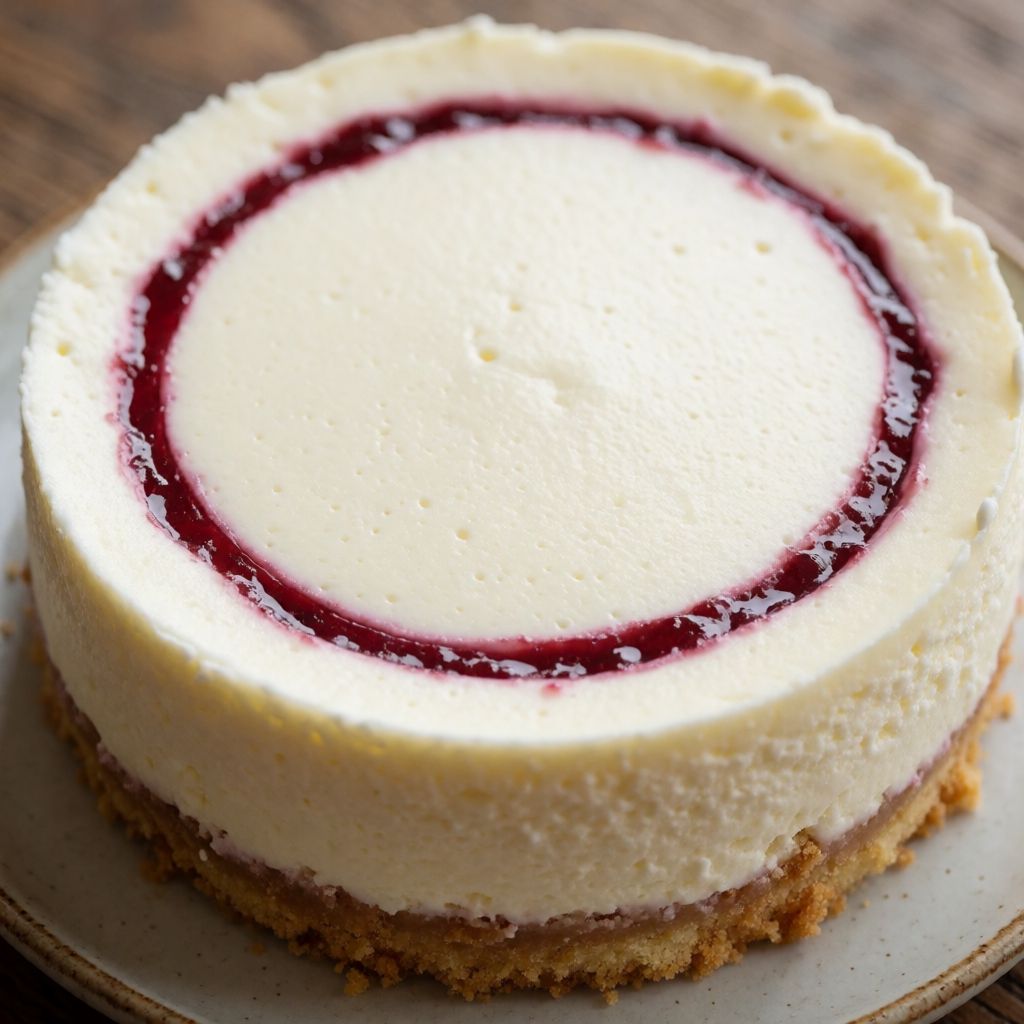
 AI photo
Monterosa Cheesecake
A chilled no-bake cheesecake layered with sponge, set with gelatine, and topped with strawberries.
Labels are worked out automatically from the ingredients and can be wrong. Check the packaging if it matters to you.
Ingredients
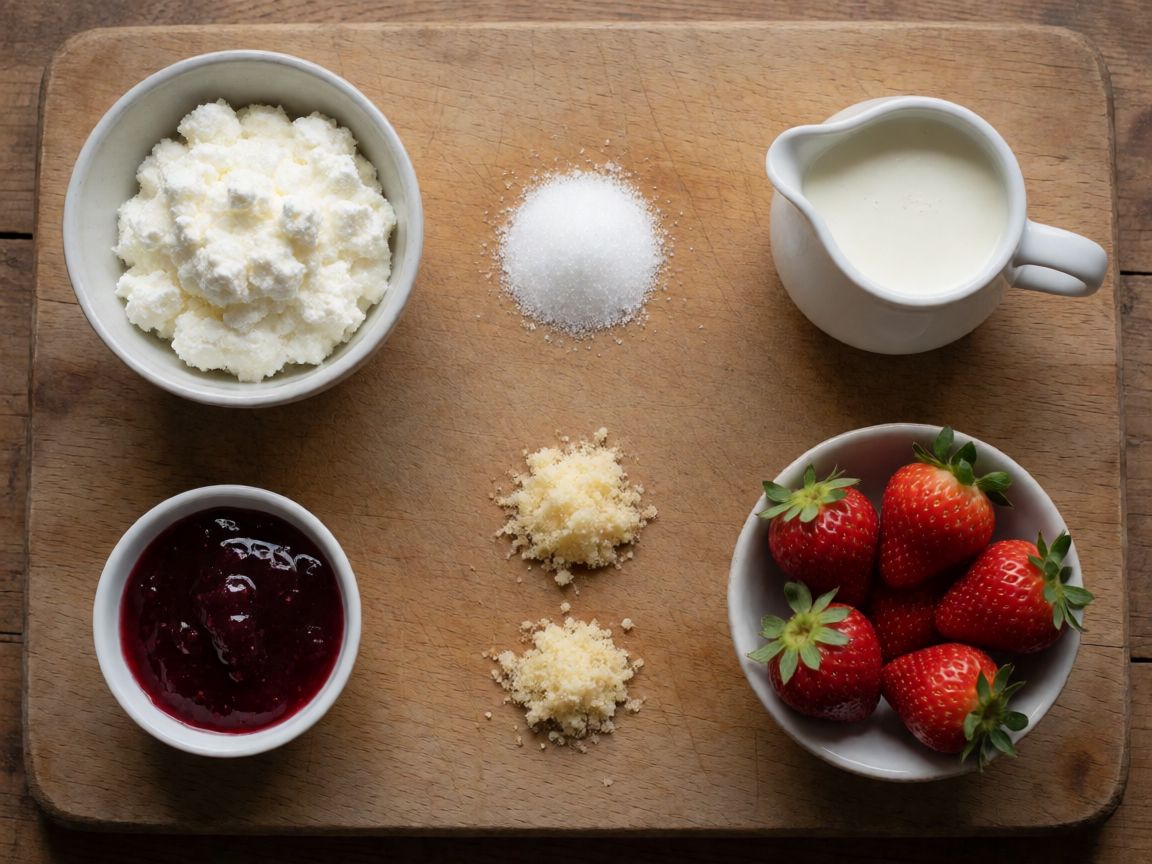
- 500 g Ricotta
- 150 g Sugar
- 200 ml Double cream
- 6 g Gelatine
- 2 pcs Sponge cake layers
- 4-5 tbsp Strawberry jam or mixed berries
- 300 g Strawberries to taste, optional, mixed berries can be used






Steps
Beat the ricotta well with the sugar until smooth.
Whip the double cream and gently fold it into the ricotta mixture.
Soak the gelatine in cold water for 5-10 minutes.
7 minWarm a few spoonfuls of water, remove from the heat and add the squeezed gelatine, stirring until fully dissolved.
Pour the dissolved gelatine into the cream mixture and mix well.
Line the base of a springform tin with a circle of baking paper and the sides with a strip of baking paper.
Place the first sponge layer on the base and pour over half the cream.
Place the second sponge layer on top and pour over the remaining cream.
Put the tin in the fridge and leave to set overnight.
480 minThe next day, spread strawberry jam over the top.
Decorate with strawberries or mixed berries, caramelised beforehand in a pan with sugar.
Before serving, put the cake back in the fridge for about an hour.
Monterosa is a no-bake cheesecake in the Italian sense — not the baked, dense American kind, but something closer to a cold ricotta mousse set between two discs of sponge. Nothing goes in the oven. The whole dish stands or falls on one thing: whether the gelatine sets the cream enough to hold a slice together, but not so much that it turns rubbery. That balance is the entire recipe.
Some say ricotta cheesecake is "healthier" than the baked kind because there's no butter biscuit base. No — it's a different dessert with a different job. The sponge layers aren't there for virtue, they're there for structure: ricotta and cream alone won't stand up when you cut into them, they need something dry to soak up moisture and give the knife a surface to push against.
What decides success is temperature control at the gelatine stage, and patience afterwards. Gelatine that goes in too hot loses its setting power; cream that's folded in too roughly collapses and weeps liquid overnight. And "overnight" is not a suggestion you can shorten by putting the tin in the coldest part of the fridge and hoping — the collagen network needs real hours to lock the water in, full stop.
This is a cake assembled in a tin, not baked in one, which suits a flat with no proving drawer and no steady oven. A springform tin, a fridge, and the discipline to leave it alone till tomorrow — that's the whole kit.
Ricotta is the base and it must be dry-ish ricotta, the kind sold in a perforated tub that's already drained most of its whey, not a wet curd swimming in liquid. Wet ricotta dilutes the gelatine's grip and you get a cheesecake that slumps when sliced. If your ricotta looks watery, tip it into a sieve lined with a paper towel for twenty minutes before you start — that's not in the method because nobody tells you your cheese is too wet, you have to look.
Sugar here isn't for structure, it's just sweetness and a little moisture control when beaten into the ricotta — any fine white sugar works, caster rather than granulated dissolves more evenly without grinding.
Double cream whipped and folded in is what gives the filling its lightness — this is the difference between a cheesecake that eats like a mousse and one that eats like cold cottage cheese. Whip it to soft peaks, not stiff; overwhipped cream folds in lumpy and won't marry with the ricotta smoothly. If you only have whipping cream (lower fat than double), it'll whip but hold less air — fine, just don't expect quite the same lightness.
Gelatine is the whole mechanism of this dessert. Soak it in cold water first — cold, because warm water starts dissolving it unevenly and you lose some of its setting power before it's even in the mix. Then it goes into warmed (not boiling) water off the heat, because gelatine loses its ability to set if it's boiled — the protein strands that would normally link up and trap the liquid get damaged by too much heat. If you use gelatine leaves instead of powder, same logic: soak, squeeze, melt gently, never boil. Agar-agar is not a straight swap — it sets firmer and at room temperature, so you'd end up with something closer to a jelly than a mousse; use it only if you know how much less you need.
The sponge layers are shop-bought or home-made thin cake discs — in a British kitchen, a couple of rounds cut from a plain Victoria-style sponge or even trimmed layers from a supermarket sponge cake do the job. Their purpose is structural, as said, but also to soak up a little moisture from the cream so the middle doesn't turn soggy by the time you cut it.
Strawberry jam on top is glaze and flavour in one — it also seals the surface so it doesn't dry out in the fridge overnight. Any smooth berry jam without big chunks works; warm it slightly to loosen it before spreading if it's set stiff from the jar. The caramelised strawberries on top are a decorative flourish, not load-bearing to the recipe — sugar melted in a pan until it goes from white to pale amber, strawberries tossed through briefly just to glaze them, not cook them through, because strawberries left too long in hot sugar collapse into mush and lose their shape on the cake.
The last hour back in the fridge before serving isn't filler time — it's there because the cake, once out and at room temperature during decorating, softens at the edges, and that hour lets it firm back up enough to cut a clean slice rather than a smear.