
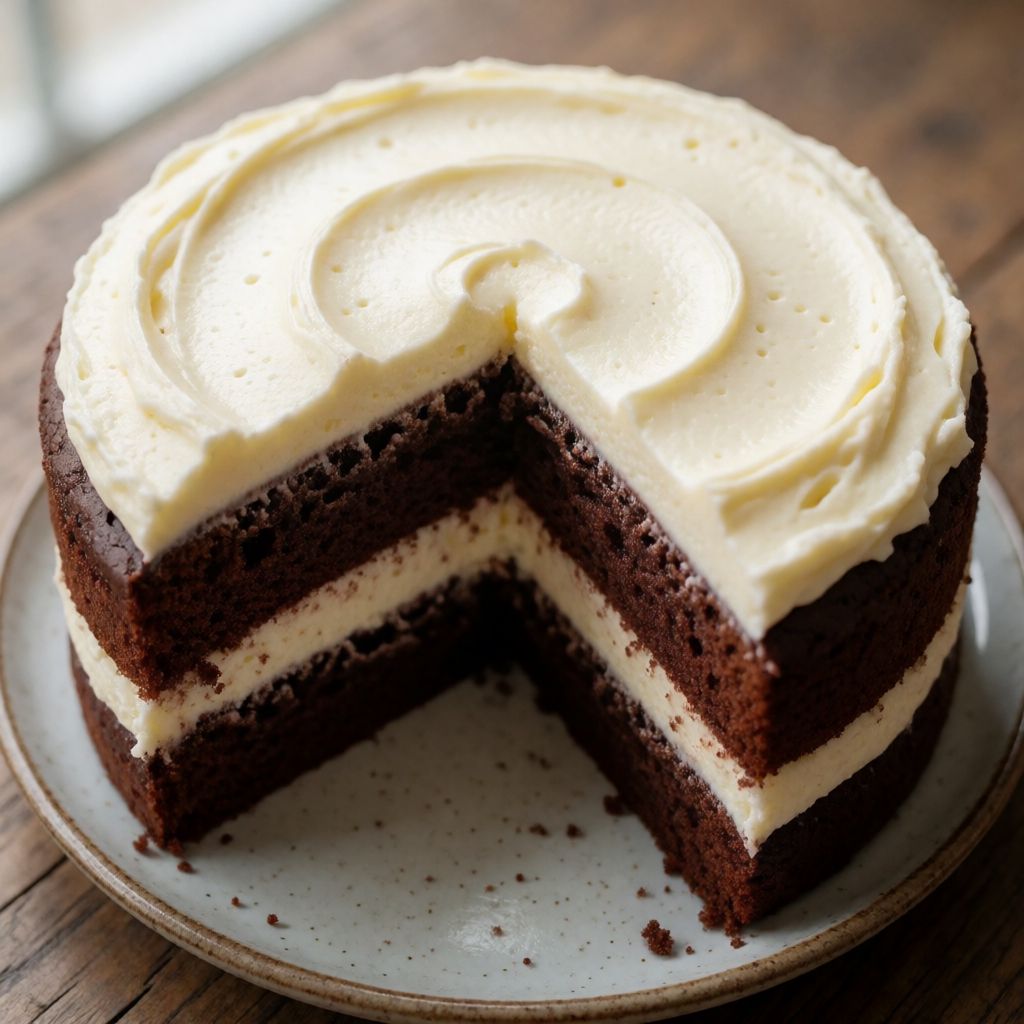
 AI photo
Moretto
A rich chocolate sponge cake filled with a creamy mascarpone and chocolate-hazelnut layer, finished with a dusting of icing sugar.
Labels are worked out automatically from the ingredients and can be wrong. Check the packaging if it matters to you.
Ingredients
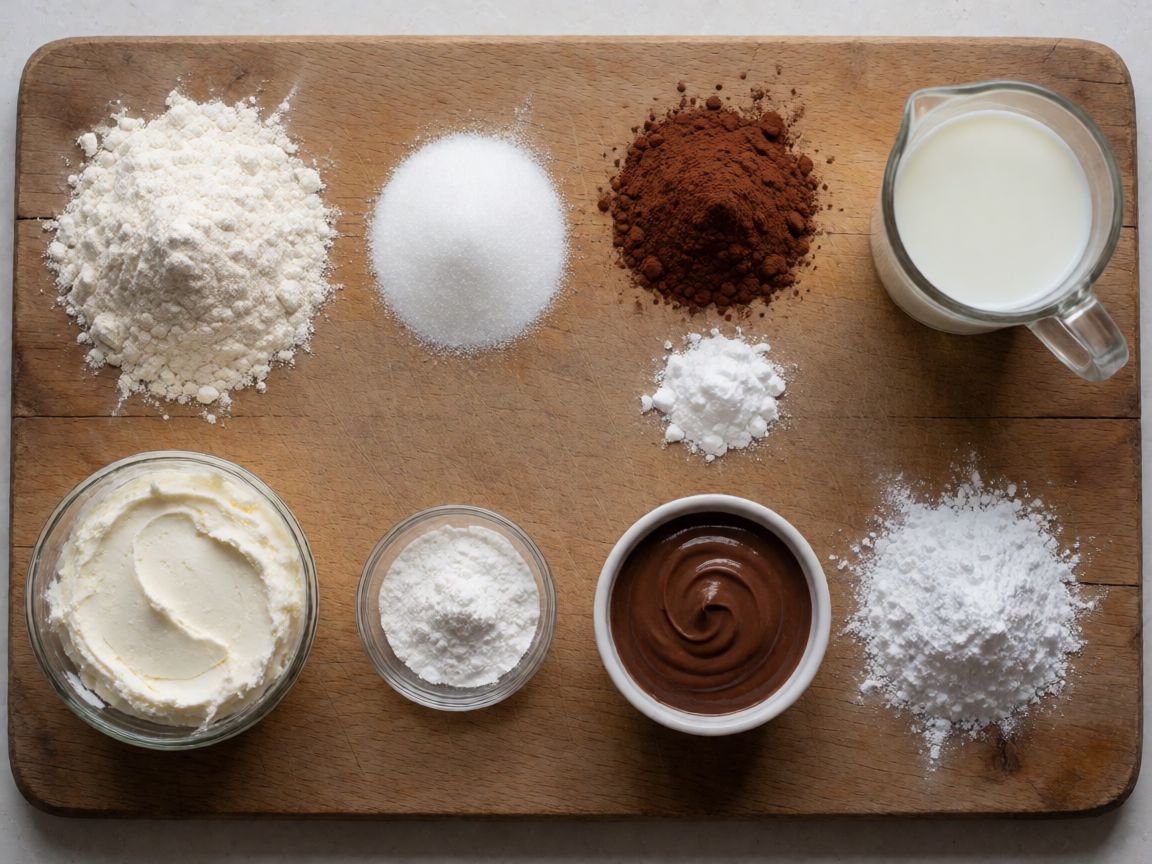
- 200 g Plain Flour sifted
- 200 g Caster Sugar
- 35 g Cocoa Powder sifted
- Milk as needed
- 1 pcs Baking Powder sachet
- 250 g Mascarpone
- 5 tbsp Nutella
- Icing Sugar to taste, for dusting






Steps
In a bowl, combine the sifted flour, caster sugar, sifted cocoa powder and baking powder, then add milk, as needed, until the batter is smooth and even.
Line a 22 cm round tin with baking parchment, pour in the batter and bake at 180°C for about 35–40 minutes.
37 minFor the cream, combine the mascarpone with the Nutella and mix well until smooth.
Once the sponge has baked and cooled, slice it in half horizontally and spread the cream between the layers and on top.
Before serving, dust the cake with icing sugar.
Moretto means something like "the little dark one" — the sort of name an Italian home cook gives a cake, not the sort a pastry chef puts on a menu. And that tells you what you're making: not a torta for showing off, but a cocoa sponge built from what was always in the cupboard. No eggs, no butter in the crumb itself. That's not corner-cutting — that's the whole design. Flour, sugar, cocoa, milk, baking powder. A cake that could be made on a Tuesday with no trip to the shop, which is exactly why cakes like this exist all over Italy under different family names.
What decides whether it works is the batter's thickness going in, and the cake's temperature coming out. Without egg protein or butter fat to carry the structure, the only things holding this sponge up are the gluten mesh in the flour and the gas the baking powder lets off. Too thin a batter and there isn't enough gluten relative to liquid — it spreads wide and bakes dry, with nothing to trap the rise. Too thick, and the gas can't travel through to escape evenly, so you get a gummy, undercooked middle under a set top. The batter you want falls off a spoon in a slow ribbon — somewhere between double cream and single cream, nowhere near as stiff as mash. "As needed" isn't vagueness, it's an instruction to watch the batter, not the measuring jug.
Flour, sifted: the sieve isn't ceremony, it breaks up the small lumps that sit, undissolved, in a batter with no vigorous beating to break them apart for you — there's no butter-and-sugar creaming step here doing that mechanical work, so the sieve does it instead. Any plain flour with a moderate gluten content works; nothing in this cake asks for strong bread flour, and using it would only make the crumb tougher.
Caster sugar, not granulated: in a batter this thin, with no fat to help sugar dissolve by friction, the finer grain of caster sugar matters — granulated can survive the bake half-dissolved and leave a faint grit. If you only have granulated, give the batter longer to sit before it goes in the tin and let the liquid do the dissolving.
Cocoa powder, sifted for the same reason as the flour — clumped cocoa resists wetting and you end up with bitter dry pockets in an otherwise sweet crumb. Use a plain unsweetened cocoa; the recipe's sugar is already calculated around cocoa, not chocolate, with no added sweetness.
Milk is the variable here, deliberately. It's both your liquid and your only source of fat in the sponge, since there's no butter — whole milk gives a slightly more tender crumb than skimmed, but any milk, dairy or otherwise, does the structural job, because nothing here curdles or needs milk's proteins specifically.
Baking powder: double-acting, most likely, which is why the rise doesn't happen the moment it meets liquid — a good share of the gas release is triggered by heat, which is exactly why the oven does the lifting, not the mixing bowl. Watch for the cake pulling slightly from the parchment at the edges and a skewer coming out clean — that's your real finish line, the given 35–40 minutes is a floor, because every domestic oven runs its own temperature, whatever the dial says.
Mascarpone isn't cream cheese, though shops sometimes shelve them together. It's cream, set by heat and acid rather than by rennet or culture, which is why it's rich and sweet-tasting with none of cream cheese's tang, and why it holds its shape without whipping — don't beat it hard trying to add air, because past a point the fat breaks out of its structure and the cream turns grainy and weeps. Fold the Nutella in gently instead. If you've no mascarpone, a thick double cream mixed with a little cream cheese gets you close, though it'll be tangier.
Nutella is doing two jobs: sweetening the cream and bringing enough fat of its own — cocoa butter and hazelnut oil — to make the mixture spreadable without any whipped air holding it up. Any hazelnut-cocoa spread with the same oily, non-watery consistency substitutes cleanly; what you're checking for is that it doesn't separate or weep when you stir it, because a watery spread will thin the mascarpone instead of thickening it.
Icing sugar goes on last, right before the cake reaches the table, because it sits on top of a moist cream and starts dissolving into it the moment it lands — dust it an hour early and you'll have a faint grey smear where you wanted a clean white one.
Two domestic notes worth having: line the tin with baking parchment rather than just greasing it — there's no butter in this batter to help the cake release itself, and the sugar at the edges will happily caramelise onto bare metal and stick. And for slicing the sponge in half horizontally without a cake leveller, push a few toothpicks around the side at the midpoint as a guide line and follow them with a long serrated knife — a bread knife does the job most flats already own.
One 22 cm cake this way gives six reasonable tea-time slices — it's rich enough that nobody's asking for seconds. Let the whole thing cool fully before you cream it and cut it; that patience is not optional, it's the difference between a layered cake and a chocolate mess with good intentions.