
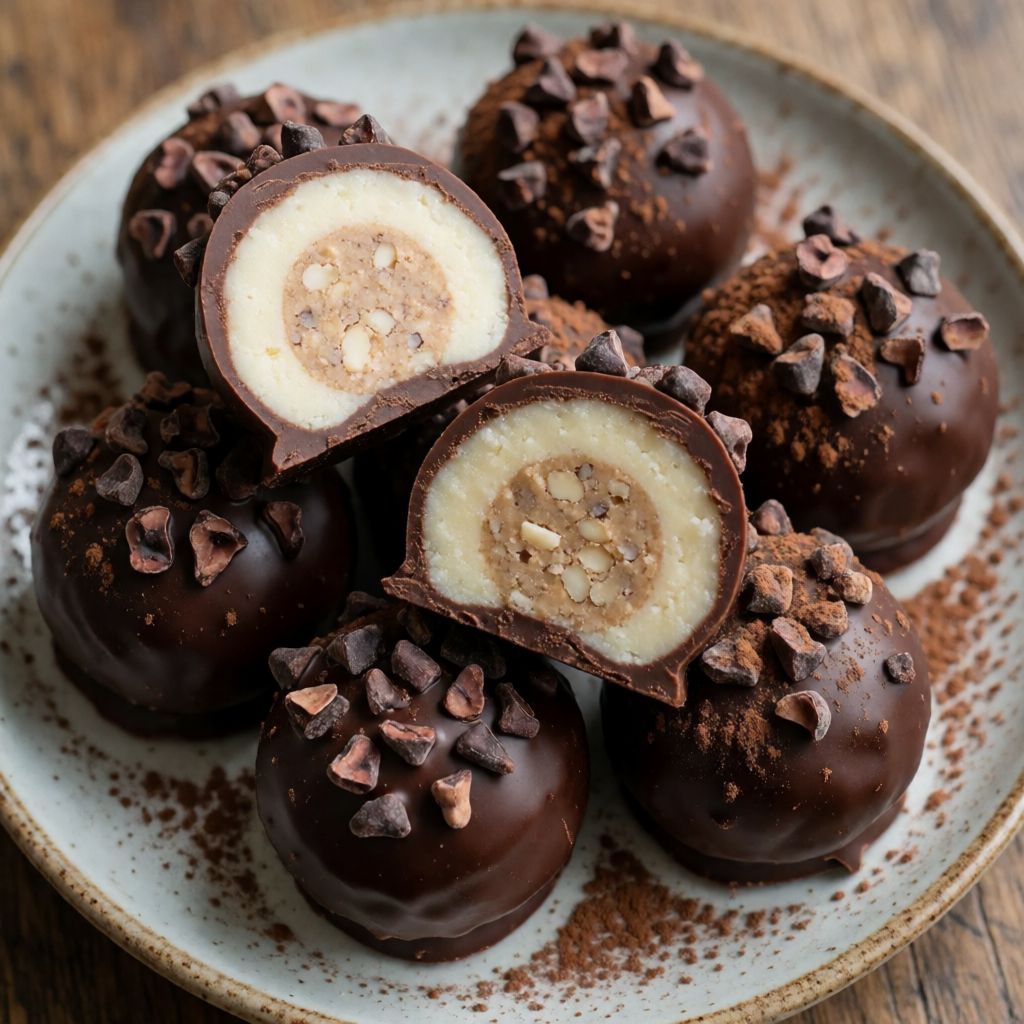
 AI photo
Mozart Balls
Marzipan and nougat truffles rolled around a hazelnut and dipped in dark chocolate.
Labels are worked out automatically from the ingredients and can be wrong. Check the packaging if it matters to you.
Ingredients
- 20 pcs Hazelnuts
- 125 g Nougat
- 200 g Marzipan
- 200 g Dark Chocolate tempered
- 20 g Hazelnuts finely chopped
- 1 tbsp Cacao Nibs crushed
- 1 pinch Edible Gold Dust
- 1 pinch Dried Flowers for decoration





Steps
Toast the hazelnuts in a pan, stirring, until the skins crack and begin to loosen.
Wrap the hot nuts in a clean cloth and rub to remove the skins.
Cut the marzipan into 20 equal pieces.
Flatten each piece and shape it into a small cup. Place a nougat piece and a hazelnut inside, close with the marzipan and roll into a ball.
Dip all the marzipan balls in the tempered dark chocolate and place them on a sheet of baking paper.
Sprinkle with the decoration while the chocolate is still wet.
Decorate with cacao nibs, dried flowers, gold dust and the finely chopped hazelnuts.
Nothing here goes in an oven. This is cold assembly — one small sweet built in layers, like a tiny parcel: a toasted hazelnut at the centre, a soft paste around it, another paste around that, and then a shell of chocolate holding the whole thing together. No heat does the cooking. Your hands do the shaping, and the chocolate does the sealing.
What decides whether this works is not the marzipan, not even the hazelnut inside — it's the shell. Some people think melted chocolate and tempered chocolate are the same thing, just chocolate that's gone liquid and come back. No — because chocolate that's only melted and left to cool sets into the wrong internal structure: it stays soft, it smudges on your fingers before it reaches anyone's mouth, and within a day it goes dull and streaky, like it's been left in a drawer too long. Tempering is the one real technique in this whole recipe. Everything else is patience and a steady hand.
Size matters more than it looks like it should. Twenty balls from 200g of marzipan means ten grams each — weigh it, don't eyeball it, because an uneven ball dips unevenly, and a thin side cracks in the box on the way to wherever these are going. These aren't a pudding for after a roast; they're the kind of small, deliberate sweet you set out with tea, two or three on a plate, not a dessert you serve in a bowl.
Start with the hazelnuts you're hiding inside. Toasting isn't for colour — it's to make the skin brittle enough to come off, and to wake up oils that taste flat and slightly grassy raw. Rub them hot, wrapped in cloth, because the heat is what's cracking the skin loose; let them go cold first and you'll be picking at stuck-on paper with your nails for twenty minutes. That's the defect this step is actually preventing — not a cosmetic one, a patience one.
Now the word that causes the most confusion in this recipe: nougat. In English that word means something chewy — whipped sugar, egg white, studded with nuts, the stuff that pulls your filling out at Christmas. That is not what goes in this ball. What's meant here is the Central European sense of the word: a soft, dark hazelnut-and-chocolate paste, closer to a loose praline filling than to anything chewy. If you buy the wrong jar, you'll get a center that doesn't soften, doesn't melt a little against the warmth of your hand, and sits like a hard pebble instead of yielding. If you can't find it labelled correctly, gianduja is the honest substitute — or make your own by warming equal parts melted chocolate and hazelnut paste together until it's spoonable, not pourable.
Marzipan is simpler to judge: ground almonds and sugar, bound together, and the only criterion that matters is whether it bends like soft dough or crumbles like biscuit. Fresh marzipan with a decent almond content stays pliable in your palm; cheap, sugar-heavy marzipan goes dry and cracks when you try to close it round the filling. If yours is dry, work in a few drops of water, or a drop of almond oil if you have it — any oil with no smell of its own will do in a pinch, though almond is the honest choice here since it's already the dominant flavour.
Tempering the chocolate is the part worth taking seriously, and the part a home kitchen genuinely struggles with, so be honest about your tools. You don't have a marble slab or a machine — you have a bowl and a pan of water that's barely moving, not boiling, because the one thing that ruins melted chocolate outright is a drop of steam or water getting into it: it seizes, turns grainy and thick in seconds, and there's no saving it, only starting again. Keep the bowl dry, melt gently, and judge readiness not by a number but by behaviour — a dab on the back of a spoon should set within a couple of minutes, matte-free, with a clean snap when you bend it, not a slow sag. That's tempered. Anything softer than that is just melted chocolate wearing a costume.
The sprinkle of cacao nibs, chopped hazelnut, gold dust and dried flowers all do the same two jobs — texture against the smooth shell, and a bit of visual lift — so they go on while the chocolate is still wet, because tempered chocolate skins over fast, and anything you add after that just rolls off instead of sticking. None of this decoration is traditional in any sacred sense; gold dust on sweets is an old habit of showing off at the table, borrowed from Baroque confectionery long before anyone thought to name a chocolate ball after Mozart — that naming itself was a Salzburg confectioner's marketing idea from the 1890s, tied to the composer because he was born there, not because he had any hand in the recipe. Worth knowing, mostly so you don't feel you owe the gold dust any reverence. Use it because it looks good with tea, not because it's owed to history.