
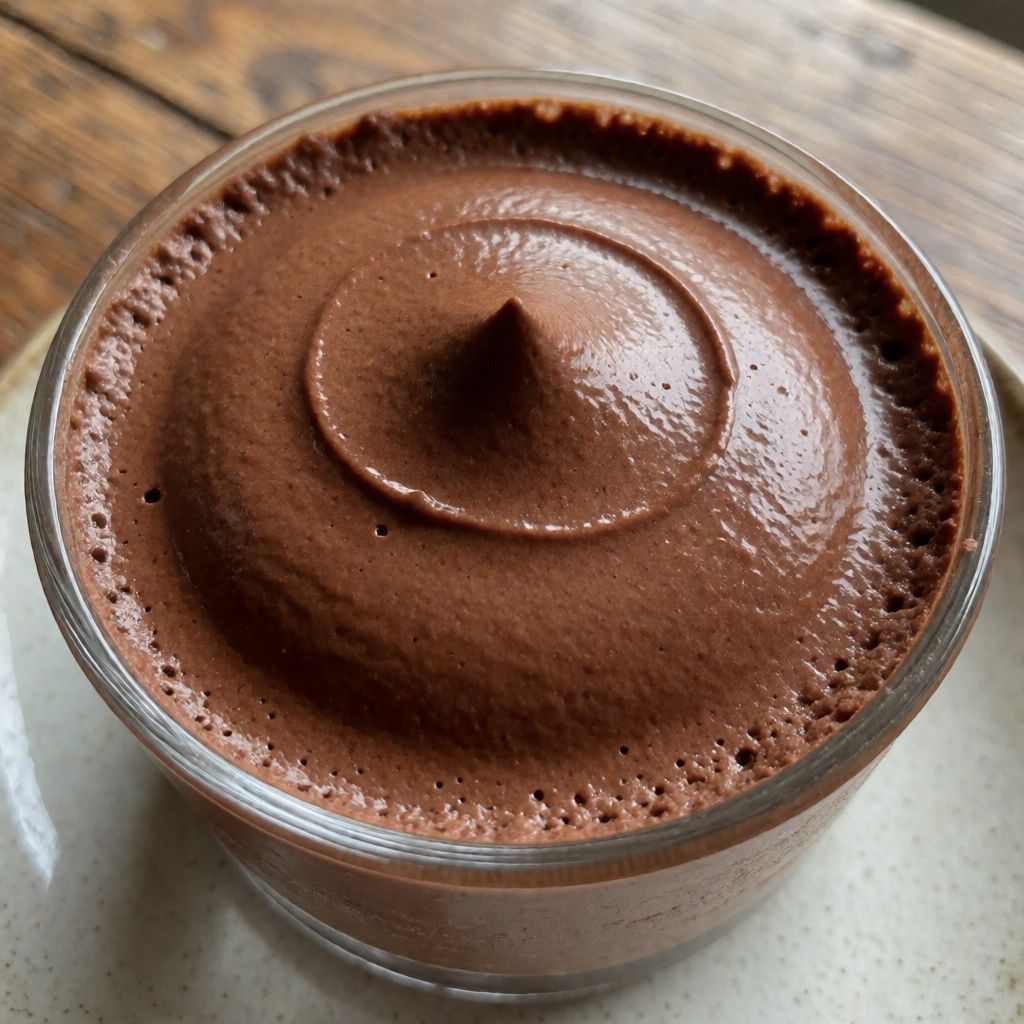
 AI photo
Dark Chocolate Mousse
A rich, silky dark chocolate mousse ready in minutes.
Labels are worked out automatically from the ingredients and can be wrong. Check the packaging if it matters to you.
Ingredients
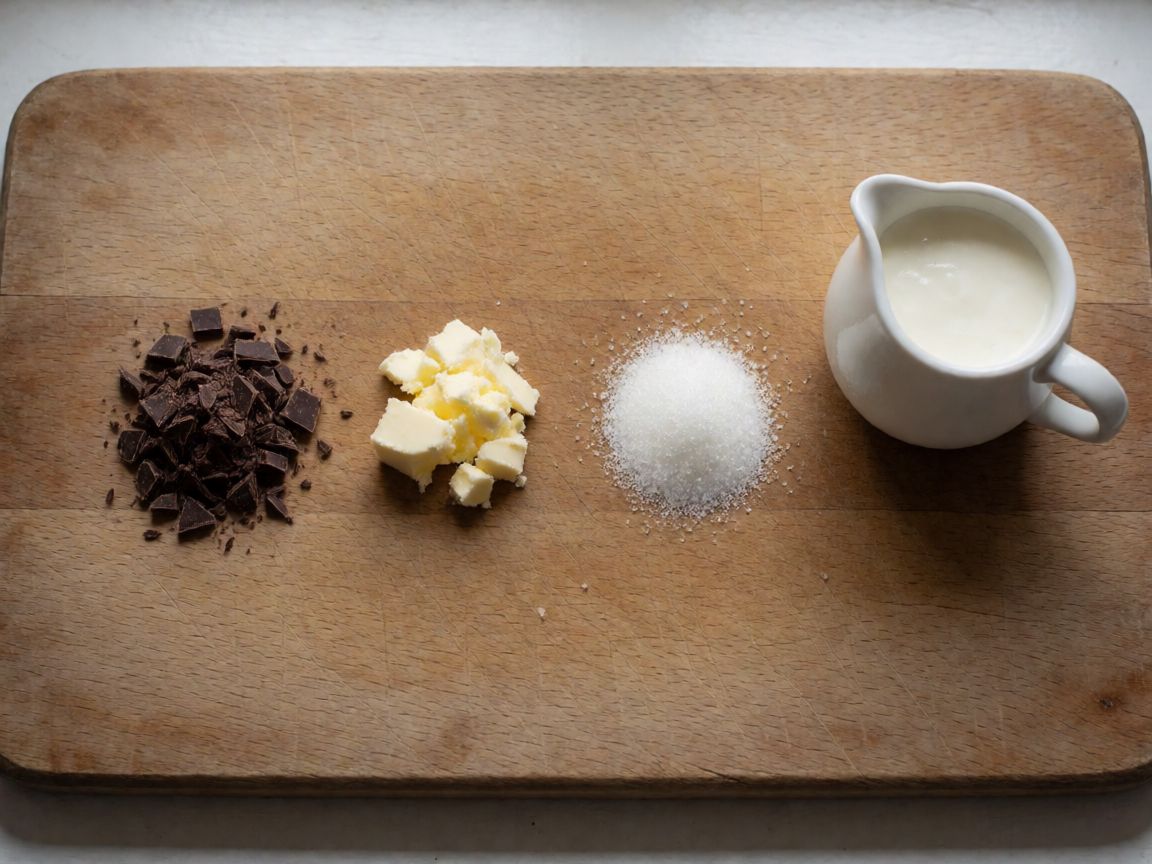
- Dark chocolate to taste
- 10 g Butter
- 30 g Caster sugar
- 300 g Double cream




Steps
Melt the dark chocolate and butter in a bain-marie (double boiler).
Whip the sugar with the cream until light and fluffy.
Gently fold the whipped cream into the chocolate-butter mixture, taking care that the chocolate is not too hot.
Pipe the mousse into clear glasses using a piping bag and serve immediately.
This is mousse for people who'd rather not whisk raw egg into pudding — a French bistro cheat where whipped cream does the job egg whites usually do: trap air, hold it, give you something that's neither liquid nor solid. Two glasses, fifteen minutes of actual work, and then the fridge does the rest, whatever the "serve immediately" at the bottom of the method says.
What decides whether this comes together or collapses into chocolate soup is one thing you can't read off a dial: the temperature of the melted chocolate when it meets the whipped cream. Too hot, and it melts the air straight back out of the cream before you've finished folding — you end up with something that pours rather than holds a shape. Too cold, and the chocolate has already started to firm up and seizes into little hard flecks the moment cream touches it. The window you want is somewhere you'd describe as warm bathwater, not tea. Touch the bowl with the back of your finger — if it's uncomfortable to hold, wait.
Some say real mousse needs egg, that cream is a shortcut and a lesser thing. No — it's a different mechanism doing the same job. Egg gives volume through protein unfolding and setting around air bubbles; whipped cream gives volume through fat globules clumping around air bubbles it's whipped into. Both trap air in a structure that then firms up as it cools. What you lose going the cream route is a touch of that silky, slightly dense weight eggs give; what you gain is no raw yolk to worry about and no tempering over a bain-marie that can scramble if your attention wanders.
Start with the chocolate, since it's the one ingredient the recipe trusts you to judge for yourself — "to taste." That's not vagueness, it's honesty: there's no fixed gram count because the result depends on the cocoa solid percentage, not the weight. A dark chocolate at 70% gives you a firmer set and a proper bitter edge against all that cream; something at 54% gives a softer, sweeter mousse that needs less sugar in the cream to balance it. Don't reach for milk chocolate here — not enough cocoa butter in it to set anything, and too much sugar already, you'll end up with a cream that never quite becomes a mousse. If you're choosing between two bars in a UK supermarket, read the cocoa solids on the label, not the price.
The 10g of butter is doing two jobs, not one. It adds fat that thins the melted chocolate so it folds into the cream without fighting it, and it gives the set mousse a slight shine and a softer bite instead of chocolate's natural tendency to go hard and snap when it's cold. Any fat with no flavour of its own and enough softness at fridge temperature will do the same job — a flavourless coconut oil is the nearest substitute if you're out of butter, though you lose a little of that dairy roundness. Skip it altogether and the mousse sets harder, more like a thin bar of chocolate than a spoonable one — not wrong, just a different texture, worth knowing before you decide it's failed.
The bain-marie exists for one reason: chocolate seizes — turns from smooth to grainy and stiff — the instant a drop of water or a wisp of steam gets into it, because the sugar in the chocolate clumps around any moisture it meets. It has nothing much to do with heat on its own; a splash from an overboiling pot ruins chocolate melted at a gentle simmer just as fast as scalding water would. So the water underneath should be at a bare shiver, not a rolling boil that throws steam up at the bowl, and the bowl itself should sit above the water, not in it. If you don't own a proper double boiler, a heatproof bowl set over a pan with a couple of centimetres of water works — just keep the bowl's base clear of the water and keep the heat low enough that you can hold your hand near the pan without flinching.
Double cream is the right call for this and not an accident — at roughly 48% fat, UK double cream whips to a stable structure that can carry the chocolate's weight without collapsing, which is exactly what single cream or whipping cream, lower in fat, can't reliably do. Whip it with the sugar to soft peaks, not stiff — if it stands up in sharp points before it meets the chocolate, it's already lost some elasticity and will deflate rather than fold smoothly when you combine the two. The sugar isn't just sweetening the cream; dissolved sugar also stabilises the foam, which is part of why you whip it in rather than add it afterwards.
When you fold, use a spatula and a scooping, turning motion — under, over, turn the bowl — not a stirring one. Stirring shears the air bubbles you've just spent effort whipping into the cream; folding moves the mixture around those bubbles instead of through them. This single habit is the difference between a mousse that holds its shape in the glass and one that slumps — not the recipe, not the ingredients, just how your hand moves the spatula.
Piping is there for looks, not mechanism — a spoon into the glass does exactly the same job if you don't own a piping bag, just less neatly. What you can't skip is the time afterwards: give it at least that twenty minutes in the fridge before anyone's spoon goes near it, longer if your kitchen runs warm. Two glasses, one dessert, and the only real cost here is cream and patience — which, around a Sunday roast table, is usually the thing people have least of and need most.