
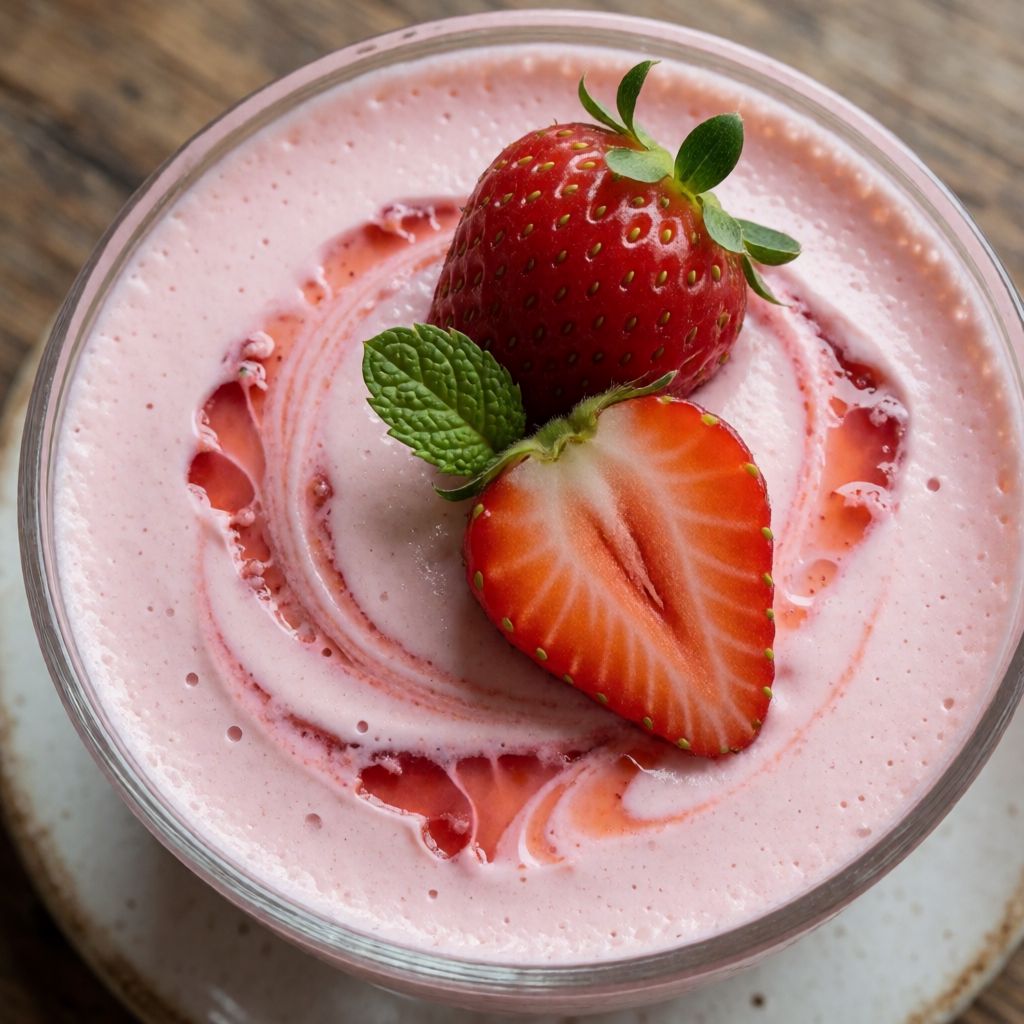
 AI photo
Strawberry Mousse
A light strawberry mousse made with whipped cream, sweetened and set with gelatine.
Labels are worked out automatically from the ingredients and can be wrong. Check the packaging if it matters to you.
Ingredients
- 300 g Strawberries
- 80 g Caster Sugar
- 400 ml Double Cream
- 4 g Gelatine
- 4 tbsp Water





For decoration
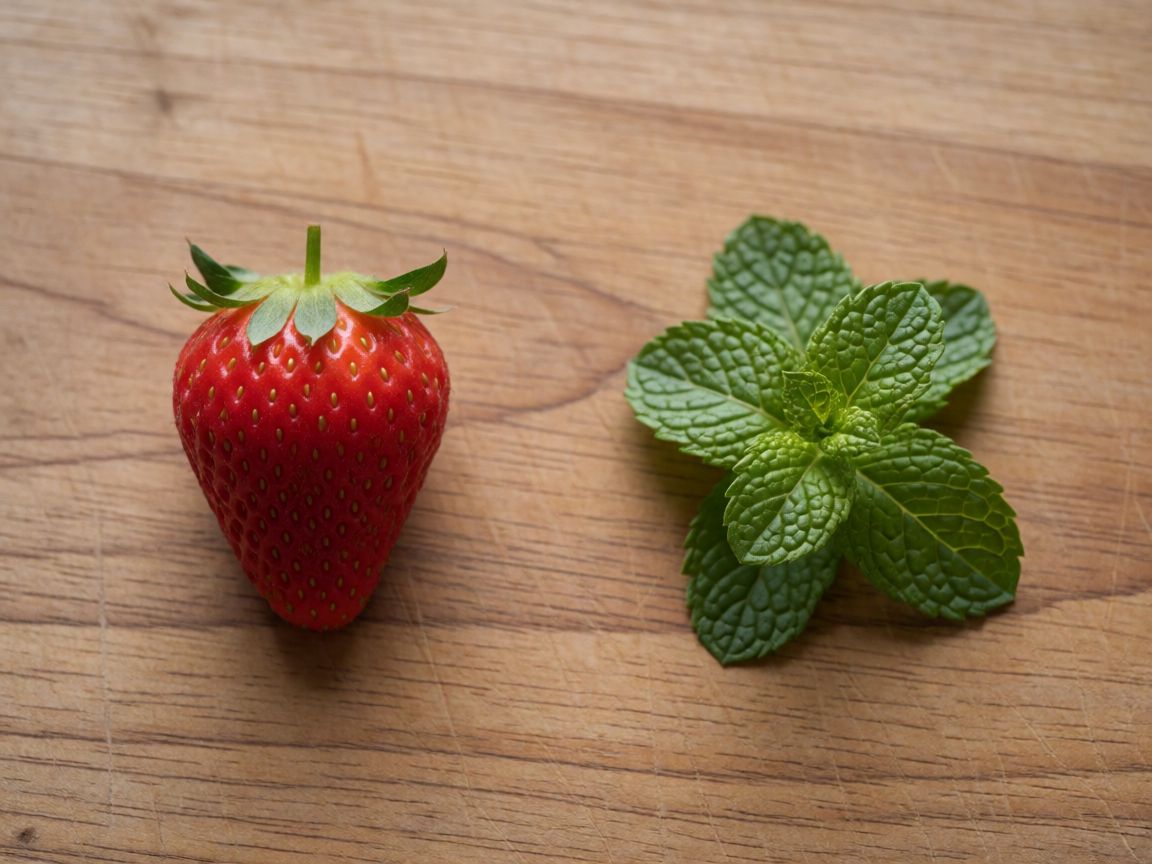
- Strawberries for decoration
- Mint

Steps
Soak the gelatine in cold water.
Clean the strawberries, removing the stalks, cut them into small pieces and blend with a hand blender until smooth.
In a small saucepan, gently warm 4 tbsp of water, squeeze the softened gelatine with your hands and dissolve it in the warm water.
Add the gelatine-water mixture to the blended strawberries and mix well.
Whip the cream in a chilled bowl and fold it into the strawberry mixture in several additions, stirring gently from the bottom up.
Divide the mousse among serving glasses.
Place in the refrigerator.
60 min
A strawberry mousse is three separate structures made to behave as one: air whipped into fat, sugar dissolved into fruit water, and a thin net of gelatine holding the whole thing up so it doesn't slump back into juice and cream. Nothing here gets cooked in the usual sense — there's no stove work beyond warming a few spoonfuls of water — and that's the point. Heat is the enemy of a mousse, not its friend. Cook the strawberries and you get jam, with jam's dulled colour and jam's set. Leave them raw, blended fine, and you keep the brightness and the actual taste of strawberry, not strawberry-that's-been-through-a-pan.
What decides whether this works is temperature discipline at exactly three moments: the gelatine goes into cold water to swell slowly and evenly (not hot — hot water cooks the outside of the granules into a skin and the middle never hydrates, so it won't ever dissolve properly later), it gets dissolved in water that's warm, not boiling (gelatine is a protein chain, and above a certain heat that chain breaks apart — your gelling power along with it, so you'd end up with soup in a glass however long you chill it), and the cream is whipped cold, because fat only traps air well while it's firm; warm cream slides instead of holding shape, and overwhipped cream tips straight past "holding air" into butter with a thin whey weeping out.
Strawberries are doing two jobs — flavour and the water the gelatine will eventually grip. Use them ripe, which in Britain means short-lived June-to-July fruit at its best, not the pale, hard ones sold most of the year that taste mostly of fridge. Frozen strawberries work, but thaw and drain them first: freezing bursts the cell walls and they release far more water than fresh fruit does, and that extra water dilutes your gelatine ratio — the same amount of gelatine now has more liquid to hold, so the mousse sets softer than it should. If you want the mousse glass-smooth with no seed texture at all, push the blended purée through a sieve; it's an extra five minutes for a finish that matters more in a clear glass than in a bowl, because here you can see straight through it.
Caster sugar is chosen for one reason: it's fine enough to dissolve into a cold purée without any heat. Ordinary granulated sugar will mostly dissolve too, just more slowly and with a slightly grainier bite if you're impatient; icing sugar is the wrong tool, because the added cornflour in it is there to stop icing sugar clumping, not to behave itself in a dairy-and-fruit mix, and it can leave a faint starchy edge. If strawberries run sour early in the season, taste the purée before you commit the full 80 g — sugar here is seasoning, not just sweetness, and a slightly sour mousse under whipped cream tastes flat, not interesting.
Double cream is a specifically British thing, sitting around 48% fat, which is high enough to whip to soft peaks and still hold them once gelatine and fruit are folded in. That high fat content is exactly why the bowl needs to be cold and the cream needs to go in cold from the fridge, not room temperature — fat whips by trapping air in a web of tiny fat crystals, and crystals only form and hold when the fat is cool enough to be semi-solid. If all you've got is regular whipping cream (lower fat, around 35%), it'll still whip, just to a softer peak, and the finished mousse will be a touch less firm — not wrong, just gentler. Don't reach for single cream or anything under about 35% fat; it won't hold air at all, it'll just go to liquid again under the whisk.
Gelatine is the scaffolding, and it's worth knowing what it actually does: it's a protein that, dissolved and then cooled, links up into a loose net that traps the water and fat around it so the whole mousse stands up in a glass instead of pooling. Powdered or leaf gelatine both work the same way — bloom (soak) in cold water first so the granules swell evenly, then dissolve gently in warm water, never boiling, for the reason above. If you're using leaf gelatine instead of powder, match it by weight and the method is identical: cold soak, then warm dissolve. A vegetarian pectin-based setting agent can replace it, but the texture changes — pectin sets firmer and less creamy, closer to a jelly than a mousse, so treat it as a different dessert wearing the same name, not a straight swap.
Serving it in glasses rather than turning it out of a mould isn't a style choice so much as it saving you a problem: unmoulding a cream-and-gelatine mousse at home, without a proper mould and a fast dunk in warm water, is how mousses end up half on the plate and half still in the dish. A glass sidesteps that entirely — you make it in the vessel you'll serve it in, no second act of nerve required, which suits a kitchen that's a cooker and a fridge rather than a dessert section. Decorate with fresh strawberry and mint right before serving, not before the fridge, since mint especially goes limp and strawberry on top starts weeping its own juice onto the set surface if it sits too long. For four people this is four modest glasses, not four generous ones — it's rich with that much cream, and a small glass finished happily beats a large one abandoned half-eaten.