
 AI photo
Mushroom Focaccia
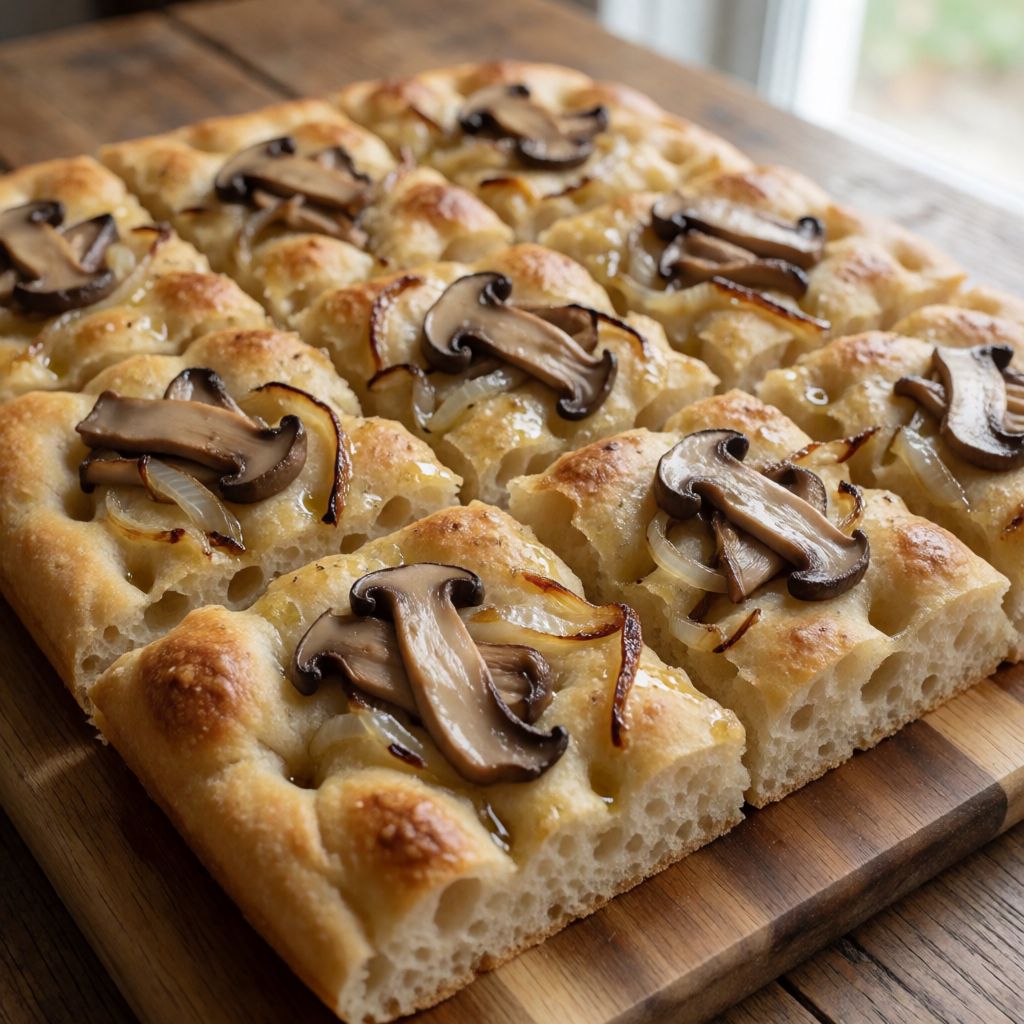
A soft Italian-style focaccia topped with caramelised onions, mushrooms and olives.
Labels are worked out automatically from the ingredients and can be wrong. Check the packaging if it matters to you.
Ingredients
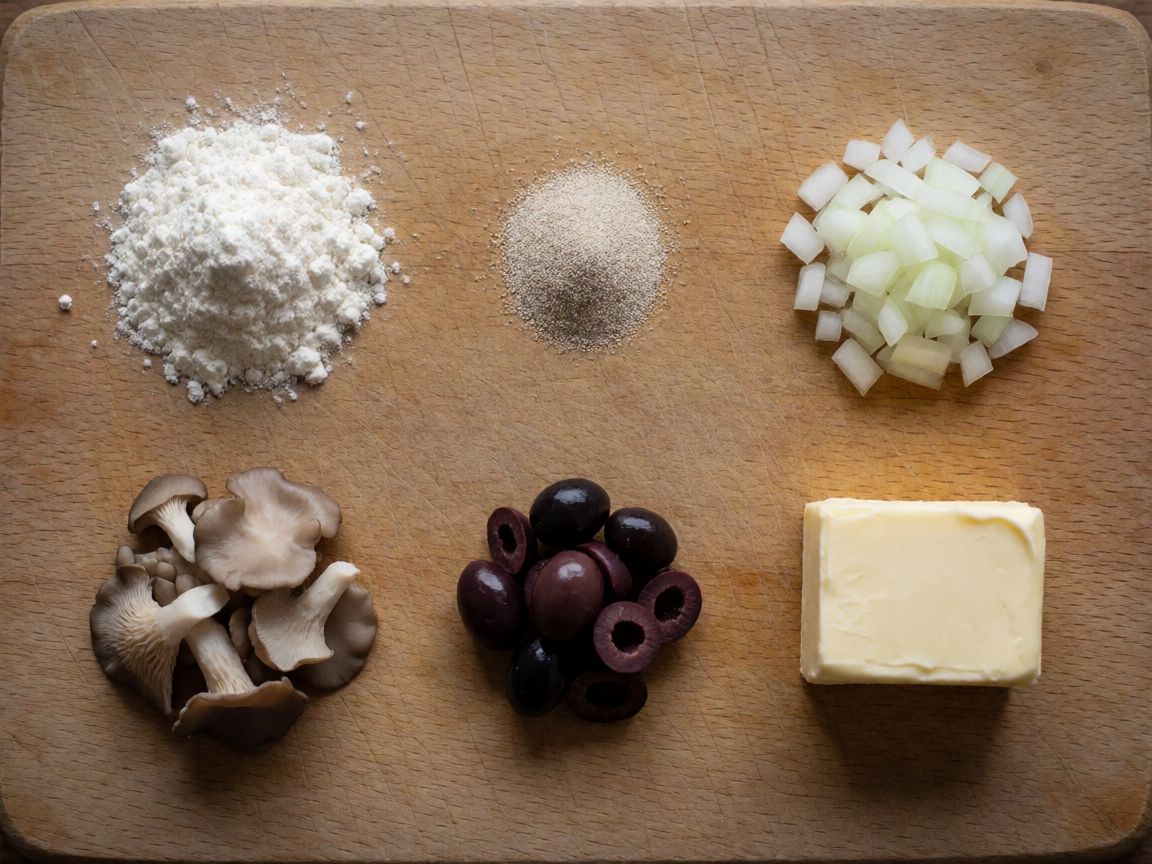
- 300 g Flour
- 20 g Yeast
- 4 tbsp Olive oil
- Salt to taste
- 320 g Onion
- 120 g Oyster mushrooms
- 40 g Black olives, pitted
- 1 pcs Butter a knob
- Black pepper to taste






Steps
Tip the flour onto the worktop. Dissolve the yeast in warm water and pour it into the flour, then add the olive oil and salt. Knead by hand until the dough is soft.
Shape the dough into a ball, cover with a dry towel and leave to rise for 2 hours.
120 minSlice the onion thinly and fry it in a pan with butter and salt until golden.
Clean the oyster mushrooms and boil them in water for about 10 minutes.
10 minDrain, cut the mushrooms into pieces and fry them in a pan with olive oil, salt and black pepper.
Roll out the dough on a floured baking tray, then top with the sliced olives, mushrooms and onion.
Bake in the oven at 200°C for at least 25 minutes.
25 min
Focaccia is bread that's been told to lie down and relax — a loose, oil-heavy dough you don't shape so much as coax flat, then dress with whatever's sweet and whatever's salty. Here that's onion cooked down into something closer to jam, oyster mushrooms squeezed dry of their water first, and black olives doing the job salt always does: waking the other two up. It's not a Sunday-roast dish, it's a Tuesday-lunch dish, or something you cut into squares for a picnic.
What decides whether it works has nothing to do with the toppings. It's the dough's rise, and it's whether you dried the mushrooms properly before they ever touched the tray. Get the first wrong and you've baked a flatbread with no lift, dense as a doorstop. Get the second wrong and the middle of your focaccia goes soggy under the mushrooms while the edges crisp — because mushrooms are mostly water held in a loose net of cells, and if you fry them raw, straight into a hot pan, they don't brown, they steam in their own juice and that juice ends up in your dough.
Flour and yeast are the whole argument here, so start with them. Twenty grams against three hundred is a generous dose — this reads as fresh yeast, the pale beige block, not the little dried granules. If that's what you've got, use it; if you only have dried, a seventh of that weight does the same job, because fresh yeast is mostly water and dried is concentrated. Either way, the yeast doesn't care what you believe about it — it eats sugar, breathes out carbon dioxide, and that gas is what makes the dough rise. Dissolving it in warm (not hot — hot kills it, that's not a myth, it's just what heat does to a living thing) water before it meets the flour just gives it a head start and spreads it evenly, instead of leaving dead spots where a dry granule never woke up.
The two-hour rise is a lower bound, not a deadline. You're not waiting for a clock, you're waiting for the dough to double and for a poked finger to leave a dent that springs back slowly, not instantly, not not at all. A cold kitchen will ask for longer. Don't chase it with more yeast or a hotter spot — that buys you volume but not flavour, because the slow stretching of gluten strands around trapped gas is also when the dough develops its taste. Patience is the actual ingredient in this step, not an inconvenience around it.
Olive oil does two separate jobs and that's worth knowing, because it means you can substitute differently for each. In the dough, it's there to soften the crumb and stop the gluten from going tough and chewy — any neutral oil with no smell of its own would do the structural job, sunflower, rapeseed, but you'd lose the faint bitterness olive oil leaves in the crust, which is really the point of making focaccia and not plain bread. In the pan, frying the mushrooms, it's there to carry heat evenly and it can be whichever olive oil you have, since by then its flavour is joining a crowd, not standing alone.
The oyster mushrooms get boiled for about ten minutes before they ever see a hot pan, and that step is there to solve a problem you won't see until it's too late: these mushrooms are soft, water-filled structures, and frying them straight from raw gives you grey, weeping slices that never brown, because all the pan's heat goes into boiling off water rather than crisping a surface. A short boil firms the protein, drives off the worst of that water in a pan of water instead of in your dough, and leaves you with pieces that will actually take colour and crisp at the edges when they hit the hot oil afterwards. If oyster mushrooms aren't to hand, button or chestnut mushrooms work, but skip the pre-boil for those — they hold less water to begin with and the extra step would just toughen them.
Butter for the onion, where the dough and the mushrooms both use olive oil, isn't an inconsistency — it's because butter caramelises differently. Its milk solids brown faster and give a rounder, slightly nutty note that plain oil can't, which is why it suits the slow sweetening of onion better than it would suit a quick mushroom fry. If you're avoiding dairy, more olive oil will cook the onion fine; you'll just lose that particular roundness, and there's no way round that except to accept the trade.
Black olives and a 200°C oven close the argument. The olives are there for salt and a little bitterness, to stop the whole thing tasting like sweet onion and bread and nothing else — any salty, briny thing earns its place here, capers at a pinch, though they're sharper and want using with a lighter hand. As for the oven: domestic dials lie, often by ten or twenty degrees either way, so treat 200°C as a starting instruction and the crust itself as the real instruction — you're done when the top has gone gold-brown and firm, not when a timer says twenty-five minutes. Twenty-five minutes is where you start checking, not where you stop.