
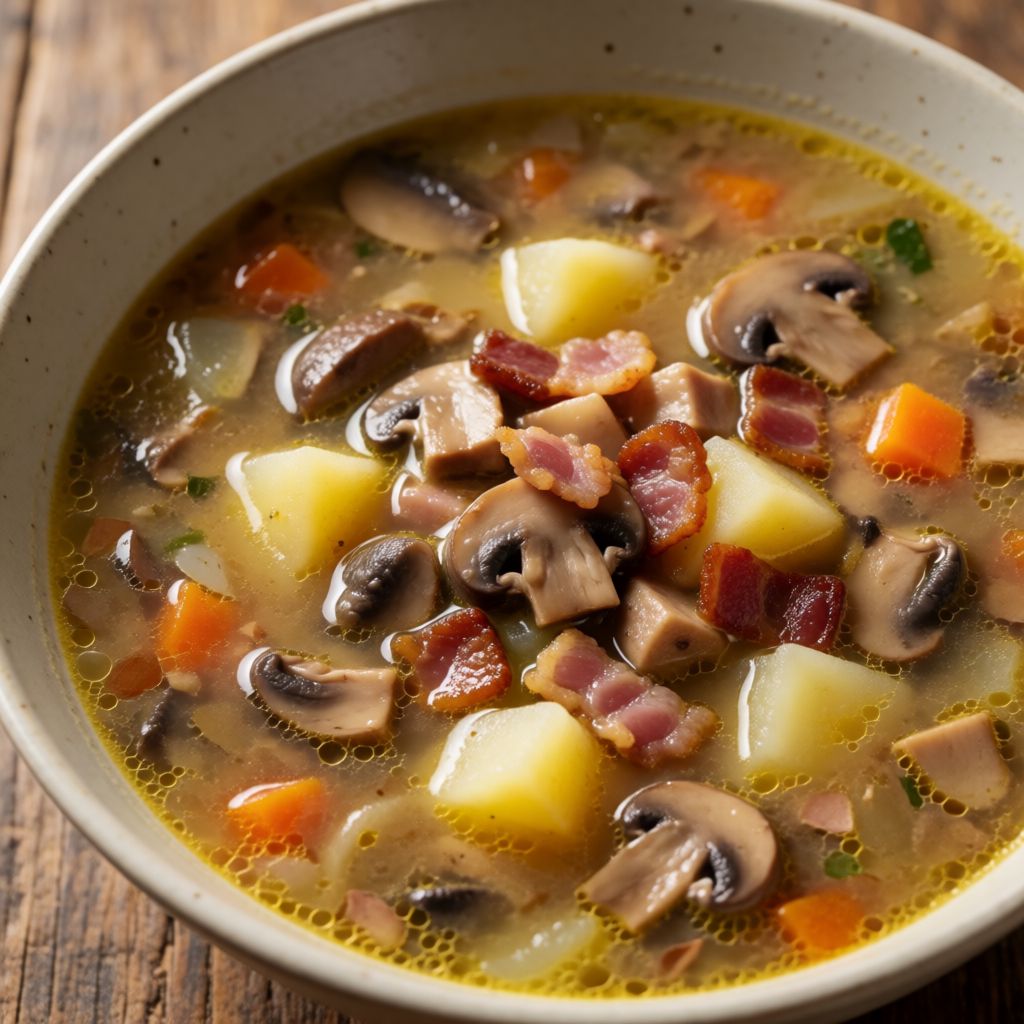
 AI photo
Quick Mushroom Soup
A quick, comforting mushroom soup with potato, ready in no time.
Labels are worked out automatically from the ingredients and can be wrong. Check the packaging if it matters to you.
Ingredients
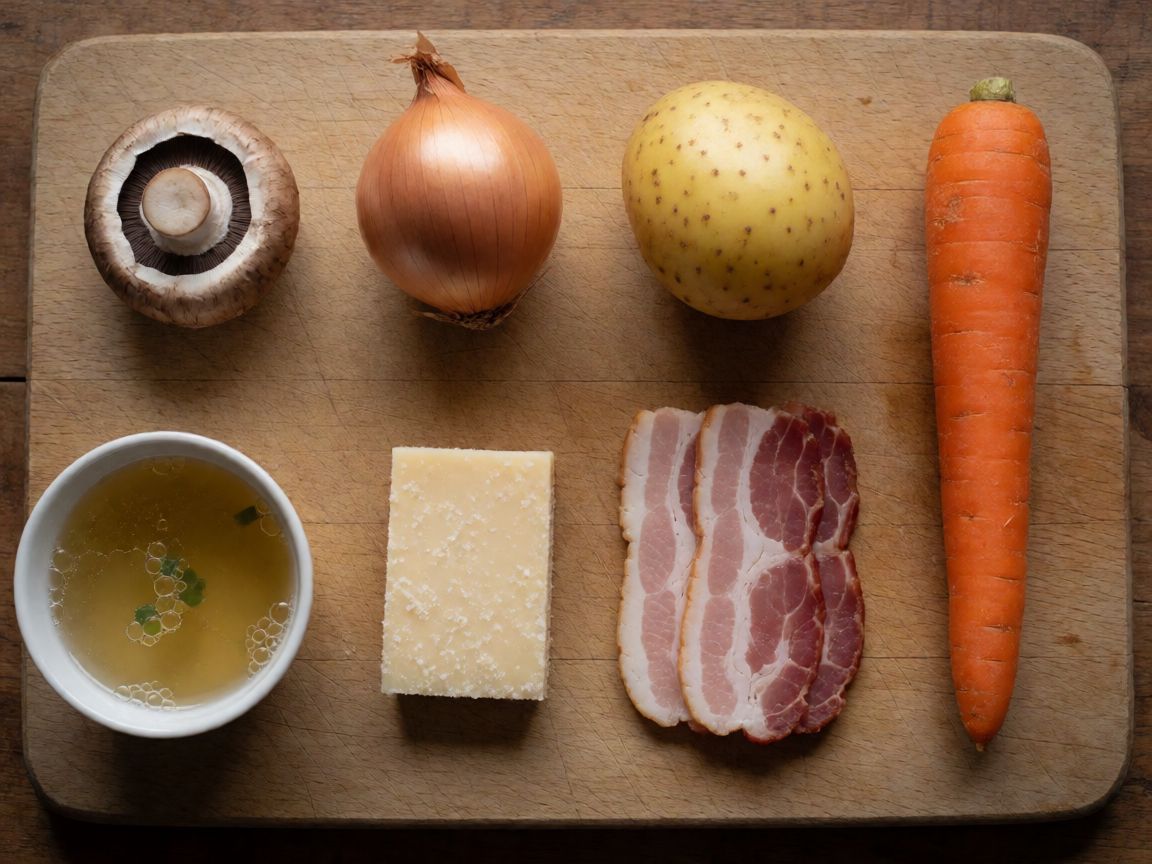
- 1 package Mushrooms
- 0.5 pcs Onion
- Vegetable oil to taste
- 1 pcs Potato medium
- 1 pcs Carrot optional
- 50 g Bacon optional
- Vegetable stock to taste, optional
- Salt to taste
- Parmesan to taste, or thick yogurt








Steps
Chop the onion (and carrot, if using) and fry in a little oil.
Add the finely chopped mushrooms and fry.
10 minAdd the potato: half whole, half finely chopped, then add the bacon, vegetable stock and salt. Cook until the potato is soft.
Mash the whole half of the potato, or blend everything with a hand blender.
Serve topped with parmesan or thick yogurt.
Call this a quick soup and people hear "lazy soup." It isn't. What makes it quick is a trick, not a shortcut: instead of building flavour the old way — dried mushrooms soaked for hours, a stock simmered down to nothing — you fry fresh mushrooms hard, in their own juice, until that juice is gone. Mushrooms are almost all water. Frying them in an open pan drives that water out as steam instead of trapping it as broth, and what's left behind is concentrated mushroom, browned at the edges. That's the whole engine of the dish. Skip it — add your stock too early, before the mushrooms have shrunk and darkened — and you get grey slices floating in mushroom-scented water. Flavour, not flavoured water. There's a difference, and your tongue knows it even when your eye doesn't.
The second piece of engineering is the potato, and it's the clever one. Half of it goes in whole, half diced small. The diced half cooks to soft little chunks that give the soup something to chew on. The whole half gets mashed back in at the end, and its starch is what thickens the pot — no flour, no cream, no roux standing guard over a lump-free sauce. Some say a soup needs cream to feel thick and finished. No — because starch released from a mashed potato does the same job, for free, with ingredients already in the pan.
Mushrooms: any pale, farmed mushroom from a supermarket tray works — button, chestnut, whatever's in the "package" you bought, since none of them are strong enough on their own to need frying gently. Chestnut mushrooms (the slightly brown ones, sometimes sold as cremini) give a bit more savour than white button for no extra money or effort, so buy those if the price is the same. You don't need anything wild or dried here — that's a different soup, built slowly, with a different economics behind it: dried porcini are expensive because someone picked and dried them by hand, and you're paying for that labour, not for flavour you can't get another way.
Onion: half an onion is deliberate, not stinginess — this is a soup for four, made on a weeknight, not a pot for a crowd. Fry it before the mushrooms go in, because onion needs longer to soften and sweeten than mushrooms need to fry, and if you add it after, you'll either undercook the onion or scorch the mushrooms waiting for it. If you're using carrot, it goes in at the same moment as the onion, for the same reason — carrot that goes in late stays raw and squeaky in the finished soup, which is the actual cause of that occasional hard little orange disc you sometimes find in soup and wonder about.
Oil: the rule is simple — anything with no smell of its own, so the mushroom smell is the one you taste. A flavourless vegetable or sunflower oil does this. Olive oil doesn't; it has an opinion, and in a soup this quiet, that opinion shows.
Potato: choose a floury variety — Maris Piper is the easy one to find — because floury potatoes break down into mash willingly, which is exactly what you want from the half that gets crushed back into the pot. A waxy potato resists mashing and gives you lumps, which is the usual complaint people have with "blended but still gritty" soups — the potato, not the blender, was the problem. One potato does both jobs here; you're not buying two kinds for one soup.
Bacon is there for fat and salt that carries further than oil alone — the rendered fat coats the mushrooms and onion with a smokiness that plain oil can't give. It's optional because the soup works without it; if you leave it out, you're trading a smoky note for a cleaner mushroom one, not losing the soup. No bacon in the house and you still want that savoury weight — a splash of soy sauce or a knob of butter stirred in near the end gets you partway there, though neither is bacon and you shouldn't pretend otherwise.
Stock is marked optional for a reason worth knowing: if the mushrooms were fried properly — water driven off, not stewed in — the pan itself has already built most of the flavour, and stock is topping up, not rescuing. If a Sunday roast happened recently and there's stock from the bones sitting in the freezer, that's the stock to use; it costs nothing extra and tastes better than a cube, which is really just salt and dried vegetable standing in for the real thing because most households don't keep bones around long enough to use them.
Parmesan or thick yogurt on top are doing the same job from two different traditions — a hard salty cheese finishing a soup the Italian way, or a spoon of soured dairy finishing it the way you'd find across Eastern Europe, where smetana does for soup what cream does in a French kitchen. "Thick" matters in the yogurt — Greek-style or a yogurt that's been strained holds its shape on a spoonful of hot soup instead of dissolving into it on contact, which is the difference between a dollop and a disappointment.
Last thing, and it's not an ingredient you can buy: give the mushroom-frying stage the time it needs even though the dish is called quick. Ten minutes is where you start looking, not where you stop. Rush it and you've made mushroom-water soup by another name.