
 AI photo
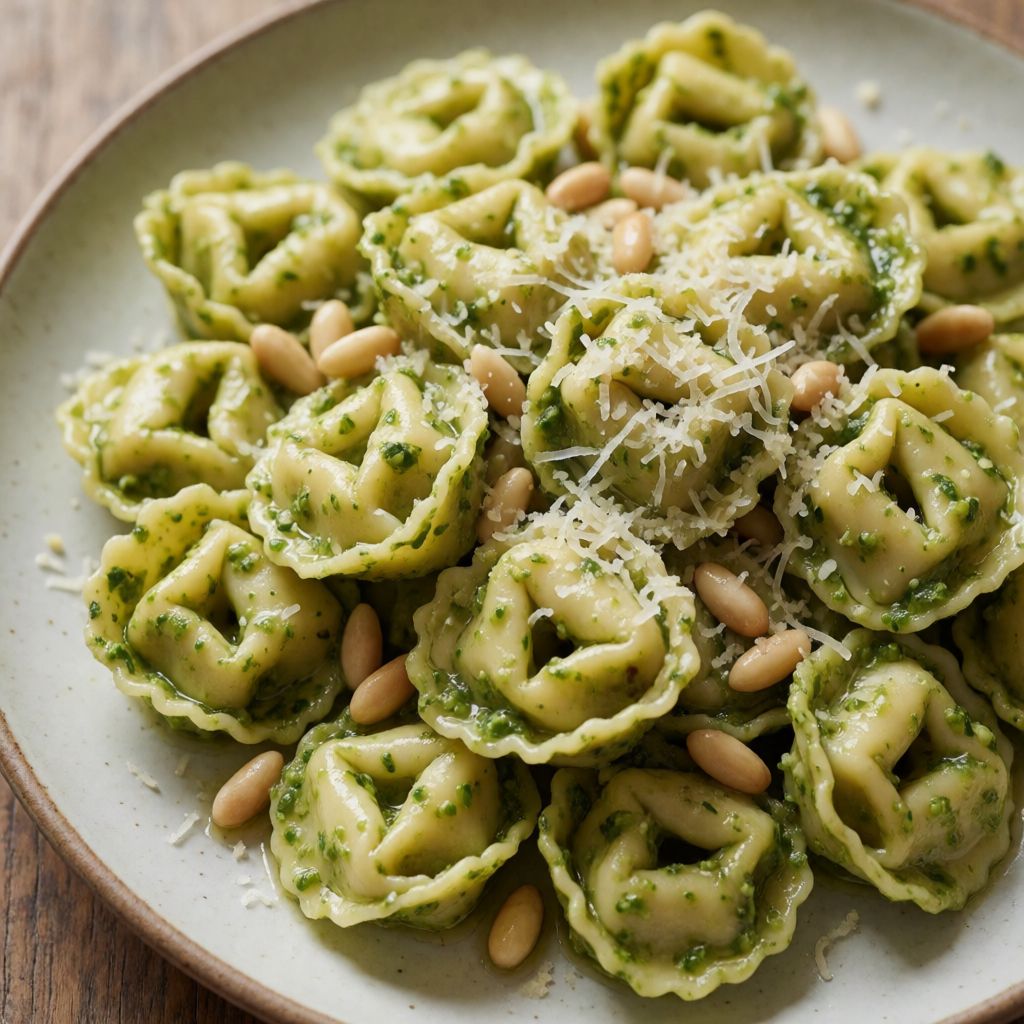
Tortellini with Pesto
Tortellini tossed with a fresh basil pesto, made by hand in a mortar or quickly in a blender.
Labels are worked out automatically from the ingredients and can be wrong. Check the packaging if it matters to you.
Ingredients
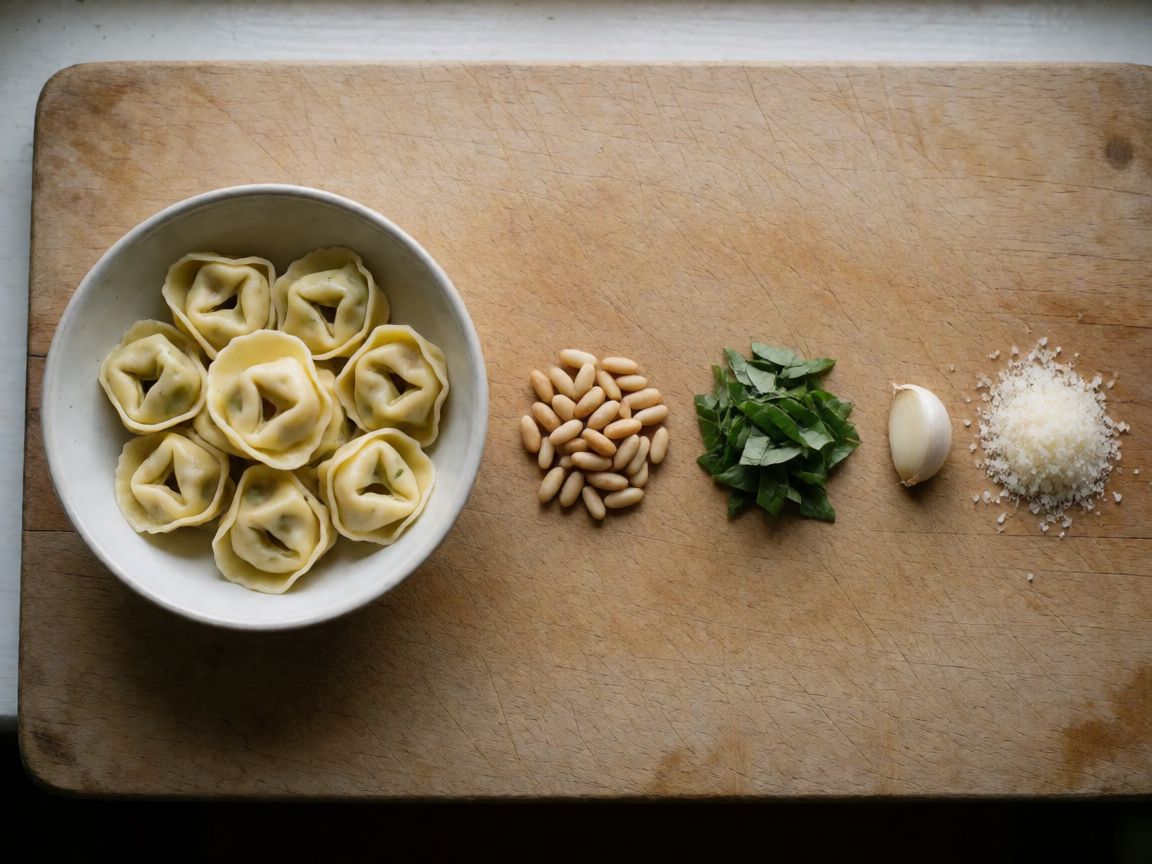







Steps
Pour water into a large pot and bring to the boil. Once boiling, add salt, wait for it to return to the boil, then add the tortellini.
Cook the tortellini until done.
Rinse the basil in cold water and let the leaves dry on a towel.
Transfer the basil to a blender or mortar — both must be completely dry.
If using a mortar: add salt and the garlic clove and crush with a pestle, then gradually add the Parmesan, continuing to grind until smooth.
Pour in the olive oil in a thin stream until the pesto becomes creamy and smooth.
Season with salt and black pepper and mix with a wooden spoon.
If using a blender: put the basil, garlic, salt and olive oil into the bowl and blend until smooth.
Transfer the sauce to a bowl, add the Parmesan, and blend for a few more minutes.
Season with salt and black pepper, taking care not to over-blend so the pesto doesn't turn foamy.
Drain the cooked tortellini and toss with the prepared pesto. Serve hot.
This is two mechanisms running side by side: a pot of water turning stuffed pasta from leathery to plump, and a sauce that's built to never see heat at all. Get the pesto's heat-avoidance right and the dish tastes of a garden in August. Let it warm through on the way to the plate and you get something greyish that tastes of boiled grass.
Pesto comes from pestare — "to crush," not blend, not cook. In old Liguria, where firewood was scarce and basil terraces plentiful, crushing cold was the cheap way to turn a summer herb into a sauce that would keep the week in a jar of oil. That's the whole tradition, no magic in it: economy of fuel, not reverence.
Some say a food processor ruins pesto and only a stone mortar will do. No — the mortar isn't sacred, it's just slow and cool. What actually ruins pesto is a blade spinning fast enough, long enough, to heat the leaves through friction. Heat turns chlorophyll to pheophytin — bright green goes drab khaki — and the basil's perfume, which is mostly volatile oil, cooks straight off into nothing. Pulse in short bursts and let the bowl rest between them, and a blender does exactly what a pestle does, just faster.
The other thing that decides this dish: dry. Dry basil, dry mortar, dry blender bowl. Water left clinging to a leaf dilutes the oil's grip on the crushed cell walls, so instead of a cream you get a sauce that splits — and wet basil bruises and blackens under the pestle far faster than dry does. Fifteen minutes on a towel isn't fussiness, it's the gap between green and grey on the plate.
Basil itself — pick young, smaller leaves where you can. The big ones low on the plant are tougher and taste more bitter, almost medicinal. There's no real substitute for basil's own smell, but if you're a handful short, flat parsley with a few rocket leaves thrown in gives you green and a peppery heat — not pesto in the strict sense, but it won't let you down either.
Pine nuts are there for fat and a faint resinous sweetness that rounds the garlic off. They're also priced in a UK supermarket like a small luxury, and that's not greed — they're still hand-harvested from pine cones that take two or three years to mature, nobody's mechanised it. If the price stops you, walnuts or blanched almonds give the same fat-bound texture with a flavour of their own instead of pine's; cashews make it milder and creamier. The recipe leaves them raw, not toasted — toasting is lovely elsewhere, but here it would push the sauce toward brown and bitter, which is exactly what you're trying to avoid.
Garlic goes in raw, so its bite is sharpest the moment you make it and softens over the next hour as the sulphur compounds settle into the oil. That's patience doing its job — give the finished pesto even twenty minutes before it meets the pasta and it tastes rounder, less like a punch to the nose.
Parmesan isn't a garnish here, it's structure: its salt and its fine crystalline grit — the crunch you feel in an aged wedge — dissolve into the oil and thicken the sauce without anything being cooked. Buy a block and grate it yourself; the pre-grated tub kind is dusted with anti-caking starch that stops it melting properly into the fat, so the pesto stays grainy instead of silky. Pecorino does the same job with more bite if you want it saltier; in a real pinch a mature hard cheddar will melt into the oil the same way, even if the flavour wanders off-script.
Olive oil is the one place in this dish where you actually want flavour, not a blank canvas — it's half the sauce. Reach for an extra virgin with some pepper or bitterness of its own; a bland refined oil emulsifies fine but leaves the pesto one-note. Without olive oil, a mild rapeseed oil binds the sauce just as well, you just lose that peppery catch at the back of the throat that a good olive oil gives.
And the tortellini: check it rather than trust the clock, and don't trust the listed cook time either — most of those minutes are waiting, not cooking: water coming to the boil, basil drying on a towel, garlic mellowing in the bowl. Patience is doing the work there, it just doesn't show up as an ingredient on the label. The pasta's done when it floats and the skin's gone from matte to glossy, meaning the dough's hydrated through and the filling's warmed. Fresh tortellini from the chiller cooks in a couple of minutes once the water's properly rolling; frozen takes longer, and you shouldn't rush it by cranking the heat — a hard boil knocks the parcels together and splits the seams before the middle's even warm. Once it's drained, toss it with the pesto off the heat: the pasta's own warmth is enough to loosen the oil and soften the cheese into it. Put the pan back on the hob to "help" and you'll cook the basil after all the trouble you took keeping it raw.