
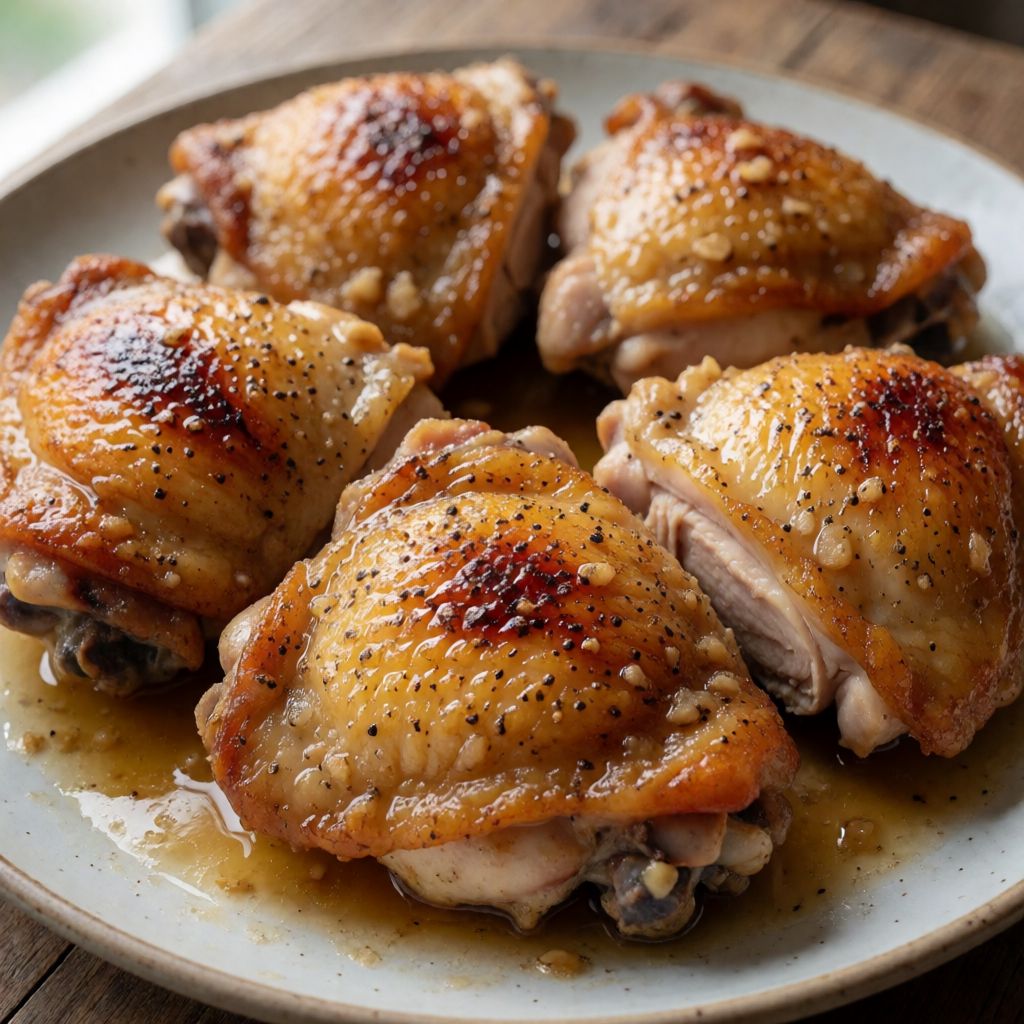
 AI photo
Pan-Fried Chicken Thighs
Juicy chicken thighs marinated with garlic and rosemary, then pan-fried and finished with white wine.
Ingredients
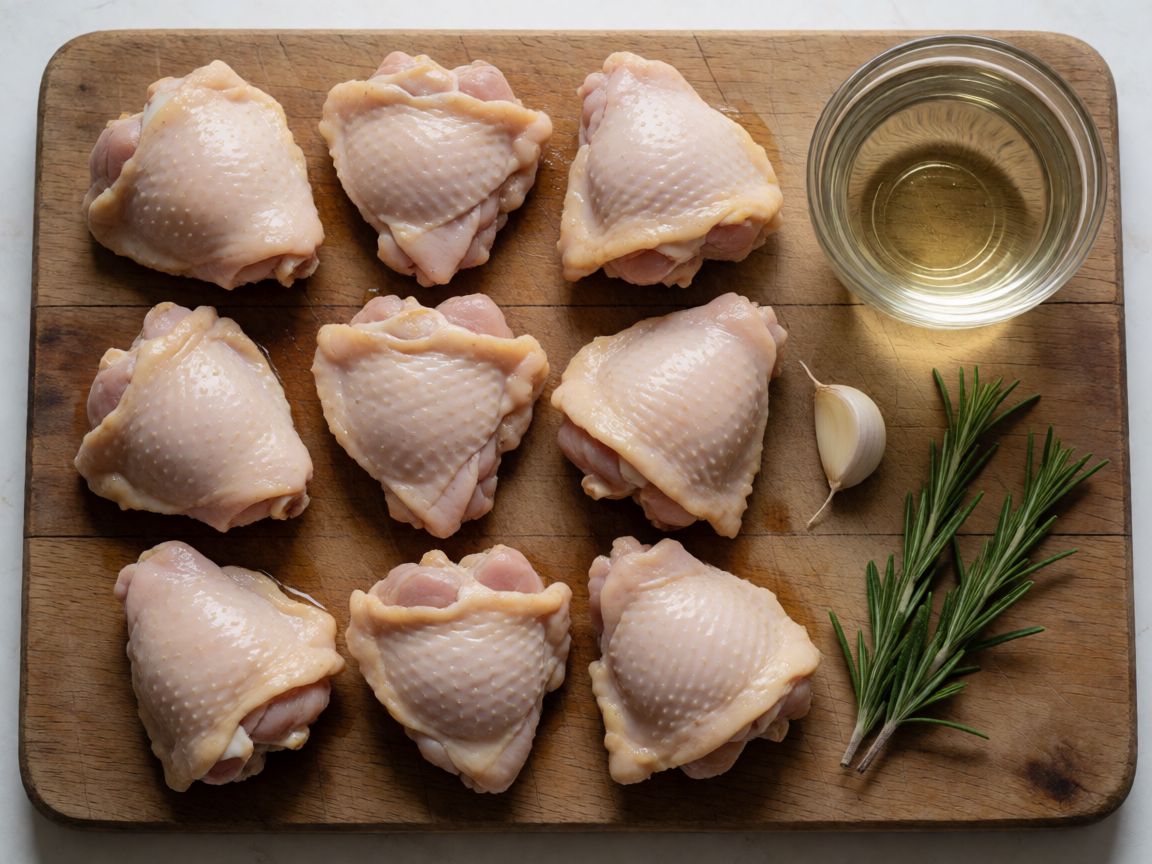
- 8-10 pcs Chicken thighs
- 40 g Olive oil
- 1 clove Garlic optional
- Salt to taste
- Black pepper to taste
- 250 ml White wine
- 2 pcs Rosemary







Steps
Place the chicken thighs in a bowl, keeping the skin on.
Crush the garlic, add the rosemary, black pepper, salt and olive oil, then rub the mixture well into the meat.
Leave to marinate.
35 minHeat a non-stick frying pan over high heat, add the garlic, then add the chicken thighs.
Fry, turning often, until golden brown.
10 minRemove the garlic, add the white wine, and reduce the heat to medium.
Simmer covered, turning occasionally and topping up with wine if needed.
25 minRemove the lid and increase the heat to evaporate any remaining liquid.
This is a stew with a crust. You brown the thighs hard first, the way you'd brown a Sunday joint before it goes in the oven, and then you let wine and steam do what an oven's slow heat would do — break down the tough bits of a working muscle until they give way. The result sits somewhere between a roast and a braise, done entirely in one pan on the hob, which is the point: not everyone has an oven free on a weeknight, and this gets you the same satisfaction in under an hour.
What decides whether it works is not a clock, it's your eyes and ears at the very start. "High heat" means nothing on its own — what it means is the pan hissing the second the thigh skin touches it, and the skin going from pale to amber-brown, never grey. Grey skin means the pan was lukewarm and the chicken sat there steaming in its own fat instead of frying in it. That's the one mistake that can't be fixed later.
Some say searing seals the juices in. No — meat isn't a bag, heat doesn't weld it shut. What searing actually buys you is flavour: the browned bits on skin and pan floor are sugars and proteins reacting, and that reaction is also what you're about to dissolve into the wine to make your sauce. Skip the hard sear and you get pale meat in thin, flavourless wine. That's the real reason for step five.
Thighs, not breast, and skin left on — that's not fussiness, it's economics and physics both. Thigh is a muscle that works hard on a live bird, so it's full of connective tissue and fat, which is exactly what you want for a long, forgiving cook: breast dries out in the time it takes thigh to turn tender. The skin matters because it's the fat reservoir that bastes the meat as it renders, and it's also the only part of the bird that can go properly crisp — strip it off and you lose both. If all you can get is skinless, thin-pre-cut meat, add a spoon of extra oil to compensate for the fat you're missing, but don't expect the same crust.
Olive oil here is a carrier, not a seasoning in its own right — its job is to pick up the garlic and rosemary and carry that flavour into the meat during the rub, and then to be the medium the chicken browns in. Any oil with no strong smell of its own will do this job; a cheap sunflower or vegetable oil works fine for the frying half, though a splash of good olive oil in the marinade still earns its place because raw, it does carry more flavour than a neutral oil would.
Garlic goes in at two separate moments and for two separate reasons. Crushed into the marinade, it has time to perfume the oil slowly, no heat, no risk. Thrown into the hot pan before the chicken, it's there purely to flavour the fat the meat will fry in — and it comes back out before it burns, because burnt garlic is bitter, sharp, and it will sit in your sauce for the rest of the cook. Some kitchens leave garlic in the pan the whole time for a more of it taste. Don't, here — the pan's too hot too long for that to end well.
White wine is doing the job stock would do in a plain braise, but it brings acid along with the liquid, and that acid is what lifts the browned fond off the pan floor into the sauce, and also what cuts through the fat of the skin so the dish doesn't taste heavy. If you've no wine open, a dry cider or a splash of stock with a squeeze of lemon gets you most of the same effect — liquid plus acid, that's the criterion, not the label on the bottle.
Rosemary is a hard, woody herb precisely because it needs to survive forty-odd minutes near heat without turning bitter or disappearing, which a soft herb like parsley couldn't do. Thyme is the honest substitute if rosemary isn't to hand, same toughness, similar resin.
And the thirty-five minutes of marinating before any heat touches the pan — that's not padding, that's the ingredient people skip because it looks like nothing is happening. Salt needs time to move into meat, not just sit on its surface; cut that time short and you've seasoned the outside of the chicken and left the inside bland, however good your sauce turns out. Eight to ten thighs, bone and skin on, feeds four generously — reckon two each, since what's left after bone and rendered fat is less than it looks on the plate.