
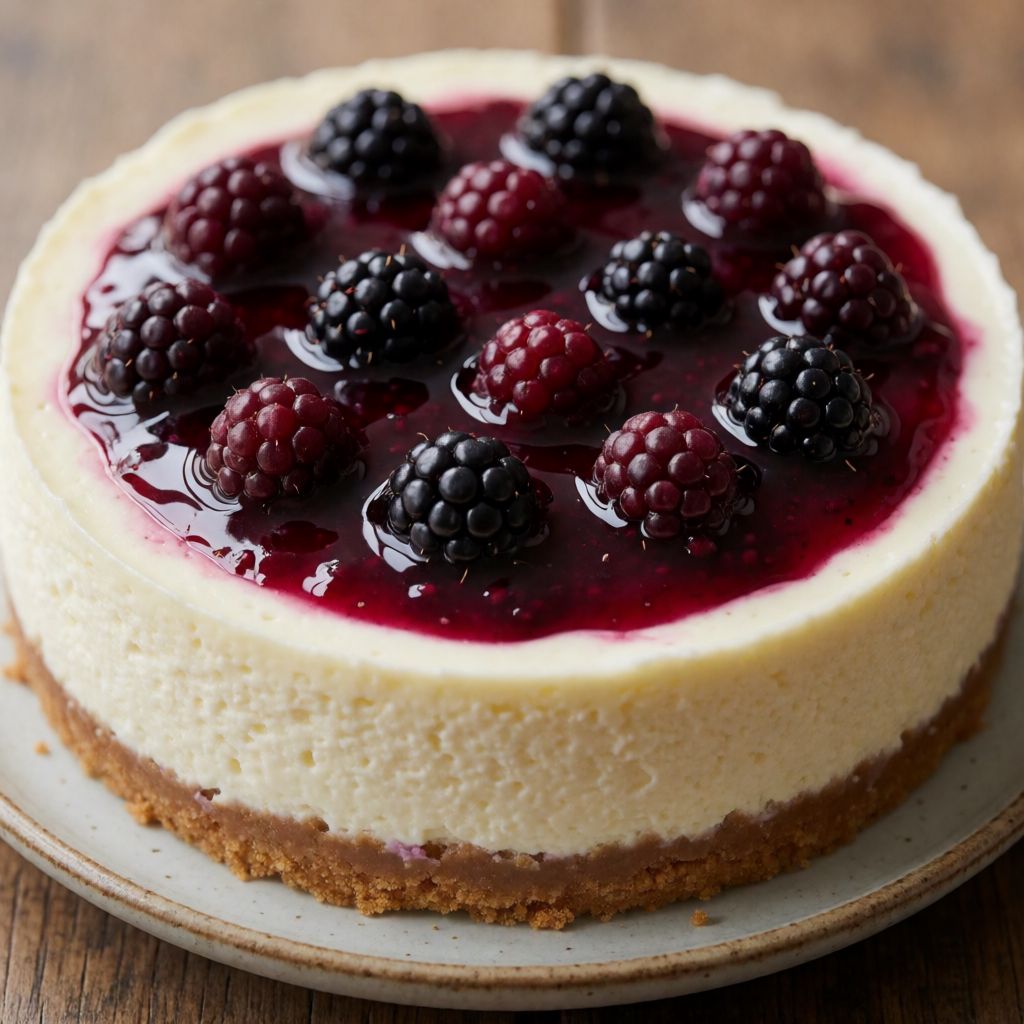
 AI photo
Chilled Blackberry Cheesecake
A chilled no-bake cheesecake with a buttery biscuit base and a fresh blackberry cream filling.
Labels are worked out automatically from the ingredients and can be wrong. Check the packaging if it matters to you.
Ingredients
- 280 g digestive biscuits
- 150 g butter melted
- 250 g cream cheese
- 170 g mascarpone
- 250 ml double cream
- 150 g blackberries plus a few extra for decoration
- 100 g icing sugar
- 8 g gelatine leaf
- 1 pcs blueberries to taste, for decoration







Steps
Crush the biscuits in a food processor to fine crumbs, tip into a bowl, add the melted butter and mix well.
Press the mixture into a 22 cm tin lined with baking paper, spread evenly and chill in the fridge.
Wash the blackberries and blend them, bring to the boil with a little water in a saucepan, then strain through a sieve and leave to cool.
Soak the gelatine leaves in cold water for about 10 minutes.
10 minIn another bowl, beat together the cream cheese, mascarpone and blackberry purée with a mixer.
Squeeze out the gelatine, warm 50 ml of the cream and dissolve the gelatine in it, then leave to cool.
Whip the remaining cream with the icing sugar until thick and fluffy.
Gently fold the whipped cream into the blackberry mixture, add the dissolved gelatine and mix together.
Spread the cream over the biscuit base and chill in the fridge to set, for at least 4 hours.
240 minDecorate the chilled cheesecake with fresh blackberries and blueberries.
This is a no-bake cheesecake, which means the whole thing is really a question of setting, not cooking. Nothing in this recipe goes near an oven. The only heat you'll use is gentle — warming cream to melt gelatine, and boiling blackberry pulp for a few minutes to break it down and concentrate its colour. The dish lives or dies in the fridge, in the hours you're told to wait and mostly don't want to.
The base is a cold-set crumb crust: crushed digestives bound with melted butter, pressed down and chilled before anything else touches it. That chilling isn't decoration — butter is solid at fridge temperature and liquid at room temperature, so if you skip the chill and pour cream filling onto a warm, soft base, the crust won't hold a slice shape; it'll just be wet sand under a layer of mousse.
What decides whether this works is the gelatine stage and the folding stage, in that order. Gelatine bloomed in cold water, squeezed out, then dissolved into warm (not hot) cream — this is what turns a soft cheese-and-cream mixture into something that holds a cut edge after four hours in the fridge rather than slumping on the plate. And folding the whipped cream in gently, not beating it, is what keeps the air in — that's the difference between a dense, fridge-heavy filling and one that's actually light.
Digestive biscuits are there for a crumb that holds together without turning gluey — they have enough structure and a little sweetness, but not so much sugar that the butter can't bind them. If you haven't got digestives, use any plain, dry biscuit with a similar bite: ginger nuts work, graham crackers work, oat biscuits work at a pinch. What you're looking for isn't a brand, it's a biscuit that crushes to fine crumb rather than clumping into paste.
The butter is simply the glue — melted so it coats every crumb evenly rather than sitting in lumps. Use unsalted if you have it, salted if you don't; the quantity of salt in a crust this size won't matter one way or the other, and only purists pretend it does.
Cream cheese and mascarpone do different jobs even though they look similar in the tub. Cream cheese gives tang and a slight sharpness that stops the whole cake tasting like one flat note of sugar and fruit. Mascarpone is richer and almost fat-only, with no acidity — it's there to soften the texture, make it silkier rather than denser. Drop the mascarpone and use all cream cheese and you'll get a sharper, firmer result; not wrong, just a different cheesecake.
Double cream is doing two separate jobs in this recipe, which is why it's split. A small amount gets warmed to carry the dissolved gelatine evenly through the mix — warm, not boiled, because gelatine loses its setting power if it's cooked hard. The rest is whipped cold with icing sugar until it holds its own shape, then folded in last, to keep the filling light rather than compacted. Icing sugar dissolves into cream without the grittiness granulated sugar would leave behind — that's the whole reason for choosing it here, not tradition, just texture.
The blackberries are blended, boiled briefly with a touch of water, then sieved — that boiling step isn't about cooking the fruit so much as breaking it down fast and pushing out more colour and flavour than a cold purée would give you, and the sieve is what removes the seeds that would otherwise sit gritty on your tongue. If blackberries are out of season or pricey, frozen ones do this job just as well — they've already been through a freeze-thaw that breaks down cell walls, so they'll purée and strain just as easily, sometimes more easily.
Gelatine leaves are soaked in cold water first because leaf gelatine swells and softens gradually; drop it straight into hot liquid and parts of it will dissolve unevenly while other parts stay rubbery. If you only have powdered gelatine, use roughly the same weight, bloom it in a small amount of cold water instead of soaking sheets, then warm it the same way — the mechanism is identical, only the format differs.
Patience is the real ingredient most people skip reading past. The crust needs its chill before filling goes on. The filling needs its full four hours, minimum, in the fridge — not because the recipe says so for form's sake, but because gelatine needs that time at cold temperature to actually set its protein network. Cut it short and you get a cheesecake that tastes right and slices like soup. The blackberries and blueberries on top go on only at the very end, once it's fully set, so they sit on a firm surface rather than sinking in.