
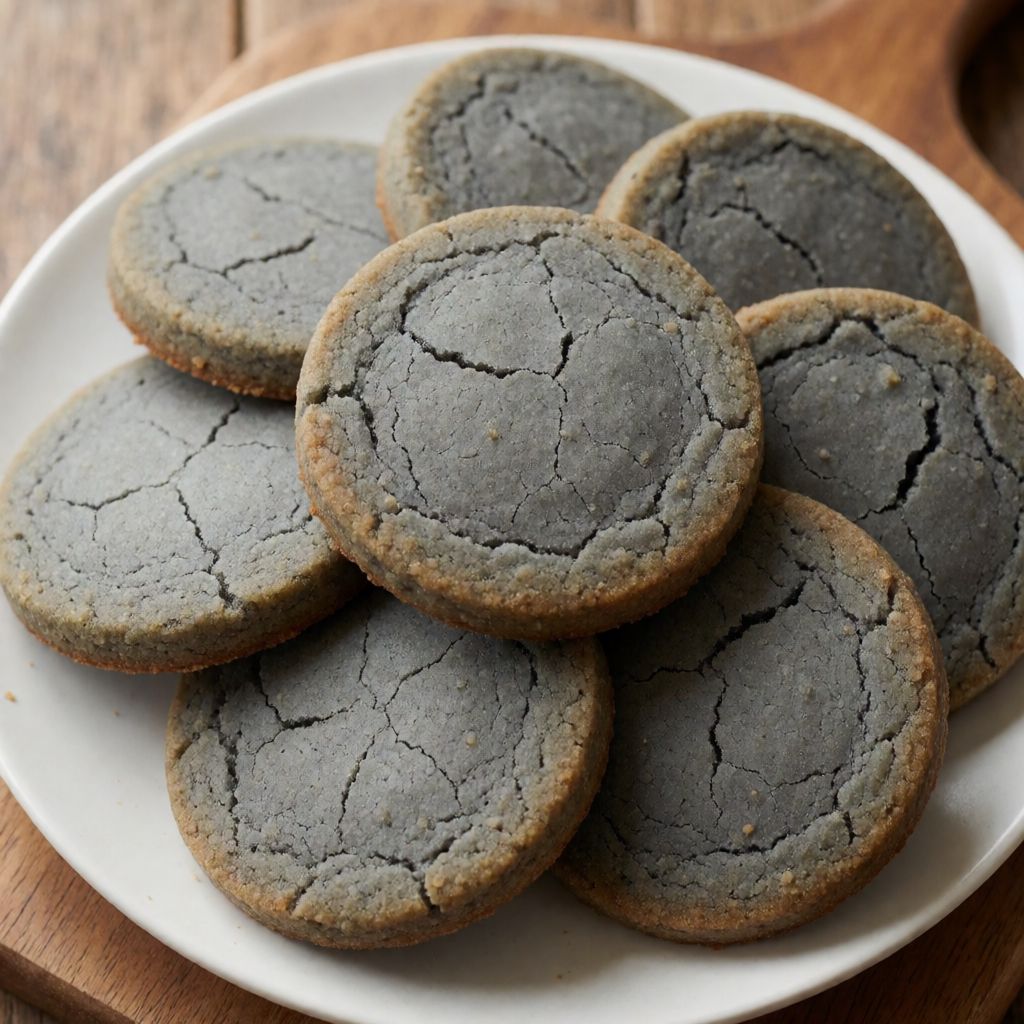
 AI photo
Liquorice Biscuits
Buttery shortbread-style biscuits flavoured with liquorice powder for a distinctive aniseed note.
Labels are worked out automatically from the ingredients and can be wrong. Check the packaging if it matters to you.
Ingredients
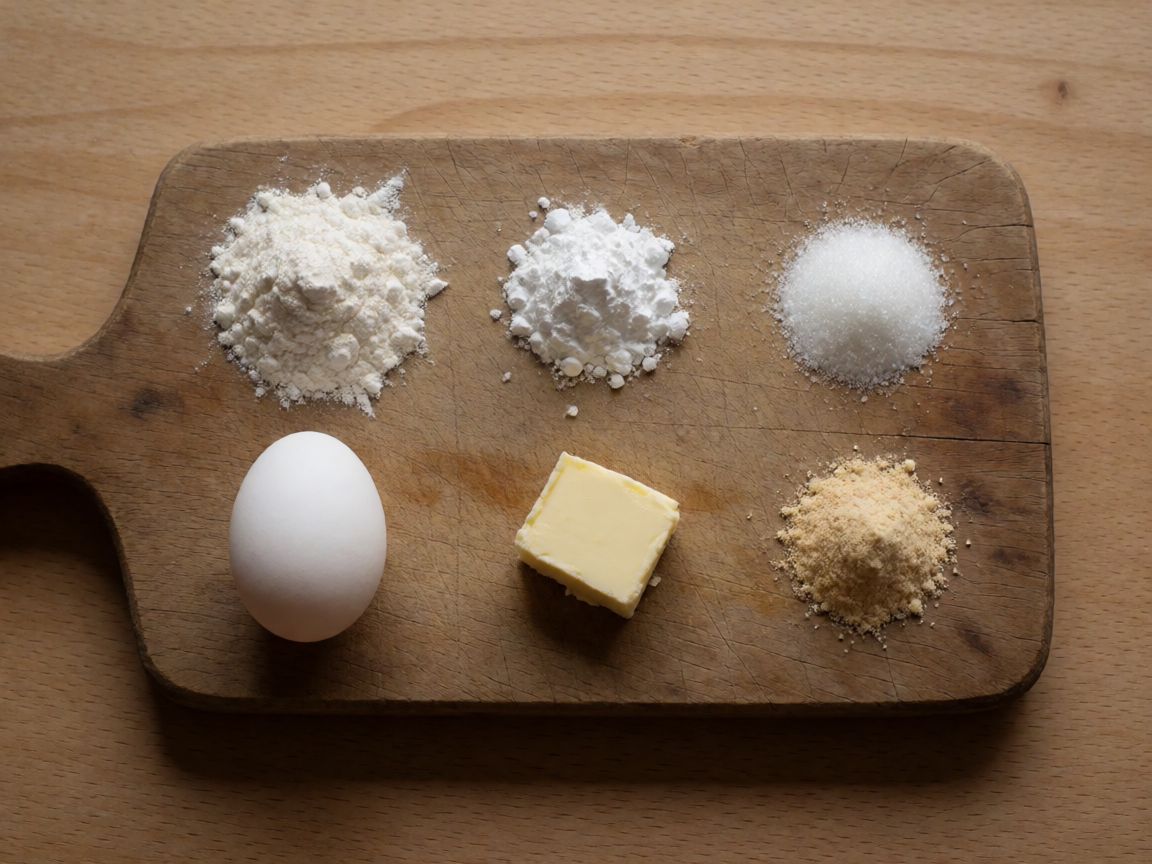
- 100 g Plain Flour
- 100 g Potato Starch
- 120 g Caster Sugar
- 1 pcs Egg
- 120 g Butter at room temperature
- 3 tsp Liquorice Powder






Steps
Cut the room-temperature butter into pieces and beat with the caster sugar using a mixer until smooth and creamy.
Add the egg and mix until fully combined.
Add the dry ingredients — the plain flour, potato starch and liquorice powder.
Knead the dough by hand until all the ingredients come together.
Wrap the dough in cling film and chill in the fridge for about 30 minutes.
30 minRoll the dough out on a lightly floured surface with a rolling pin to a thickness of 7-8 mm.
Cut the biscuits into the desired shapes using a fluted or round cutter.
Bake the biscuits in an oven preheated to 180°C for about 10-12 minutes.
11 min
This is shortbread wearing a liquorice coat — a short, sandy biscuit, not a chewy cookie. The crumb is built, not risen: there's no baking powder in this list because none is needed, and that's worth saying out loud, because the usual assumption is that flat equals under-leavened. No — this biscuit is meant to be flat and dense in the short, crumbly sense, the way shortbread is dense. The lift it has comes from air beaten into the butter and sugar at the very start, nowhere else.
What decides whether it works is mostly what you do before the oven ever comes into it. Butter at room temperature means it dents under a fingertip but doesn't shine — shiny means it's started to melt, and melted butter won't hold air when you beat it, it just slides past the sugar instead of trapping it. Beat it properly and the mix goes pale and fluffy; that fluff is the only rise this biscuit gets, so don't skip past this step thinking it's just softening the butter — it's building the structure.
The other load-bearing decision is how little you handle the dough once flour and starch go in. Flour has gluten, gluten makes things chewy and tough when it's worked, and a shortbread-type biscuit wants the opposite of chewy — it wants to crumble on the tongue. That's why the instruction says knead only until it comes together: past that point you're not improving the dough, you're toughening it. The potato starch is doing real work here too — it bulks the dough out without adding any gluten at all, which is exactly why this stays sandy rather than biscuity-tough.
Flour and potato starch split the structural job between them, and that split is the whole trick of a short, sandy biscuit. Plain flour alone, kneaded any real amount, gives you gluten strands and those strands are what make dough elastic and chewy — fine for bread, wrong here. Potato starch has none of that; it just sits between the flour's gluten strands and gets in their way, which is precisely the point — it breaks up the gluten network before it can form properly, so even a confident knead doesn't toughen the dough much. If you don't keep potato starch in the cupboard, cornflour does the same job — any fine, flavourless starch with no gluten of its own will do. Tapioca starch works too, though it's less common in a British kitchen than a bag of Bird's custard-adjacent cornflour already sitting in the baking drawer.
Caster sugar is chosen for its fineness, not its sweetness level — it dissolves into the butter while beating instead of sitting there as grit, which matters because any undissolved sugar crystal becomes a weak, crumbly point in the baked biscuit, and sometimes a faint gritty bite you notice too late. Granulated will mostly work if that's what's in the house, but expect a slightly coarser crumb. Icing sugar is the wrong direction entirely — too fine, it won't hold the air the creaming is meant to trap.
The egg binds the fat and dry ingredients into something that holds a cut shape rather than crumbling apart on the board, and it adds a little moisture that keeps the baked biscuit from being bone-dry. One medium egg is assumed; if yours is large, the dough will feel very slightly softer and more sticky when you knead it — not a disaster, just flour your hands a touch more when rolling, and don't pile extra flour onto the dough itself to compensate, because raw flour worked into the surface leaves a dull, chalky patch you'll taste.
Liquorice powder is the one ingredient without an easy substitute, and it's worth knowing roughly what it is before hunting for a replacement: finely ground, dried liquorice root, bittersweet rather than just sweet, dark brown rather than black despite what the sweets aisle has trained your eye to expect. Britain actually grew this once, around Pontefract in Yorkshire, where monks cultivated liquorice root for medicine long before anyone thought to sugar it into sweets — the famous Pontefract cakes came later, once sugar got cheap enough through trade to turn a medicinal root into a treat. There's no clean swap for the flavour; aniseed or fennel seed, ground fine, sits in the same family but tastes sharper and more herbal, not the same bitter-dark note. If you can't get liquorice powder, it's honestly a different biscuit with those substitutes, just a related one.
Mix the liquorice powder in with the flour and starch before it meets the wet butter-and-sugar base, not stirred in on its own afterwards — on its own it clumps and leaves dark bitter streaks instead of an even grey-brown crumb throughout. This is a small step but it's the difference between a biscuit that tastes of liquorice everywhere and one that tastes of liquorice in three unlucky bites and plain butter in the rest.
Chilling for half an hour before rolling isn't decoration, it's patience doing actual work: the butter re-solidifies after all that beating, so the dough holds a cut edge cleanly instead of smearing under the cutter, and it won't slump sideways in the oven before the heat's had a chance to set it. Skip the chill because you're in a hurry and the biscuits spread thinner and flatter than they should, with blurred edges instead of a clean fluted line. Thirty minutes is the lower bound, not a target to race towards — if your kitchen runs warm, give it longer rather than less. This batch makes enough for a proper plateful for eight with tea; milky British tea, with its own slight bitterness and tannin, sits well against the liquorice's bitter edge rather than fighting it, which is as good a reason as any to bake these on a Sunday afternoon alongside whatever else is happening in that kitchen.