
 AI photo
Persimmon and Ricotta Cake
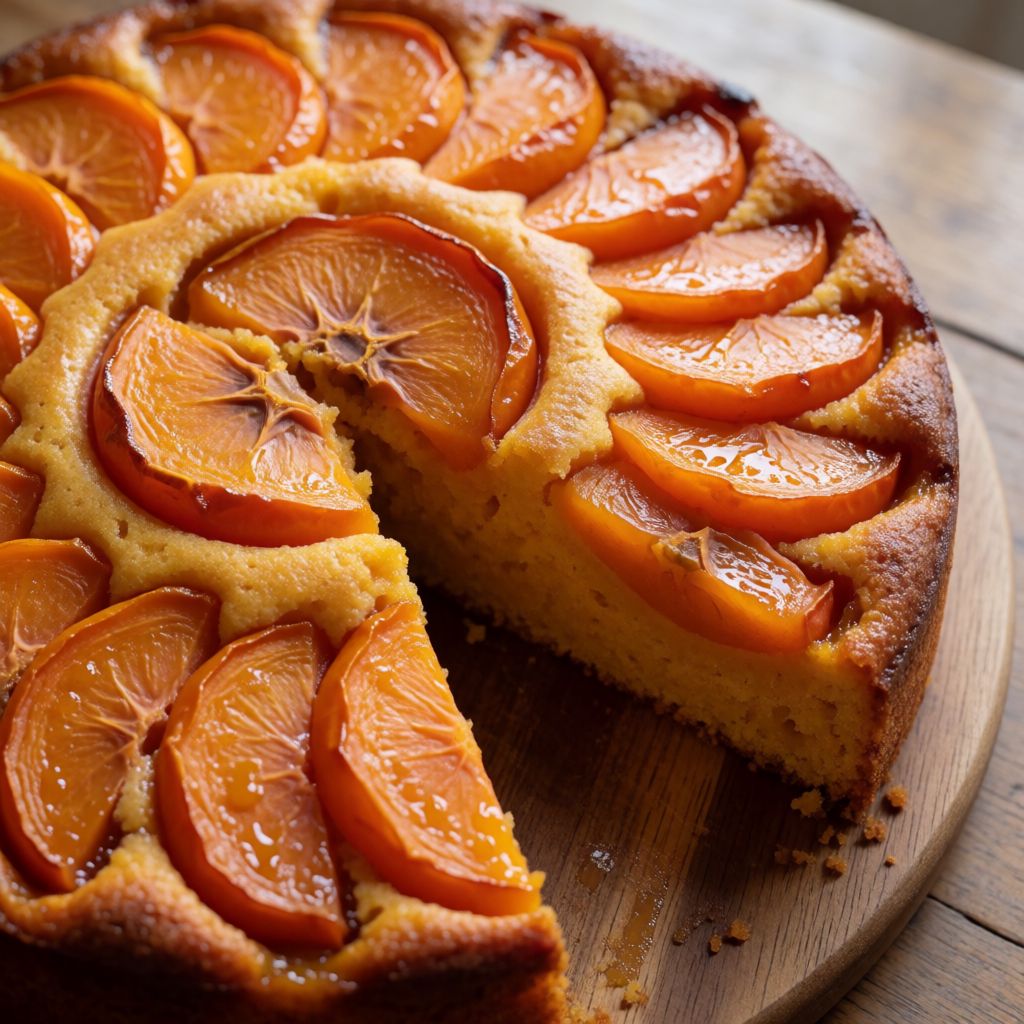
A soft ricotta cake folded with sweet persimmon purée and orange zest, finished with persimmon slices on top.
Labels are worked out automatically from the ingredients and can be wrong. Check the packaging if it matters to you.
Ingredients
- 4 pcs Eggs
- 160 g Sugar
- 200 g Ricotta
- 100 ml Vegetable oil
- 2 pcs Persimmon ripe
- 200 g Persimmon purée
- 1 pcs Orange zest
- 300 g Plain flour sifted
- 16 g Baking powder
- 1 tsp Vanilla sugar
- 1 pinch Salt
- Icing sugar to taste












Steps
Whisk the eggs with the sugar for a few minutes until light and fluffy.
Add the ricotta and vegetable oil, and mix until smooth.
Peel two ripe persimmons and blitz with a blender into a smooth purée; add it to the batter along with the orange zest.
Add a pinch of salt, then gradually fold in the sifted flour, mixing until smooth and even.
Add the baking powder and vanilla sugar and mix thoroughly once more.
Line a 22-24 cm tin with baking paper, pour in the batter and level it with a spatula.
Arrange persimmon slices on top in a sunburst pattern for decoration.
Bake in a preheated oven at 180°C on static (conventional) setting for about 45 minutes.
45 minCheck it is done, remove the cake from the oven and let it cool completely.
Remove the cake from the tin, dust with icing sugar if you like, cut into slices and serve.
What was changed
Baking powder is used instead, and Vanilla sugar is added for the vanilla note, since ready-mixed vanilla baking powder isn't sold in British shops.
This is a wet cake — the ricotta and the persimmon purée between them carry more water than a sponge usually sees, and that's what gives it the dense, custardy crumb instead of an airy one. Whether it works depends on one thing: how ripe your persimmons are. Not ripe like a supermarket tomato is ripe. Ripe like a water balloon — the skin feels like it might give way, the flesh underneath has turned from a firm, astringent block into something you could drink with a straw. An underripe persimmon still carries tannins, and tannins pucker the mouth — the same compound that makes a strong tea go furry on your tongue. There's no amount of sugar that masks that, so get the fruit right before you touch the oven.
Some say persimmons need to be hard like apples to be "fresh" — no, because that's the one state in which this fruit is actively unpleasant. Let it sit on the windowsill until it's nearly collapsing, or buy the squashier-looking ones on purpose and ignore anyone who tells you they're past it.
The eggs and sugar being whisked properly matter more than people think in a cake this heavy with fruit and cheese. That whisking is the only source of lift here — the baking powder does secondary work, nudging an already-aerated batter, not rescuing a flat one. Skip the few minutes of real whisking and you get a cake that sits low and a bit sullen, no matter how long it bakes.
Ricotta here isn't about richness, it's about structure — it's a curd cheese, loosely bound, so it loosens the batter without adding the kind of fat that would make it greasy. If you can't get ricotta, a well-drained cottage cheese blitzed smooth gets you close; mascarpone is too fat-heavy and will skew the result towards a cheesecake texture, which isn't what this is.
The vegetable oil's job is purely to keep the cake moist over its shelf life — oil stays liquid at room temperature, butter doesn't, so a cake made with oil stays tender on day two in a way a butter cake can start to go dry. Use any oil with no smell of its own: sunflower, rapeseed, a neutral light olive oil at a push. Skip anything cold-pressed and grassy; it'll fight the orange zest and the persimmon rather than sitting quietly behind them.
The flour is there to hold the structure the eggs built, nothing more — folding it in gently rather than beating it is what keeps the air you whisked into the eggs from collapsing. Beat hard at this stage and you develop gluten strands that tighten the crumb, turning your cake chewy instead of soft. Baking powder at 16g for 300g flour is a proper, generous lift — it's compensating for the weight of the ricotta and purée, which would otherwise sit heavy and dense without it.
Orange zest is doing a job you won't taste directly: persimmon on its own can read a little flat and vegetal once cooked, and the zest's oils cut through that, the way a squeeze of lemon lifts a stew. Use the zest only, not the juice — the juice adds water you don't need and acid you haven't accounted for in the raised structure.
On an ordinary UK hob and oven, the honest limit is knowing your own oven runs hot or cold against its dial — most domestic ovens drift by 10-15°C from what the knob claims, which is why "about 45 minutes" is a floor, not a fact. Use a skewer in the centre, not near the edge where the ricotta thins out and cooks faster; it should come out with moist crumbs clinging, not wet batter, and not bone dry either. Let the cake cool fully in the tin before turning it out — persimmon purée keeps a cake fragile while warm, and cutting into it too soon is how it collapses on the plate rather than on the cooling rack, where a collapse costs you nothing.