
 AI photo
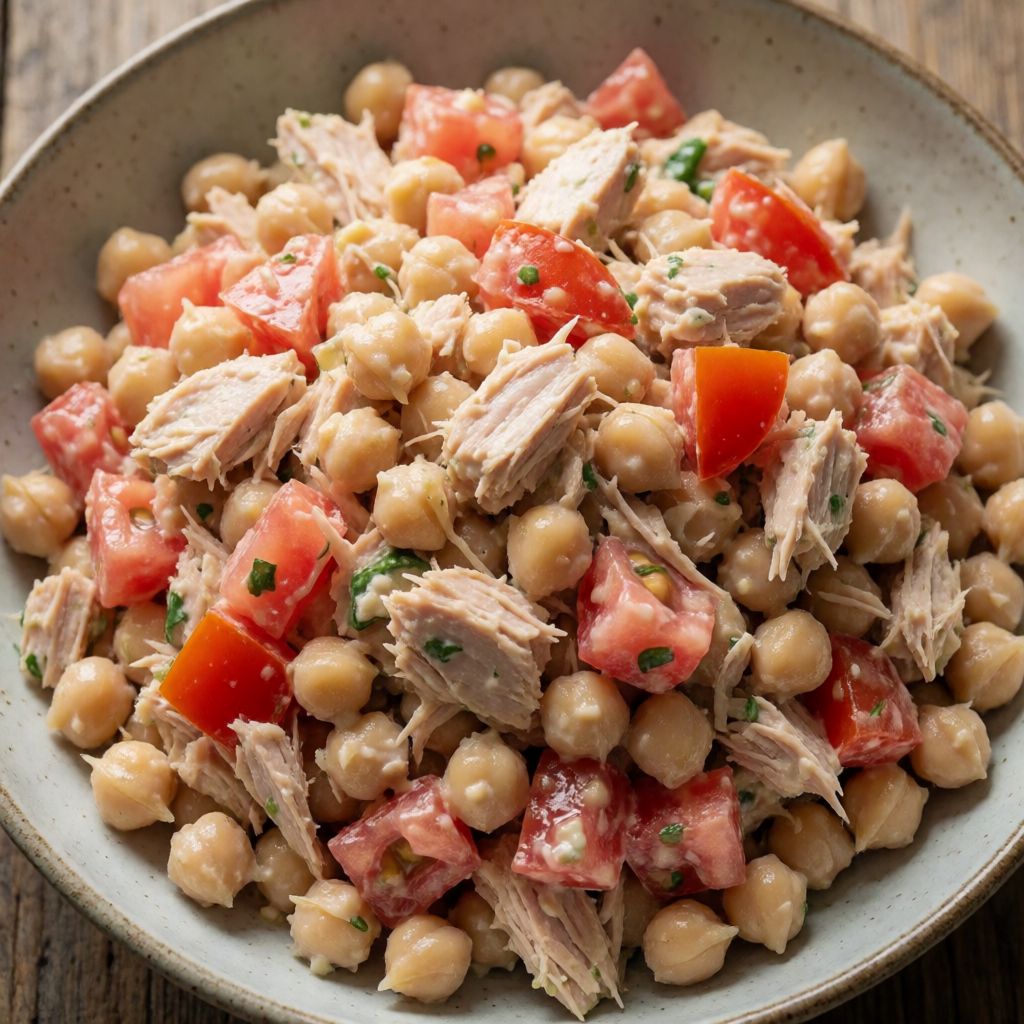
Chickpea and Tuna Salad
A simple, fresh salad of chickpeas, tuna and ripe tomatoes, dressed with olive oil and a splash of vinegar.
Labels are worked out automatically from the ingredients and can be wrong. Check the packaging if it matters to you.
Ingredients
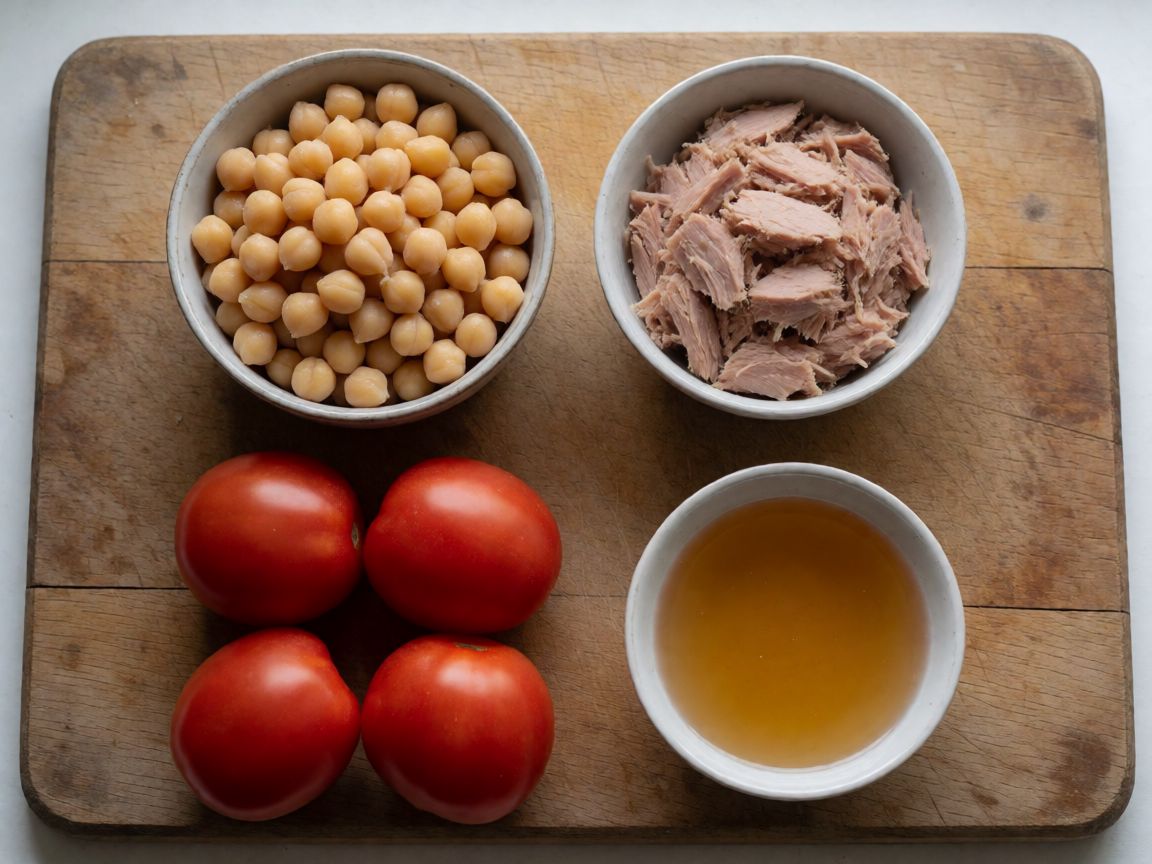
- 400 g Chickpeas cooked
- 160 g Tuna
- 4 pcs Tomato ripe but firm
- Apple cider vinegar to taste
- Olive oil to taste
- Salt to taste
- Black pepper ground, to taste







Steps
Drain the chickpeas in a colander and rinse well under warm water.
Transfer the chickpeas to a salad bowl and add the tuna and, if needed, the olive oil.
Wash the tomatoes, pat them dry with a clean towel, cut into pieces and add to the salad.
Season the salad with salt, black pepper and aromatic herbs to taste.
This is not a cooked dish — it's an assembly, and that changes what you're actually responsible for. Nothing here gets fixed by heat. If the tomato is dull or the chickpeas taste of tin, no amount of oil and vinegar at the end will cover it. So the whole thing stands or falls on three things: how well you rinse the chickpeas, how firm the tomato stays once cut, and whether you let the tuna's own oil do some of the dressing's work instead of fighting it with more olive oil.
Start with the chickpeas. Straight from the can they sit in a liquid that's thick, a bit slimy, and carries a flat, tinny taste that has nothing to do with chickpea and everything to do with the can. Rinsing under warm — not cold — water isn't fussiness: warm water lifts that starchy film the way warm water lifts grease off a plate, while cold water just lets it cling. Skip this and your dressing tastes of brine before it tastes of anything else.
The tomato instruction — ripe but firm — is the other hinge. Ripe gives you sweetness and smell; firm means it holds its shape under the knife and doesn't bleed water into the bowl. An overripe tomato looks the same in the hand but turns the whole salad watery within minutes, because a soft tomato is already halfway to liquid. Salt makes this worse, which is why it goes on at the very end, after everything is already in the bowl — salt pulls water out of cut vegetable the moment it touches it, so the later you add it, the more tomato stays tomato.
Chickpeas: 400 g cooked is the base, and "cooked" covers canned or home-soaked-and-boiled equally — a can is just someone else having already done the soaking and boiling for you, at the cost of that tinny liquid you rinse away. If you're starting from dry, about 150–160 g dry chickpeas, soaked overnight and simmered until they give under a finger rather than resist it, gets you to the same 400 g. Don't rush the rinse-and-drain step at the start — a colander left two minutes longer drains properly; two minutes skipped means a wetter, duller salad later. That patience costs nothing and buys you a lot.
Tuna: 160 g for four people is a light hand of protein — this is a side or a light lunch, not a dish for someone who worked outside all day. Oil-packed tuna is the better default here precisely because the recipe wants you to use its oil as dressing; water-packed works too, but then you'll need the olive oil every time, not just "if needed." Either way, flake it rather than mash it — you want pieces you can taste, not a paste.
Tomato: four pieces, one per person roughly, chosen ripe for flavour but firm enough that a wedge holds its edges when you cut it. If your tomatoes are the pale, mealy kind the supermarket sells most of the year, you're better off reaching for good canned or sun-dried for flavour and accepting a different texture, than forcing a bland fresh tomato to carry the whole salad on hope.
Vinegar and oil: apple cider vinegar here isn't the only option, it's a type — something acidic and mild, without the sharp bite of plain white vinegar. Lemon juice does the same job if that's what's open in the fridge. The criterion for the oil is similar: it needs to carry flavour without shouting over the tuna, which is exactly what a decent olive oil does and a very neutral sunflower oil doesn't — use sunflower if that's all you have, but know you're trading some character for availability.
Salt, pepper, herbs: salt at the end, as above, to keep the tomato from weeping into the bowl before it reaches the table. Pepper, ground fresh if you can, because pre-ground loses its sharpness sitting in a jar — not ruined, just quieter. "Aromatic herbs to taste" is deliberately open: parsley, a little basil if the tomato is good enough to deserve it, nothing that will argue with the tuna's own saltiness.
One last practical point for a British kitchen: don't serve this straight out of the fridge. Cold numbs the tongue and stiffens the oil slightly, so a salad that tasted balanced when you mixed it tastes flat and greasy cold. Let it sit at room temperature the few minutes it takes to lay the table — no cooking required, but a little waiting still is.