
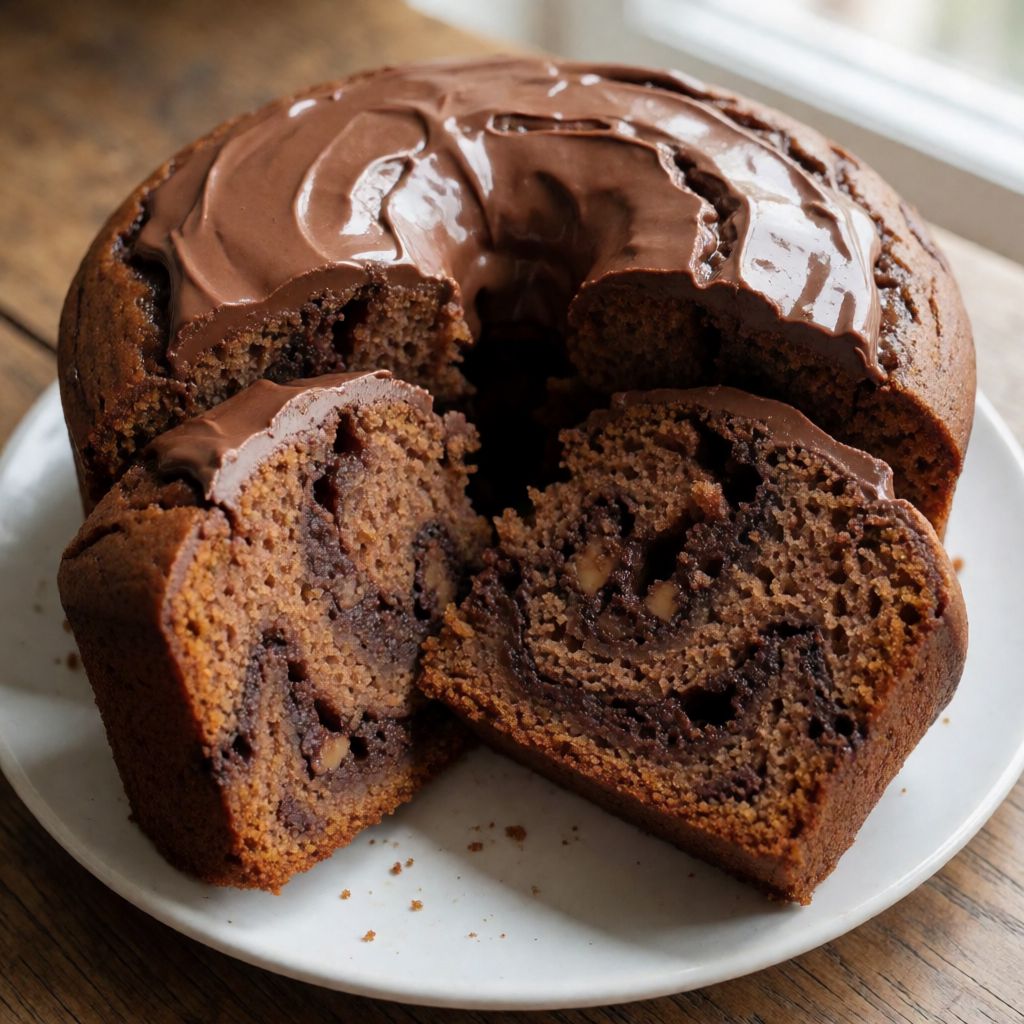
 AI photo
Nutella Cake without Oil or Butter
A light Nutella cake made without any oil or butter at all.
Labels are worked out automatically from the ingredients and can be wrong. Check the packaging if it matters to you.
Ingredients
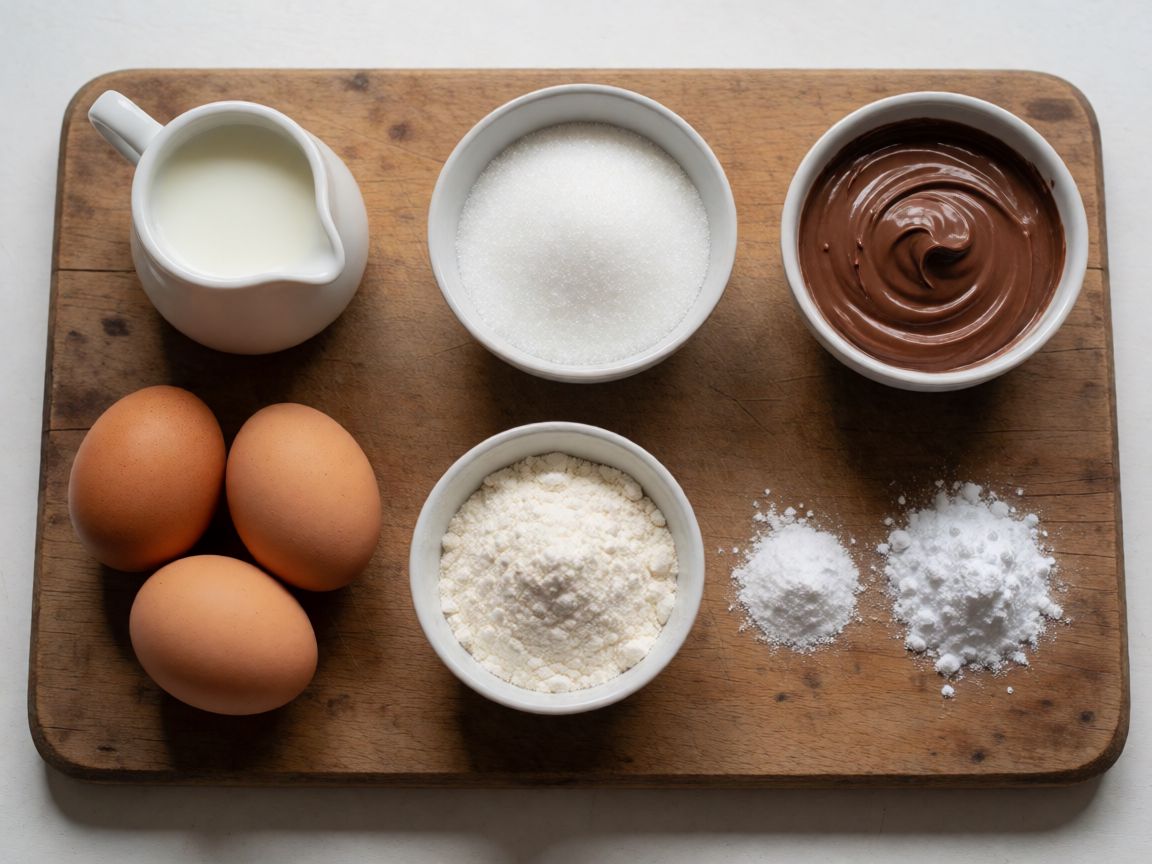
- 3 pcs Eggs
- 150 g Caster sugar
- 200 ml Milk
- 200 g Nutella softened
- 160 g Plain flour
- 15 g Baking powder
- 1 tbsp Icing sugar for dusting







Steps
Beat the eggs with the sugar using a mixer for at least 5–10 minutes, until pale and fluffy.
10 minPour in the milk, then add the softened Nutella and mix well.
Add the sifted flour and baking powder to avoid lumps in the batter.
Pour the batter into a greased and flour-dusted 22 cm cake tin.
Bake in a preheated fan oven at 180°C for about 40 minutes (or 45 minutes without fan).
40 minCheck with a skewer: insert it into the centre, and if it comes out dry, the cake is ready.
Let the cake cool completely in the tin, then remove it and dust with icing sugar.
This is a one-bowl cake that fakes having butter in it. There's no butter, no oil in the ingredient list, and yet the crumb will be moist and rich — because Nutella is already roughly a third fat (hazelnut oil and cocoa butter, held in an emulsion with sugar and milk solids). You're not removing fat from the recipe, you're hiding it inside a jar. That's the whole trick, and it's also the whole risk: if the Nutella isn't properly softened, that fat sits in lumps instead of spreading through the batter, and you get streaks of dense, greasy cake next to patches that are dry crumb with nothing in them.
What decides whether this works is the egg-and-sugar beating at the start. Some people think this step is just 'to dissolve the sugar' — no, because sugar dissolves in milk just fine with a spoon. What the five to ten minutes of mixer work actually does is beat air into the eggs and trap it in a fine, stable foam. Since there's no creamed butter here to hold air the usual way, that foam is the only aeration this cake gets. Rush it, and the cake rises on baking powder alone — which gives you a flatter, tougher, slightly bitter-edged result, because baking powder lifts but it doesn't give you fine, even crumb the way trapped air does.
On the eggs: three medium eggs is what gives you both the liquid and the structure — the whites' protein sets the crumb when it hits heat, the yolks' fat and lecithin help bind the Nutella and milk into one batter instead of two separate liquids fighting each other. If you've only got large eggs, use two rather than three; too much egg and the cake turns rubbery instead of soft.
Sugar here is caster, not icing or granulated, because its fine crystals dissolve fast into the egg foam without taking forever or leaving grit. If all you have is granulated, give it an extra minute or two under the mixer — it'll work, just slower.
Milk's job is simple: it loosens the Nutella enough to fold through the batter, and it supplies the liquid the flour needs to hydrate properly. Any milk works, including skimmed, since this isn't a recipe leaning on milk fat for richness — that job already belongs to the Nutella.
Nutella itself is the one ingredient with no real substitute by name, only by criterion: you need a hazelnut-cocoa spread with enough oil content to behave like a fat when warmed, not a dry chocolate paste. A supermarket own-brand hazelnut spread with similar ingredients will do the same job. A spread that's mostly sugar and very little oil won't — the cake will come out dry, and people will blame the 'no oil' recipe instead of the thin spread.
Flour and baking powder together are doing what self-raising flour does on its own — if that's what's in your cupboard, use it and leave out the baking powder, or you'll get a cake that domes hard in the middle and cracks, because it's risen faster than the crumb can set around it. Sifting isn't ritual, it's distribution: baking powder clumped in one spot gives you a bitter patch and an uneven rise, not a fluffier cake.
A 22 cm tin, greased and dusted with flour rather than lined, is standard in a British kitchen and sized right for this amount of batter — go smaller and the middle stays wet past the point the edges burn; go larger and you'll have a thin, dry disc. At 180°C fan (45 minutes without a fan, because fan ovens move hot air onto the cake's surface faster and cook it through quicker) the skewer is your only honest clock — a kitchen's real oven rarely matches the dial exactly, so trust the skewer coming out dry over the timer going off. Dust the icing sugar only once the cake is properly cold, or it melts into the surface and you lose the dusting entirely within minutes — a small defeat, but an avoidable one.