
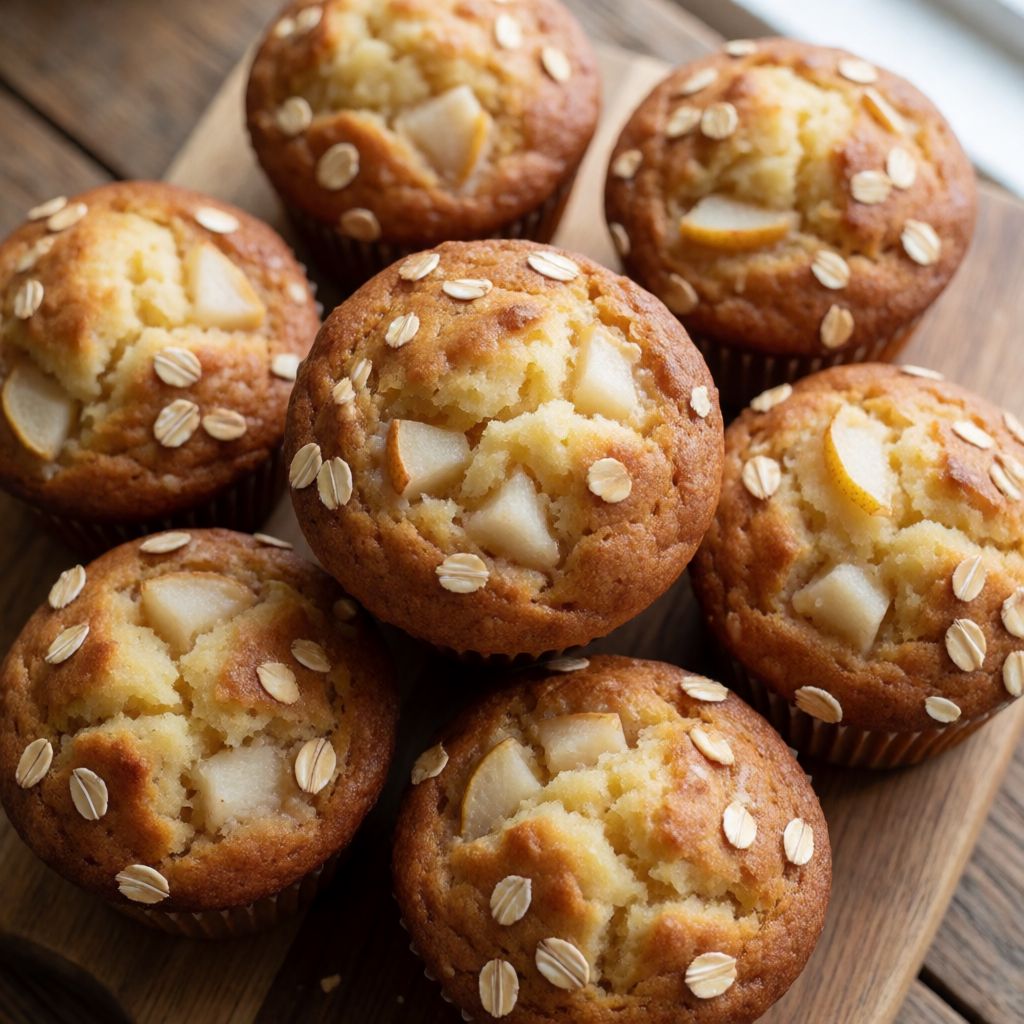
 AI photo
Oat Muffins with Honey and Pear
Light oat muffins sweetened with honey, studded with pear and walnuts.
Labels are worked out automatically from the ingredients and can be wrong. Check the packaging if it matters to you.
Ingredients
- 100 g Butter at room temperature
- 125 g Honey
- 3 pcs Eggs
- 100 ml Yogurt
- 100 g Porridge oats
- 90 g Plain flour
- 1 tsp Cardamom ground
- 1 tsp Cinnamon ground
- 1 pinch Salt
- 1 tsp Baking powder
- 50 g Walnuts finely chopped
- 150 g Pear finely diced









Steps
Beat the butter with the honey until smooth, then beat in the eggs one at a time, finishing with the yogurt.
In a separate clean bowl, mix the porridge oats, plain flour, cinnamon, cardamom, salt and baking powder well, then fold into the batter.
Add the walnuts and diced pear, and gently mix in.
Spoon the batter into muffin cases and bake in a preheated fan oven at 175°C for about 18 minutes.
18 minLet the muffins cool slightly on a wire rack.
Forget the airy, over-domed café muffin here — what you get from this batter is denser and more honest: a moist oat cake in a paper case, held together by honey and egg rather than by whipped-in air. That's not a flaw, it's the physics of the recipe. Sugar crystals, beaten into butter, cut sharp little tunnels that trap air — that's where a classic sponge gets its lift. Honey is already liquid. Beat it into butter and you get a smooth emulsion, not a pale fluffy mass. So almost all the rise you'll see comes later, from the baking powder and from the egg proteins setting as they heat. Knowing that changes what you're aiming for at step one: smooth and combined, not whipped to ribbons.
What actually decides whether these work is the fold, not the beat. Once the oats, flour, spice and baking powder go in, you're building gluten with every extra stroke — and gluten is what turns a tender crumb into a chewy, slightly rubbery one. Fold until the dry streaks disappear and stop. A few lumps in the batter are not a problem; they're insurance against a tough muffin.
Butter at room temperature matters for the same reason the honey point matters: cold butter won't take the honey into an even emulsion, it'll sit there in separate lumps, and when the eggs go in afterwards that split only gets worse — you'll see it as a curdled, grainy batter instead of a smooth one. That's also why the eggs go in one at a time: egg is mostly water, butter and honey are fat and sugar, and pouring all three eggs in at once overwhelms the emulsion before it can hold. Add them slowly and the mixture drinks each one in before the next arrives.
Yogurt goes in last for its acid, not just its liquid. That tang tenderises the crumb and reacts with the baking powder to give it an extra nudge of lift right before the batter meets the oven. If you've no yogurt, anything soured and dairy will do the same job — buttermilk, kefir, even soured cream loosened with a splash of milk. Plain milk won't; you lose the acidity and the muffins bake flatter and blander.
Honey's job is sweetness, moisture, and colour — it browns a crust faster than sugar does, which is part of why these muffins look deeply golden rather than pale. If you swap in golden syrup or maple syrup, you'll keep the moisture and most of the browning, but lose the particular floral note honey brings; that's a fair trade if that's what's in your cupboard, not a disaster.
The flour here is doing far less work than usual — 90g against 100g of oats — which is why gentle folding matters so much. There isn't a huge reserve of structure to spare; overwork the little gluten that's there and the crumb toughens fast. Mix the oats, flour, cardamom, cinnamon, salt and baking powder together before they ever meet the wet batter, for a reason that has nothing to do with tidiness: baking powder clumped in one spot gives you a muffin that rises unevenly, with a bitter metallic bite where the undiluted powder sat. Spread it through the dry mix first and every spoonful of batter gets its fair share.
Pear and walnut go in last, and barely stirred, because both are fragile in their own way. Over-mix diced pear and you pulp it into the batter, losing the little pockets of juicy fruit and turning the crumb grey-pink and wet in patches. A firm pear, not an overripe one, holds its dice through baking — apple works the same way if that's what you have. Walnut just needs to stay walnut, not paste; chop it by hand rather than in a processor, which tends to go too far before you notice.
Fan ovens run hotter in effect than their dial suggests, because moving air strips heat into the food faster — 175°C fan is doing roughly the job of a notch or two higher in a conventional oven. That's worth knowing on a British domestic hob where fan is the default: it's why the crust catches colour and the inside still has time to set without drying out, in that same stretch of minutes. Once they're out, let them sit on the rack rather than in the tin. The tin traps steam against the base, and that trapped steam is exactly what turns a good muffin soggy-bottomed ten minutes after it looked perfect.