
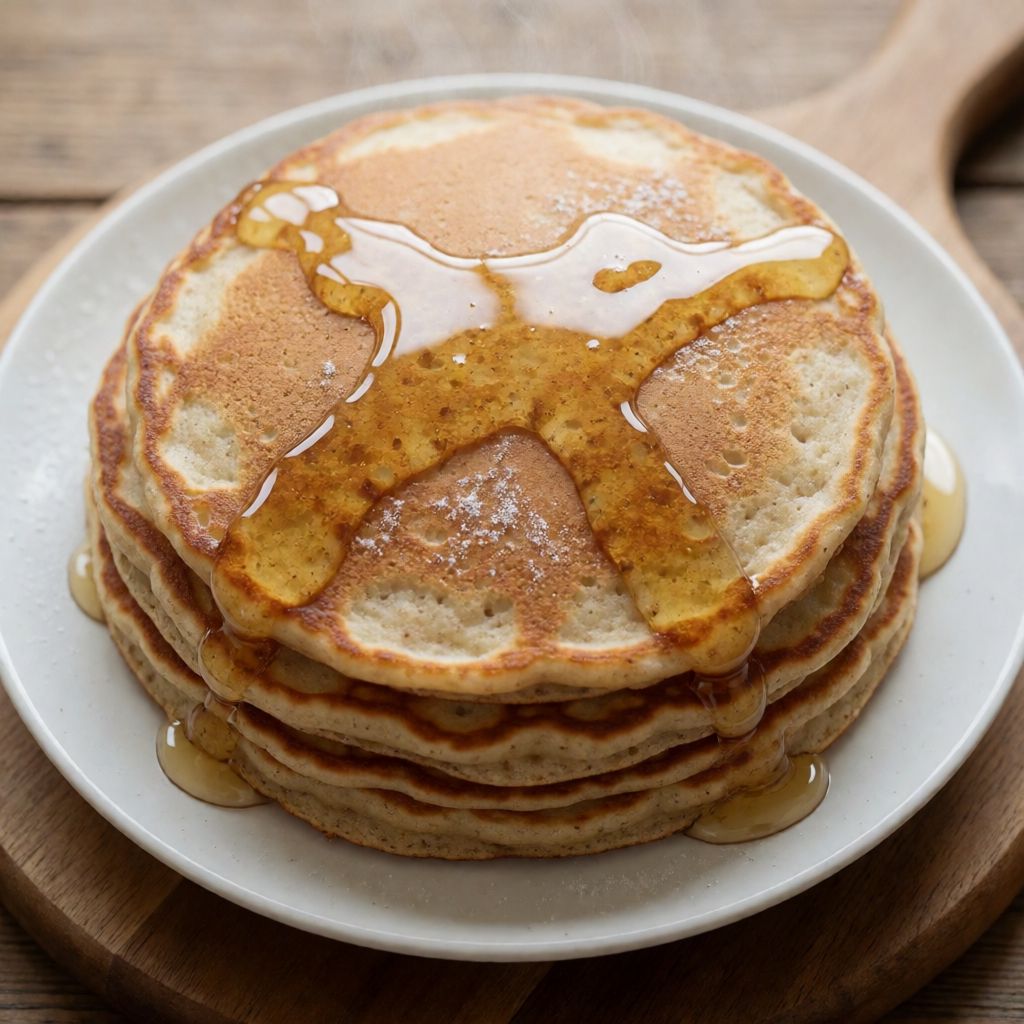
 AI photo
Oat and Yogurt Pancakes
Fluffy oat and yogurt pancakes blended smooth and pan-fried until golden.
Labels are worked out automatically from the ingredients and can be wrong. Check the packaging if it matters to you.
Ingredients
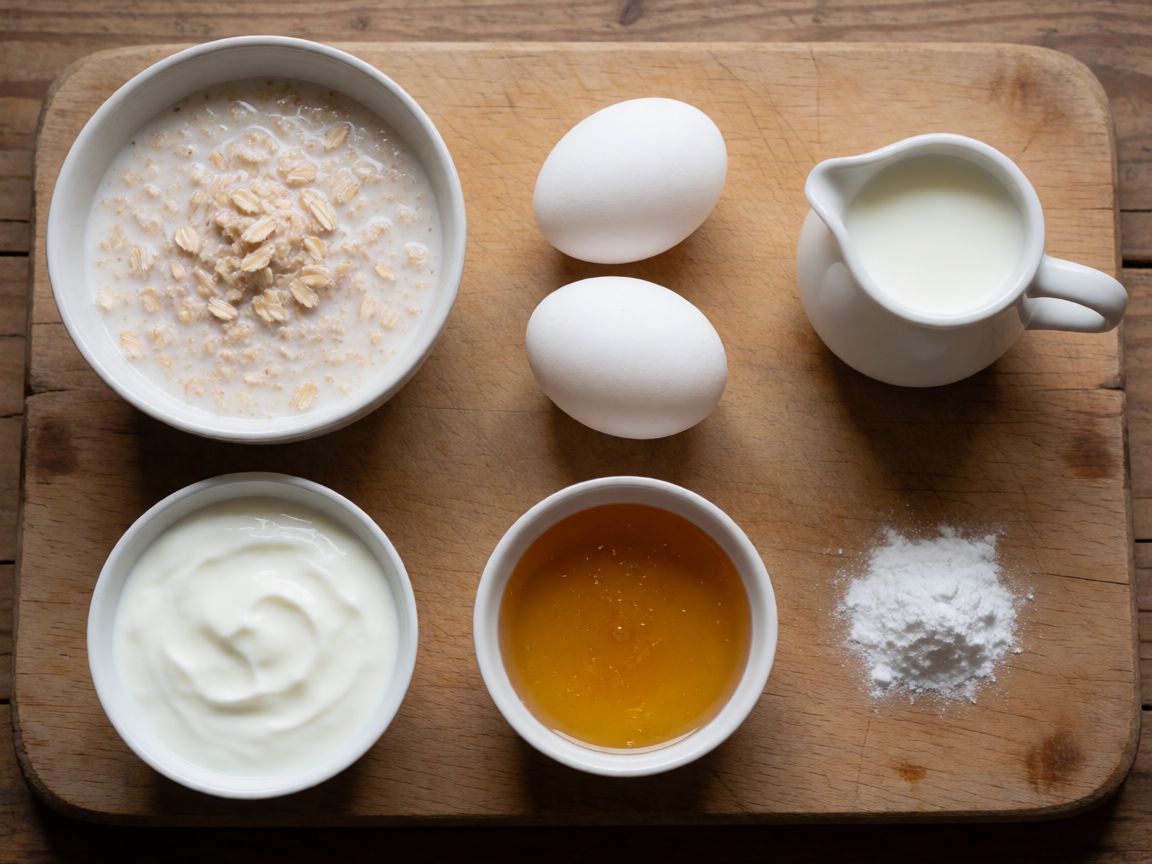
- 150 g Rolled oats
- 2 pcs Eggs
- 130 g Yogurt
- 80 g Milk
- 1 tbsp Wildflower honey
- 0.5 tsp Baking powder
- 1 tbsp Vegetable oil for frying, to taste





Steps
Blitz the oats in a blender until you get a fine, even flour.
2 minAdd the yogurt and baking powder to the blender jug, then the eggs, milk and finally the honey.
2 minBlend everything until smooth and pour the batter into a bowl.
1 minHeat a frying pan, lightly grease it with oil and shape pancakes about 8-10cm across.
3 minFry for a few minutes on each side, until the pancakes are puffy and golden.
6 minContinue until all the batter is used. Serve straight away.
1 min
These are pancakes built without wheat, so put aside what you know about gluten doing the work. The body here comes from ground oats and two eggs; the lift comes from baking powder meeting heat, not from kneading or resting a dough. Done right, you get a small thick disc, a little tangy from the yogurt, holding together like a drop scone but lighter, almost soufflé inside — four people, about three each, eaten as they come off the pan.
Three things decide whether it works. First, how fine the oats are ground — leave whole flakes in the batter and you get grit in the finished pancake, because oat starch only behaves itself once the grain's tough casing is broken open by the blade. Second, the heat of the pan: hot enough that the edge of the batter sets the instant it lands, sealing in the baking powder's gas before it can escape, but not so hot that a crust forms on the outside while the middle is still wet and eggy. Third, timing of eating — these come off the pan and go straight to the plate, because the puff is an egg-protein foam, and a foam collapses as it cools, the same way a soufflé sulks the moment you stop watching it.
Some say an oat batter can never rise the way a wheat one does — no, because what actually raises a pancake is gas trapped by a protein setting fast, and egg does that job perfectly well, sometimes faster than gluten, since it firms up quickly and locks the bubbles in before they can wander up and out.
Start with the oats. Rolled oats are flakes that have already been steamed and pressed flat, which is exactly why they grind to a fine, even flour in a couple of minutes instead of turning to shrapnel — try the same with steel-cut oats and you'll be picking bits out of your teeth. Instant oats will also grind fine, even faster, if that's what's in the cupboard. If you already own oat flour, skip the blender step entirely and just weigh it out. One honest note the written steps don't mention: once the flour meets the yogurt and milk, give it even a couple of minutes before it hits the pan rather than frying the first spoonful straight away — oat starch is slower to take up liquid than wheat, and that short wait is the difference between a smooth batter and one with a faint gritty bite later. Patience here costs you nothing but two minutes.
The eggs are doing structural work that in a wheat pancake would belong to gluten. There's no flour here to form that stretchy net, so the protein that sets and holds the pancake's shape, traps the gas, and gives you that puffed middle is entirely the egg. That's worth knowing because it means this isn't a recipe you can casually make egg-free — swap them out and you're not making a lighter version, you're making a different, flatter thing, closer to a thick dairy flatbread. I won't pretend otherwise; I haven't tested an egg-free version I'd stand behind.
Yogurt earns its place on three counts: it adds body so the batter holds its shape rather than running thin across the pan, it adds moisture without diluting the mix the way plain milk would on its own, and it adds the sour edge that keeps these from tasting like dessert. Any thick, soured dairy does the same job — kefir, buttermilk, even soured cream loosened with a splash of milk. Greek yogurt works too, but it's thicker than what's called for here, so thin it slightly or you'll need extra milk to get back to a batter that pours rather than plops.
Milk's only task is to bring the batter down to a consistency you can spoon into rounds — thick enough to hold an 8–10cm shape in a domestic frying pan (there's no need for anything fancier; a nonstick pan and a spatula do everything a griddle would), thin enough that it spreads a little and cooks through without staying gluey in the centre. Whatever's already open for your tea works fine; there's nothing special required of it.
Honey does double duty: it sweetens, obviously, but its fructose also browns faster than ordinary sugar does, which is part of why these go golden rather than pale. It's added last in the blending so its stickiness doesn't glue up the blade before everything else has had a chance to combine. Any pourable syrup — golden syrup, maple, anything that moves rather than sits in grains — will do the same; granulated sugar won't blend in the same way and leaves a grittier batter.
For the oil, the only criterion that matters is that it has no character of its own — a sunflower or rapeseed oil, the kind that sits in most British cupboards already, won't fight the honey or the tang of the yogurt the way olive oil would. And a small historical footnote, since the question of why oats at all is worth asking: oats grow where wheat struggles — cool, wet ground, exactly the conditions much of this country has in spades — which is why they've been the cheap, reliable grain here for centuries, long before anyone called a dish like this a health food. Nothing mystical in it. Just a grain that does well in bad weather, ground fine enough to behave like flour, and two eggs doing the lifting wheat usually does.