
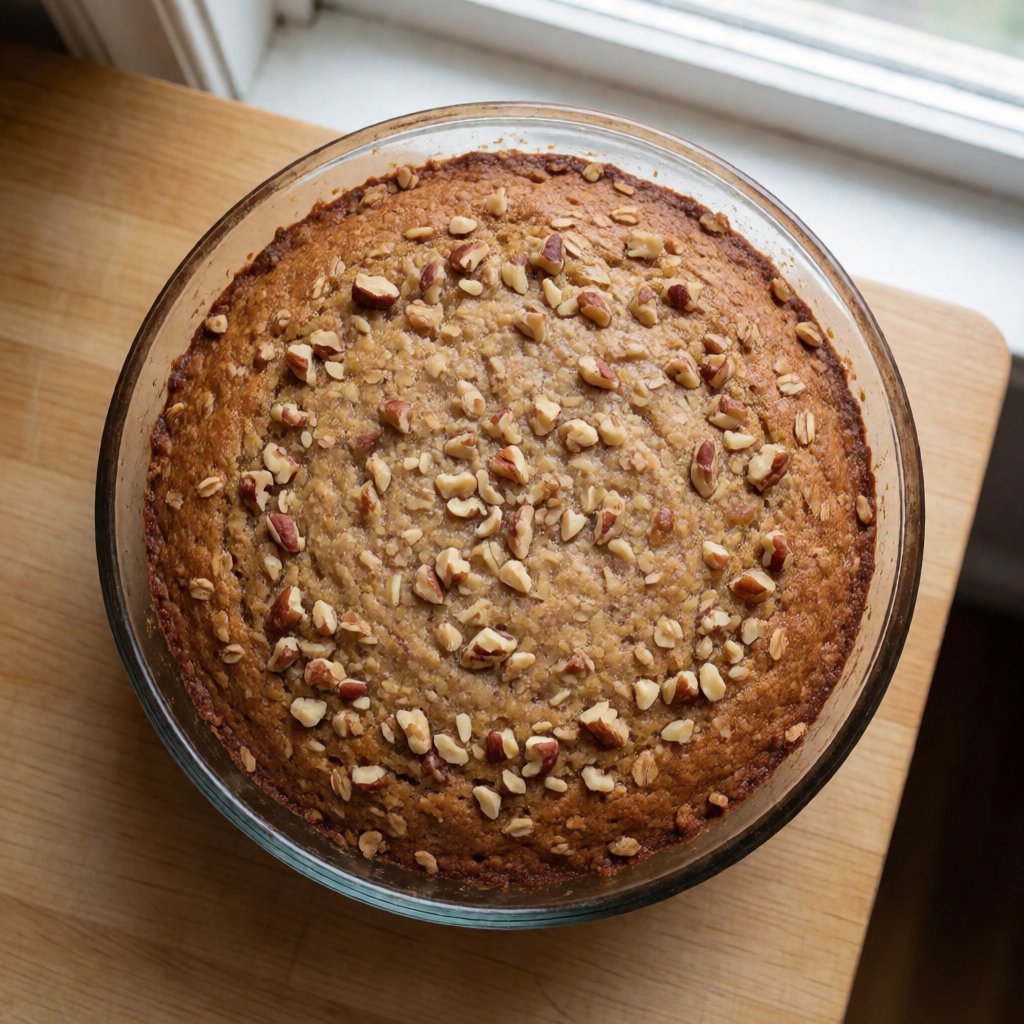
 AI photo
Banana Oat Cake
A quick oat and banana cake, lightly sweetened and ready in under 40 minutes.
Labels are worked out automatically from the ingredients and can be wrong. Check the packaging if it matters to you.
Ingredients
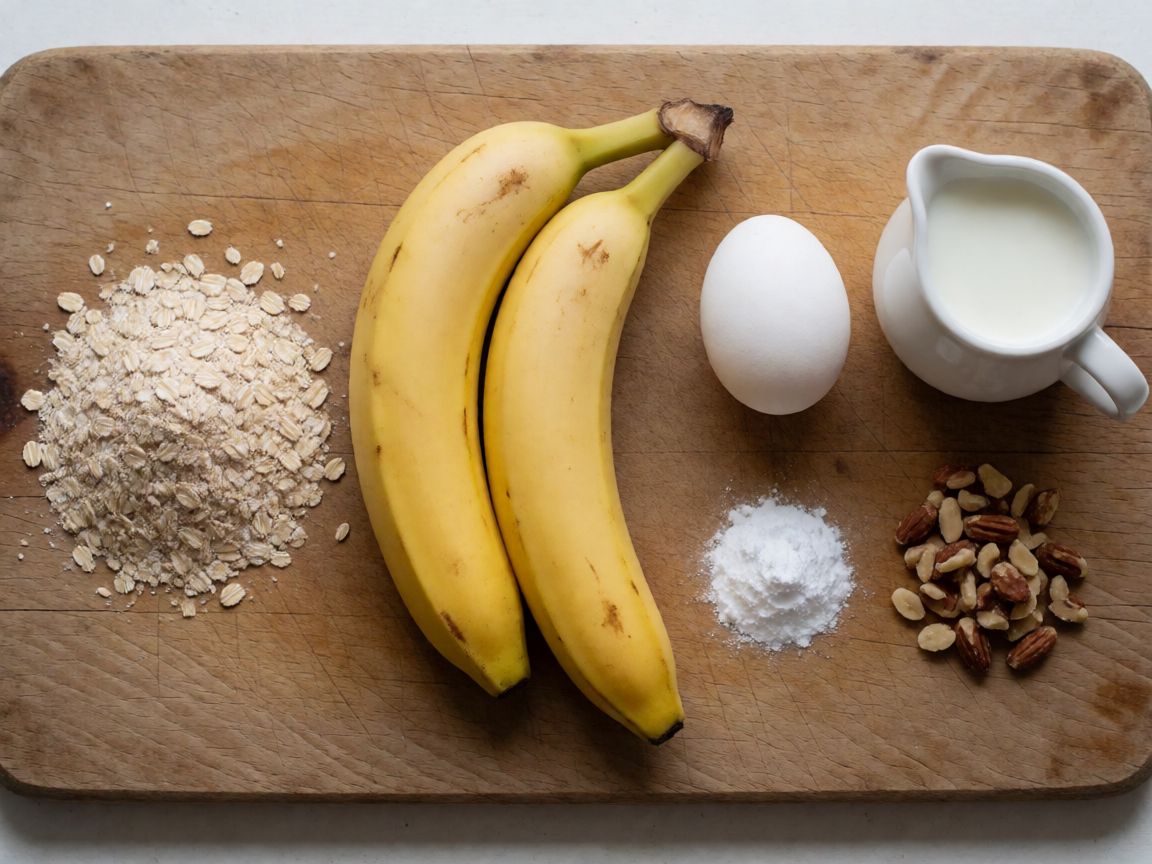
- 100 g rolled oats
- 2 pcs ripe bananas
- 1 pcs egg
- 100 ml milk
- 0.5 tsp baking powder
- 20 g mixed nuts
- 1 tbsp sunflower oil for greasing the tin






Steps
Mash the bananas and mix with the egg and milk.
Add the oats, baking powder and nuts, then transfer to a greased tin.
Bake at 200°C for 25–30 minutes.
30 minRemove the tin from the oven.
Leave to stand for 10 minutes.
10 min
This is a cake with no flour in it, and that's the whole trick. Oats behave like a flour substitute only once they're given enough liquid and heat to swell and glue themselves together - the egg is what actually holds that glue, coagulating as it heats and turning mush into crumb. Take the egg out and you have warm porridge with a crust, not a cake.
Ripe banana is non-negotiable, and spotty isn't a defect here, it's a label. As a banana ripens its starch converts to sugar and its pectin slackens, so a well-spotted banana mashes to a sweet, almost-liquid paste, while a plain yellow one stays starchy and grainy under the fork and the batter won't come together the same way. Some say you need bananas gone nearly black - not necessarily; you need soft and sweet, not rotten and weeping, because too much free liquid and the middle won't set before the top browns.
The rise owes nothing to gluten. Baking powder reacts with heat and the milk's moisture and throws off bubbles, and it's the egg setting around them that traps the lift - same principle as any cake, just without flour's elastic net to shape it. That's why this wants a tin with sides, not a flat tray: height gives the bubbles somewhere to push, and spread thin, the edges dry out long before the centre has set.
Oats: rolled, not steel-cut, and not the instant kind if you can help it. Rolled oats have been flattened and lightly pre-steamed, so they hydrate at a cake's pace - 25 to 30 minutes in a hot wet batter is enough to soften them through. Steel-cut will still be chewy and raw-tasting in that time, and instant oats collapse to paste, so you lose the bit of bite that makes this a cake rather than a bowl of porridge with a crust. If rolled is what's already in the UK cupboard for breakfast, you're set.
Egg: it binds, and it sets. It's the only ingredient here that goes from liquid to firm when it hits heat, which is exactly the job that flour and gluten do in an ordinary cake. Want it egg-free? A thick spoon of yoghurt or a third banana will loosen the batter the same way, but the result holds together looser, closer to a baked porridge - nothing in the substitute coagulates the way egg protein does, so don't expect the same crumb.
Milk: its only job is to thin the mash to something pourable. Any milk does that - oat, almond, the kind you already put in your tea - as long as it's roughly water-thin with a touch of fat in it. Water on its own works too, the cake just tastes flatter for it.
Baking powder: a small dose on purpose. This isn't trying to rise like a sponge, it's lightening a dense oat-and-banana mass just enough that it doesn't bake into a brick. Double it hoping for more lift and you get pockets of air that collapse as the cake cools, leaving tunnels through the crumb - more is not more here.
Nuts: texture, not real flavour at this quantity. They give the fork something to meet in all that softness. Walnuts, almonds, hazelnuts, whatever's open in the cupboard - the one rule is raw and unsalted, because salted snacking nuts will drag the whole thing toward savoury without anyone asking for that.
Sunflower oil on the tin: any oil with no smell of its own does the same job - groundnut, a flavourless vegetable oil, a thin smear of butter if you don't mind a darker crust, since butter browns faster than oil at 200°C. Its only function is release - an oat batter like this has no flour to help it let go of the tin, and skipping the grease means half your cake stays behind when you turn it out. On the tin itself: in a kitchen without a proper small loaf tin, two ramekins or a small foil tray with sides will do, as long as the batter sits at some depth rather than spread thin across something flat - depth is what keeps the middle moist while the top sets, the same logic as the rise.
·