
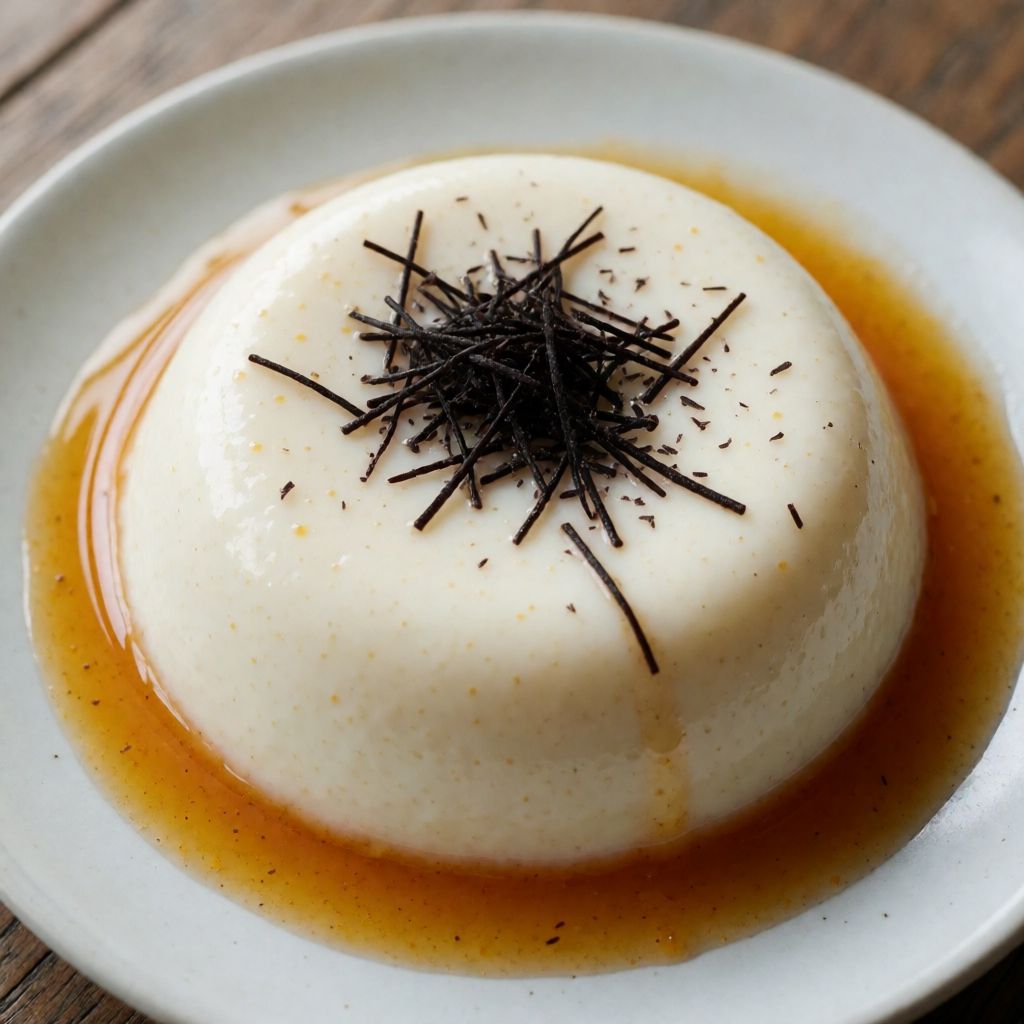
 AI photo
Panna Cotta with Orange and Liquorice
A classic Italian panna cotta layered with an orange and liquorice jelly and topped with white chocolate mousse.
Labels are worked out automatically from the ingredients and can be wrong. Check the packaging if it matters to you.
Ingredients
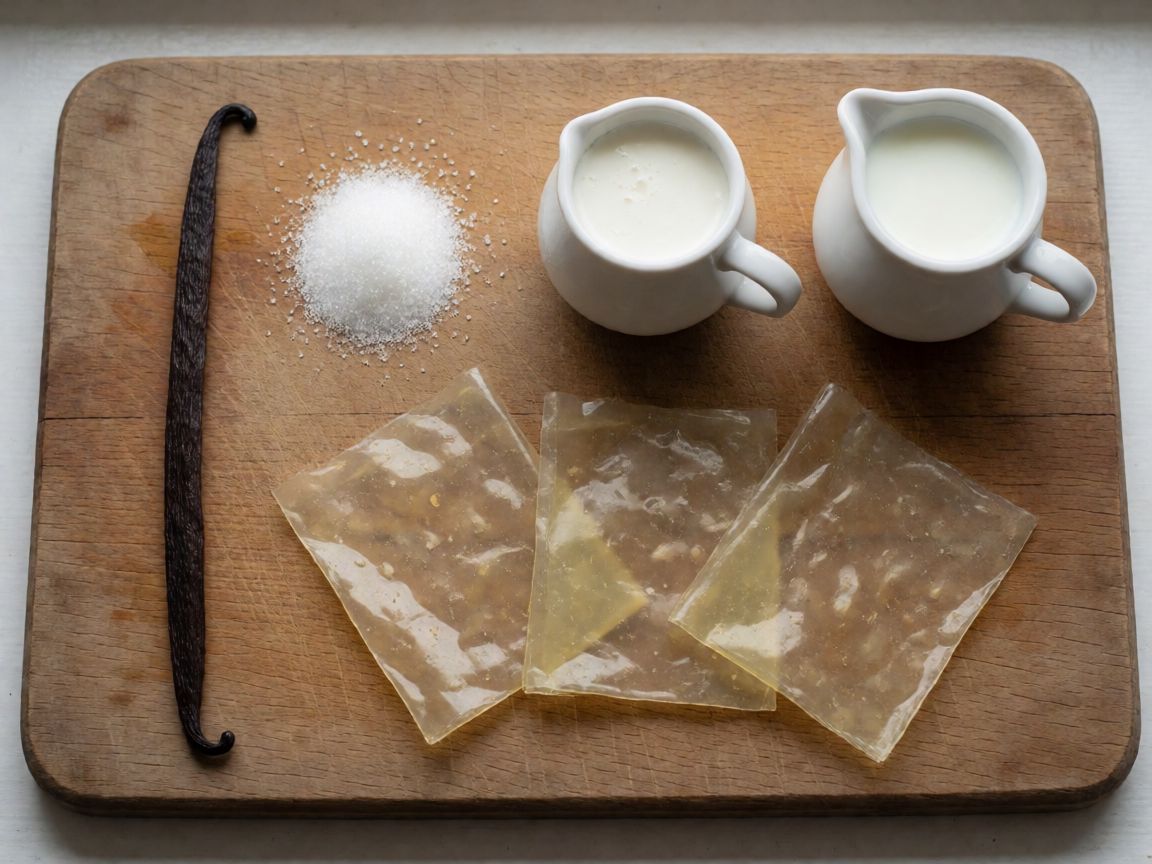
- 1 pcs vanilla pod
- 60 g caster sugar
- 500 ml double cream
- 100 ml milk whole
- 3 pcs gelatine leaves





Orange and liquorice
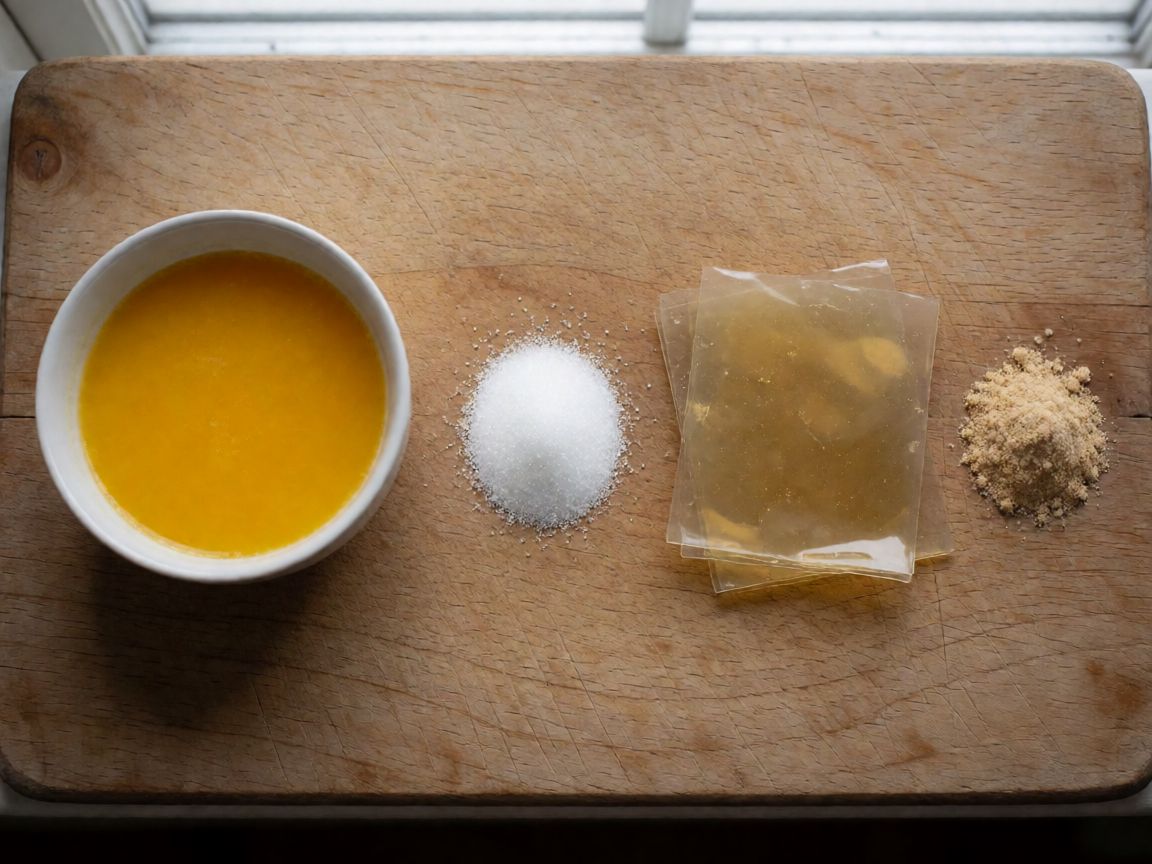
- 200 ml orange juice
- 25 g caster sugar
- 1.5 pcs gelatine leaves
- 0.5 tsp liquorice root powder for the jelly and to decorate

White chocolate mousse
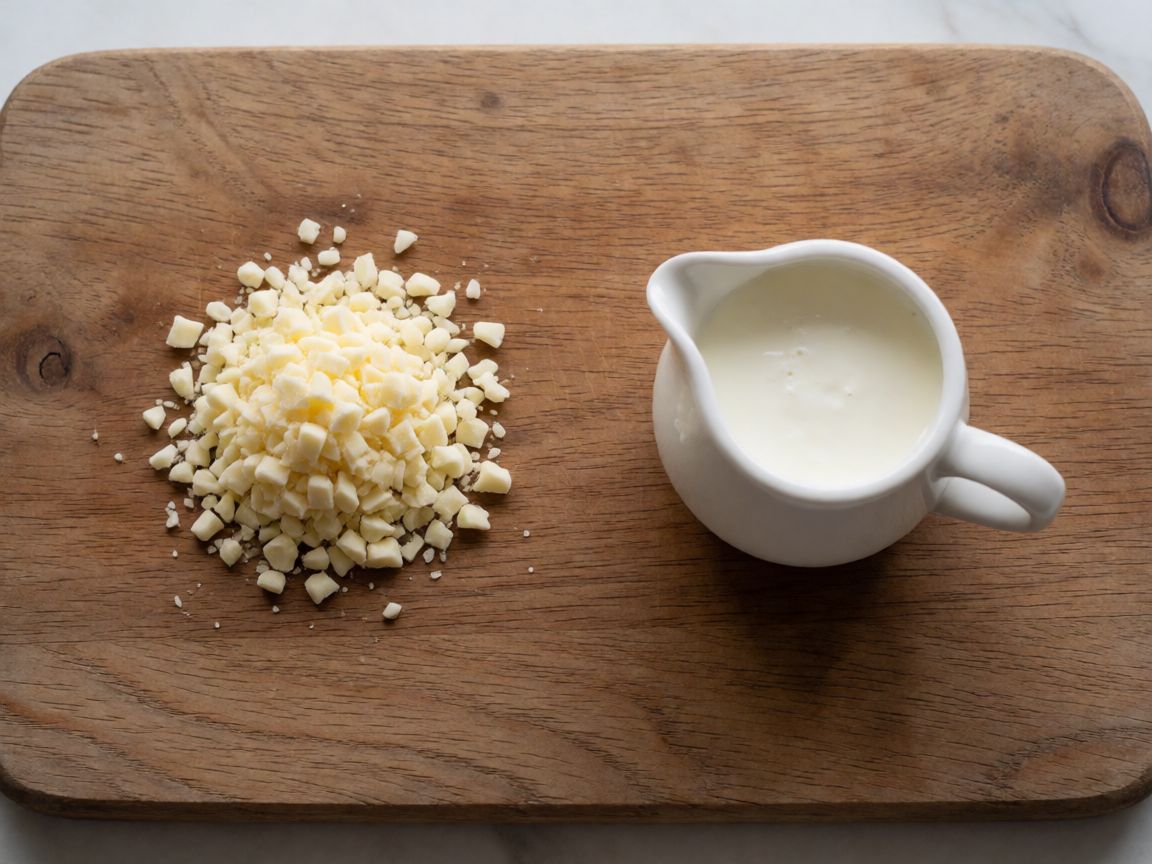
- 90 g white chocolate finely chopped
- 75 ml double cream

Steps
Split the vanilla pod lengthways and scrape the seeds onto a chopping board, add a little sugar and crush the vanilla seeds with the back of a knife.
Put the gelatine leaves one by one into a bowl of cold water.
Put the vanilla, sugar, cream, milk and the empty vanilla pod into a saucepan and bring to about 90°C, then remove from the heat.
Squeeze the gelatine out of the water and immediately add it to the hot liquid, stirring well until fully dissolved.
Remove the vanilla pod and let the vanilla cream cool on the kitchen counter for 1 hour 30 minutes.
Stir the cream well and pour it into serving glasses.
If you want the panna cotta in the glasses to be tilted, carefully pour the cream into tilted glasses set on a tray, then refrigerate.
Refrigerate for 2–3 hours.
Orange and liquorice: put the gelatine into a bowl of cold water.
Put the orange juice and sugar into a saucepan and bring to the boil until the sugar fully dissolves.
Turn off the heat.
Squeeze the gelatine out of the water, add it to the saucepan and stir well.
Refrigerate for 1 hour, then sprinkle over a pinch of liquorice root powder.
Once the panna cotta has chilled for 3 hours, carefully pour the orange jelly over it and return to the fridge until serving.
White chocolate mousse: set a bowl over a saucepan of boiling water (bain-marie).
Put the white chocolate into the bowl and immediately turn off the heat under the water.
Stir well until the chocolate melts.
Remove the chocolate from the bain-marie once almost melted and let it finish melting off the heat, stirring.
Whip the cream to a soft foam and fold in the white chocolate.
Transfer the mixture to a piping bag fitted with a nozzle and refrigerate for 15 minutes until firm enough to pipe caps to decorate the panna cotta, finishing with a dusting of liquorice root powder.
Panna cotta means "cooked cream" and that's the whole engineering brief right there — not a custard set by egg proteins tangling under heat, but cream held in shape by gelatine alone. That's why the texture is different from a crème brûlée or a flan: it wobbles rather than cuts clean, and if you've only ever had the stodgy, over-set version at a chain restaurant, that's not what this is — that's a cook who panicked and put in too much gelatine because they were scared of it collapsing on the plate.
This one builds three layers that each do a different job. The vanilla cream is the body — rich, barely sweet, set just enough to hold a shape but soft enough to give under a spoon. The orange and liquorice jelly on top is a counterweight: sharp, slightly bitter, cutting through all that cream fat so the dessert doesn't sit heavy. And the white chocolate mousse piped on top is pure theatre and pure sugar — it's there to look generous and to round off the bitterness of the liquorice, not because the dish needs more richness.
What decides whether it works is patience and gelatine math, nothing else. There's no cooking technique to get wrong here — you're not caramelising, not reducing, not building a roux. You're dissolving protein in hot liquid and then doing nothing for several hours while physics does the work. The people who fail at panna cotta fail because they rush the setting time, or guess at gelatine quantity instead of respecting it, or pour a hot layer onto a soft-set layer and watch the two melt into each other.
Start with the 90°C heating of the cream — that number matters more than it looks. Gelatine needs enough heat to actually dissolve and disperse evenly through the liquid, but if you let it boil, two things go wrong: you start denaturing the gelatine's own setting power, and you cook off moisture so your proportions drift and the set turns too firm or patchy. You don't need a thermometer glued to the pan for this — you're looking for the surface just starting to shiver and release a thin wisp of steam, well before any bubble breaks. Some say you can skip this and just warm everything to "hot" — no, because gelatine bloomed in cold water and then dropped into liquid that's merely warm won't fully unfold and dissolve, and you'll get stringy, uneven lumps sitting in your cream instead of an invisible set.
The vanilla pod split and scraped onto a chopping board, with sugar crushed into the seeds — that's not fussiness, that's because vanilla seeds are tiny and oily and want to clump. The sugar acts as an abrasive, breaking the seeds apart so they distribute through the cream as flecks instead of a single sticky knot sitting at the bottom of the pan. If you've only got vanilla extract, a teaspoon stirred in off the heat does the job — you lose the visual flecking, nothing else.
Gelatine leaves bloomed in cold water first, always — this is the step people skip when they're in a hurry, and it's the one that causes the most failures downstream. Cold water lets the leaves absorb liquid slowly and evenly; drop dry gelatine straight into hot cream and the outside of each leaf seizes into a skin before the inside ever hydrates, so you get gelatine that never fully integrates. If leaves aren't on your shelf, powdered gelatine works the same principle — bloom it in a few spoons of cold water until it looks like wet sand, then melt it into the hot liquid the same way. The quantities aren't interchangeable gram-for-gram, so check the packet rather than guessing.
The one-and-a-half hour cool on the counter before chilling isn't there to be fussy about timing — it stops condensation forming a skin or watery layer on top when hot cream goes straight into a cold fridge, and it lets the mixture thicken slightly so it doesn't slosh when you move the glasses. Then the long chill — two to three hours, not a number to shortcut — is where the actual setting happens; gelatine needs sustained cold to lock its protein network, and an hour in a busy fridge that's constantly opened and closed for milk and Sunday roast leftovers isn't the same hour as an undisturbed one. Check it by nudging a glass gently: it should hold a dome, not run flat, before you risk the orange layer on top.
Pouring the jelly only after the panna cotta has properly set — that's the one rule in this whole dish you cannot cheat. Warm liquid jelly poured onto a soft-set cream will simply sink in and marble together, and you lose the clean two-layer look that's the entire point of the dish. The liquorice root powder is a bitter, aromatic finish rather than a flavour you build a sauce from — a pinch goes a long way, so resist the urge to be generous; if you can't get it, a little very finely grated dark chocolate or even a whisper of fennel pollen gives a related savoury-bitter note, though neither is really liquorice.
The white chocolate mousse is the forgiving part, and also where the bain-marie discipline matters most. Turning the heat off the moment the chocolate meets the hot water, and pulling the bowl before it's fully melted, is about chocolate's low scorch point — white chocolate, with its milk solids and no cocoa mass to buffer it, catches and seizes into a grainy mess far more easily than dark chocolate does. Let the retained heat finish the job rather than the direct flame. Whipping the cream only to a soft foam, not stiff peaks, matters because you're folding chocolate into it afterwards — overwhip now and you'll knock the air back out fighting a too-stiff cream to combine it evenly, and end up with a dense cap instead of something light enough to pipe.
Four glasses here, which tells you something about where this dish lives — it's a dinner-party plate, not a family pudding you dish out after a roast. That's fine; just don't scale the gelatine linearly if you double it for a bigger table, because set strength doesn't always travel one-to-one with volume in a wide, shallow domestic fridge where cold air circulates less evenly than a professional blast chiller. If you're doing this in an ordinary UK kitchen with one fridge shelf and no bain-marie pan, a heatproof bowl sitting in a saucepan of just-boiled water does exactly the same job as any specialist kit — the method doesn't need a kazan or a pastry kitchen, just attention and the willingness to wait.