
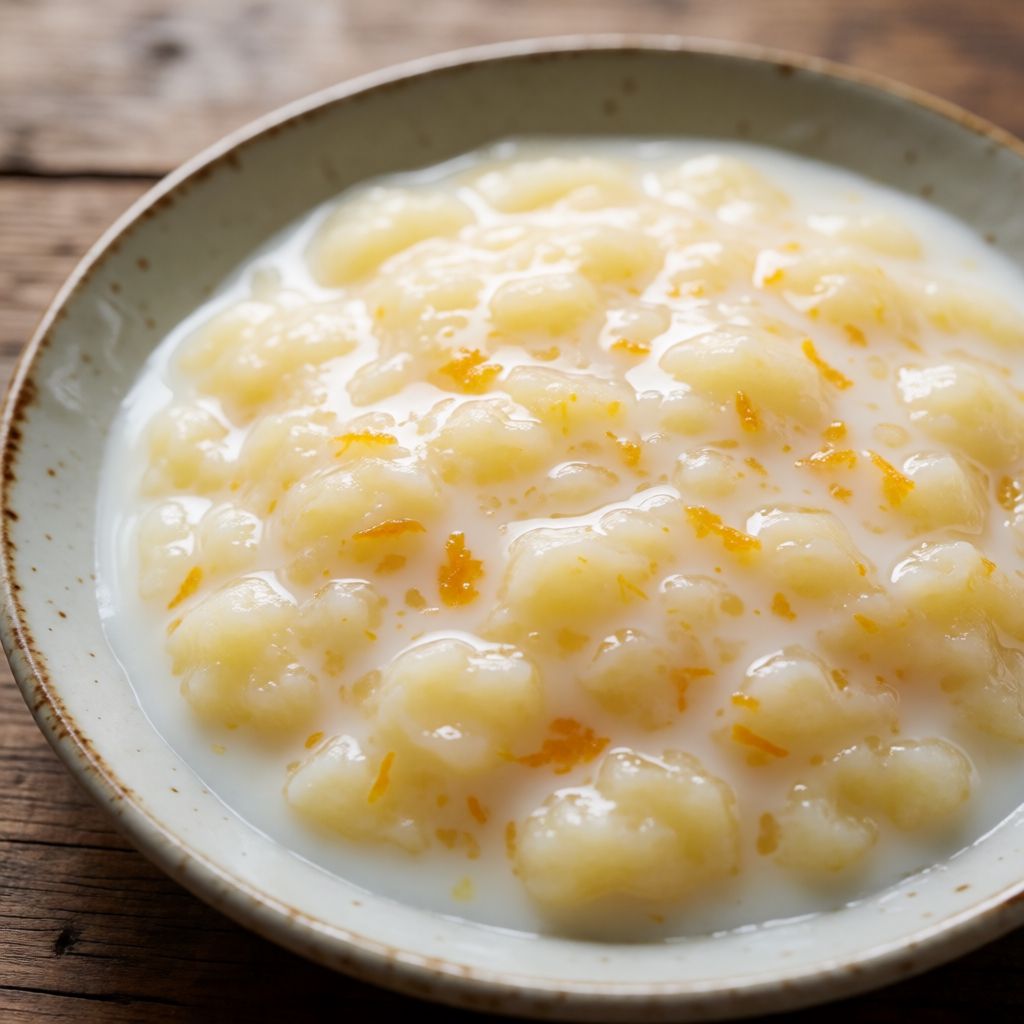
 AI photo
Orange Pudding
A silky orange-scented custard pudding, set with potato starch and chilled until firm.
Labels are worked out automatically from the ingredients and can be wrong. Check the packaging if it matters to you.
Ingredients
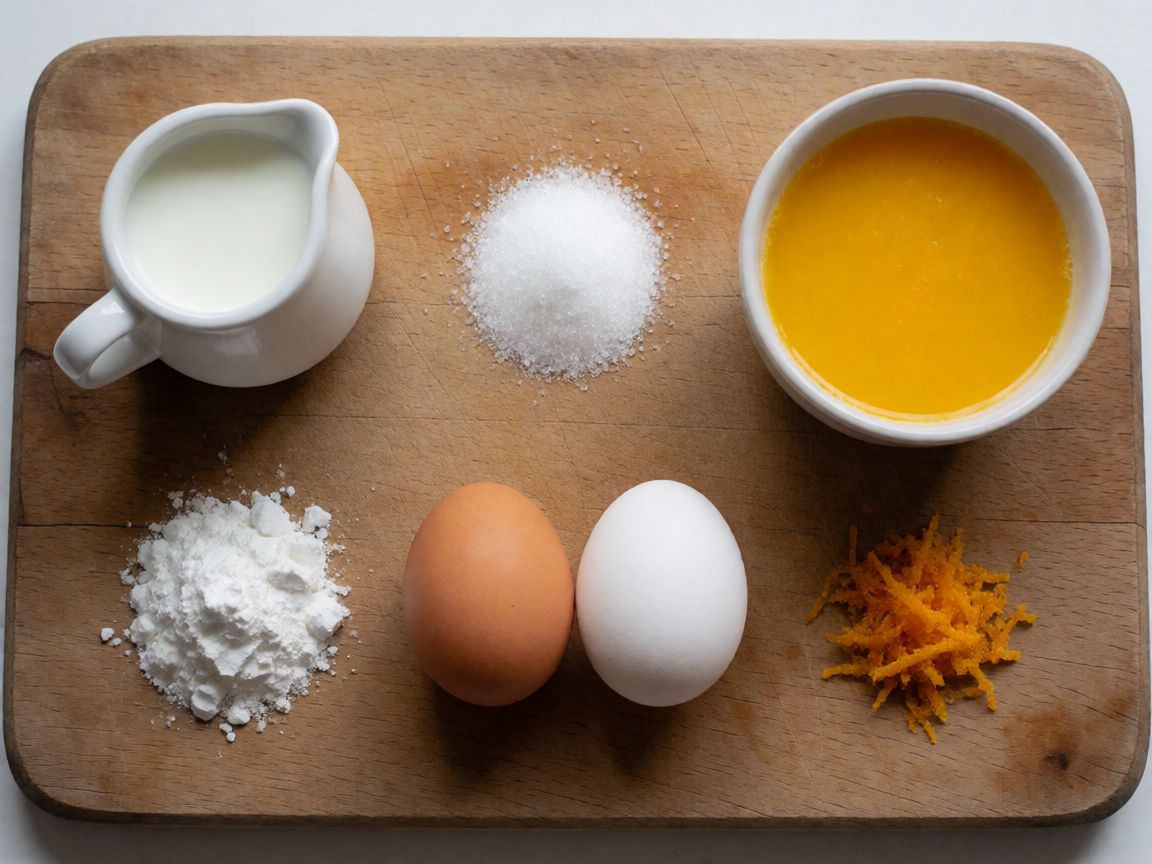
- 500 ml Skimmed milk
- 120 g Sugar
- 50 g Potato starch
- 2 pcs Eggs
- 25 ml Orange juice
- 1 pcs Orange zest





Steps
Put the eggs, sugar, orange juice, potato starch and orange zest into a saucepan and mix well.
Warm the milk in the microwave or in a small pan, without letting it boil.
Pour the hot milk into the saucepan gradually, stirring constantly.
Cook on the stove, stirring constantly, until the mixture thickens.
5 minPour the pudding into bowls or moulds and cover with cling film.
Leave to cool, then refrigerate for at least 4 hours.
240 minBefore unmoulding, dip the bottom of the mould in hot water to loosen it.
This is a milk pudding thickened twice over — once by egg, once by potato starch — set in little bowls and turned out shiny after a night in the fridge. Simple to make, but the five minutes on the stove decide everything: too slow and it stays thin, too fast or uneven and you get either lumps or little flecks of scrambled egg hiding in a smooth cream. That's the whole skill here, and it's a short one.
What makes or breaks it is the order of temperatures, not the amount of time. You warm the milk gently, short of a boil, then bring it to the eggs — not the other way round. Pour hot milk straight onto raw egg too fast and the egg nearest the heat sets before it has a chance to mix in: you get threads of cooked egg in a liquid custard, not a pudding. Pour it in gradually while stirring and you're raising the temperature of the whole mixture together, so starch and egg thicken as one smooth mass instead of two things happening in different corners of the pan.
Some say custard always needs a bain-marie, a pan within a pan, gentle indirect heat or it will split. Not true here — because the starch is doing a second job besides thickening. It sits around the egg proteins like packing material, slowing down how fast they can clump together, so you can cook this one directly in a saucepan on the stove, stirring all the time, and the eggs are protected from curdling long enough for the starch to take over and set the texture. That's the whole reason this pudding has both egg and starch rather than one or the other — it's a safety margin, not decoration.
Skimmed milk is there for lightness, not for the set — the starch and egg do the setting regardless of fat content. If all you have is whole milk, use it; the pudding will be a little richer and rounder on the tongue, no harm done. Only avoid anything already sweetened or flavoured — you want a blank canvas for the orange.
Potato starch is the engine of the whole dish. Heated in liquid, its granules swell and burst, releasing long starch molecules that tangle into a net as they cool — that net is what holds the pudding together and lets you turn it out of its mould in one piece rather than eating it with a spoon from a bowl. The criterion for a substitute is simple: any starch that gels clear and doesn't taste raw when cooked. Cornflour works gram for gram. Plain flour does not — it clouds the pudding and leaves a pasty taste, because wheat starch needs longer cooking and brings gluten proteins you don't want here.
The eggs are there for richness and for a softer, more custard-like bite than starch alone would give — pure starch puddings (think old-fashioned blancmange) set firmer and a bit rubbery. Worth knowing: cornflour custard powder, the stuff in British tins, was invented in the 1830s precisely to get a custard texture without eggs, because eggs were the expensive, perishable part of the dish and starch was cheap and kept forever. This pudding keeps both — egg for texture, starch as insurance — which is why it tolerates direct heat and a home cook's inconsistent stirring arm better than a true egg custard would.
Orange juice and zest are two different ingredients doing two different jobs, and it's worth not confusing them. The zest carries the aromatic oil that sits just under the skin — that's the actual orange smell. Grate only the orange part, not the white pith underneath, or you'll pull bitterness into a dish that has none now. The juice brings acidity and a milder, wetter orange flavour alongside it. If you're out of fresh oranges, a few drops of orange oil or a spoon of good marmalade (strained of peel) will stand in for zest, though nothing quite replaces grating one over the pan while the citrus smell lifts off it.
Sugar sweetens, obviously, but it also nudges up the temperature at which the egg and starch set — too little sugar and the pudding can set a touch firmer and sooner than you expect. There's no dark science to override here, just taste it in the raw mix before cooking and adjust if your oranges are very sharp.
The fridge time is not a formality — the starch network keeps tightening for hours after the pudding looks set, and cutting the wait short gets you something that slumps rather than turns out cleanly. Patience is the last ingredient on this list, and it's free. When you do turn it out, that dip in hot water isn't for show either: it melts a whisker-thin layer of gel against the mould's wall, just enough to break the seal, without warming the pudding through. Linger too long in the water and you'll melt the shape along with the seal — a few seconds, then straight out onto the plate.