
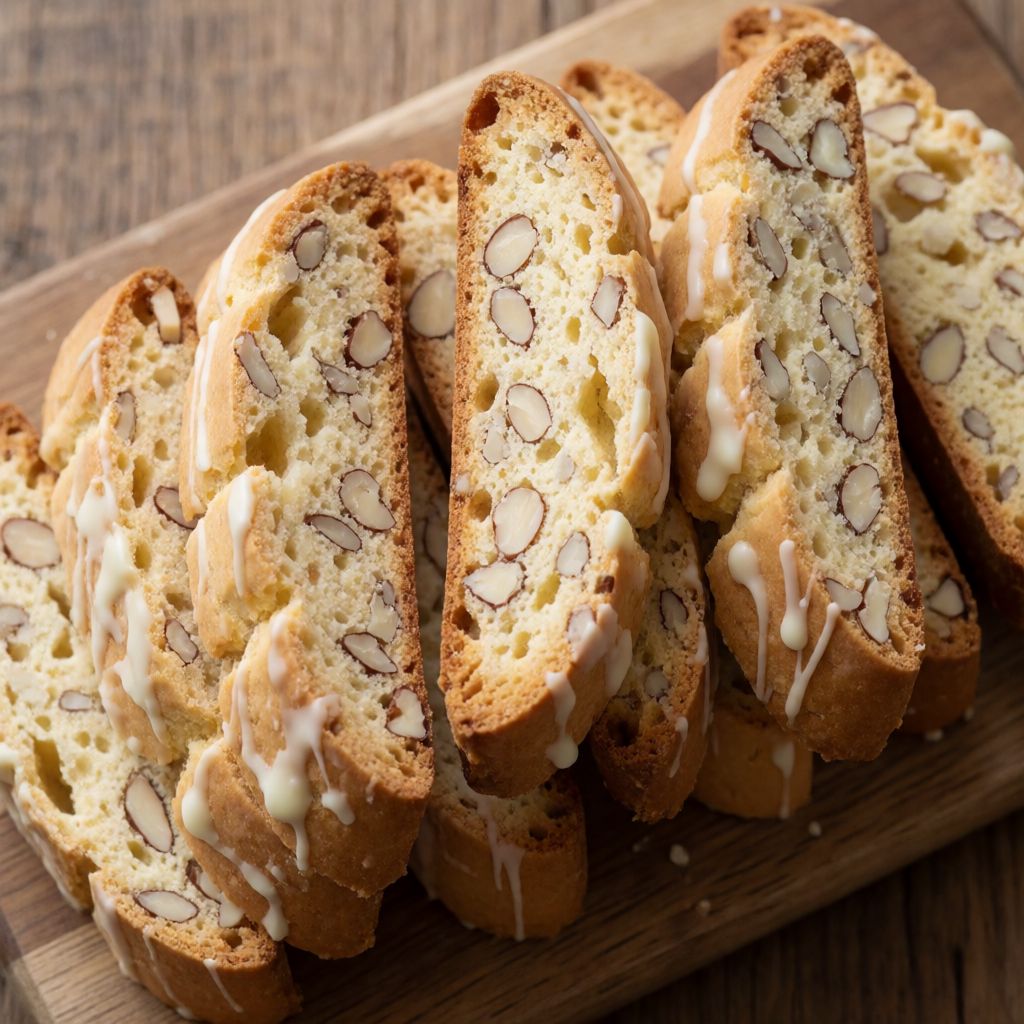
 AI photo
Orange and White Chocolate Biscotti
Crisp Italian-style biscotti flavoured with orange zest, almonds and white chocolate, twice-baked until crunchy.
Labels are worked out automatically from the ingredients and can be wrong. Check the packaging if it matters to you.
Ingredients
- 75 g Almonds
- ½ pcs Vanilla pod halved
- 125 g Plain flour
- 100 g Caster sugar
- 0.5 tsp Baking powder
- 50 g White chocolate roughly chopped
- 1 pcs Orange zested
- 1 pinch Salt
- 2 pcs Eggs beaten
- 50 g White chocolate tempered, for decoration









Steps
Put the almonds in a bowl and cover with boiling water; leave for 10 minutes, drain, cover with boiling water again and leave for 2 minutes, then drain and peel the almonds.
12 minCut the vanilla pod in half, scrape the seeds from one half lengthways and mix with the flour, sugar, baking powder, whole almonds, white chocolate, orange zest and salt.
5 minKnead the dough with the beaten egg.
3 minShape into two oblong logs about 30 cm long and 3–4 cm thick on a baking tray lined with baking paper; the dough is damp and sticky, so rinse your hands in cold water now and then to make it easier to work.
5 minBake in a preheated fan oven at 175°C for 15 minutes.
15 minTake the tray out of the oven and let the logs cool slightly.
5 minCut the biscotti diagonally into slices about 1 cm thick.
3 minLay the biscuits back on the tray lined with baking paper and bake for a further 10–15 minutes, until crisp.
13 minLet the biscuits cool on a wire rack.
10 minDecorate with tempered white chocolate.
5 min
Biscotti means "twice-baked" — that's not a cute name, it's the whole engineering of the thing. You bake a log once to set the dough, slice it while warm, then lay the slices flat and dry them out in a second, gentler pass. That second bake isn't cooking anymore, it's dehydrating — pulling the last moisture out so the crumb goes from cake-like to the kind of dry, dense snap that can survive weeks in a tin and a dunk in tea without collapsing into mush.
What decides whether this works is moisture — too much left in the log and the slices will be soft and crumbly instead of crisp; cut them too thin and they'll scorch on the second bake before they dry through; cut too thick and the centre stays chewy while the edges are already biscuit-hard. The shape of the log — flattish, 3 to 4 cm, not a fat round sausage — exists so the second bake reaches the middle of every slice evenly.
Some say biscotti should be dunked in Vespro wine standing up like a spoon in a mug — that's a myth from people who've only had the dry, teeth-breaking supermarket kind. Done right, with the moisture judged well at step one, they're firm but not punishing; a British builder's tea is honestly a fine substitute for the wine, the chocolate just needs the milk to soften against it.
Twenty-five from one batch sounds like a lot until you remember these keep — a sealed tin, two to three weeks, no fridge needed. That shelf life is the entire point of the double bake, not an afterthought.
The almonds get scalded, not for flavour, but to get the skins off cleanly — bitter, papery skin left on would turn gritty and slightly tannic once baked twice. Ten minutes softens the skin, the second short dunk loosens it further; if you can't be bothered, buy them already blanched — nothing is lost, the scalding is pure mechanics, not tradition dressed up as ritual.
The vanilla pod split in half and only one side scraped is the baker's version of using half an onion — you get the seeds' flavour in the dough now and keep the spent pod for infusing milk or sugar another day. If you've only got vanilla extract, a teaspoon stirred into the egg does the same job; you lose the little black flecks, that's all, not the flavour.
Flour here is structural, not flavour-giving — plain flour with a small amount of baking powder gives just enough lift that the log doesn't bake into a brick, while staying dense enough to slice cleanly once cool. Too much baking powder and the log puffs and tears when you cut it; biscotti dough isn't meant to rise like cake, it's meant to hold its shape under a knife.
Orange zest and white chocolate are a pairing that works for a real reason: white chocolate has no cocoa bitterness to fight the citrus oil in the zest, so you get sweetness and orange cutting through together rather than competing. Use any citrus with a fragrant, oily peel — lemon works, even bergamot if you can find it — but avoid pre-grated jarred zest, the oil that carries the smell is mostly gone by the time it's sold that way.
Eggs, beaten and kneaded in, are both the binder and most of the moisture in this dough — there's no butter or oil here, which is unusual for a biscuit and is exactly why biscotti keep so well; fat goes rancid in storage, egg-bound dough baked dry twice does not. Rinsing your hands in cold water while shaping isn't fussiness, it's because warm, sugary dough sticks to warm hands and tears instead of smoothing — cold water keeps the surface of the log clean so it bakes evenly.
The final tempered chocolate is decoration only, and tempering matters here for a mundane reason: untempered melted chocolate stays soft and smears on your fingers forever; tempered sets with a snap and a shine, which is the only way it survives sitting in a tin with the biscotti brushing against each other for two weeks. If you've no cocoa thermometer or patience for tempering, melt and drizzle it anyway and keep the biscotti in the fridge instead of the tin — a smaller compromise than it looks.