
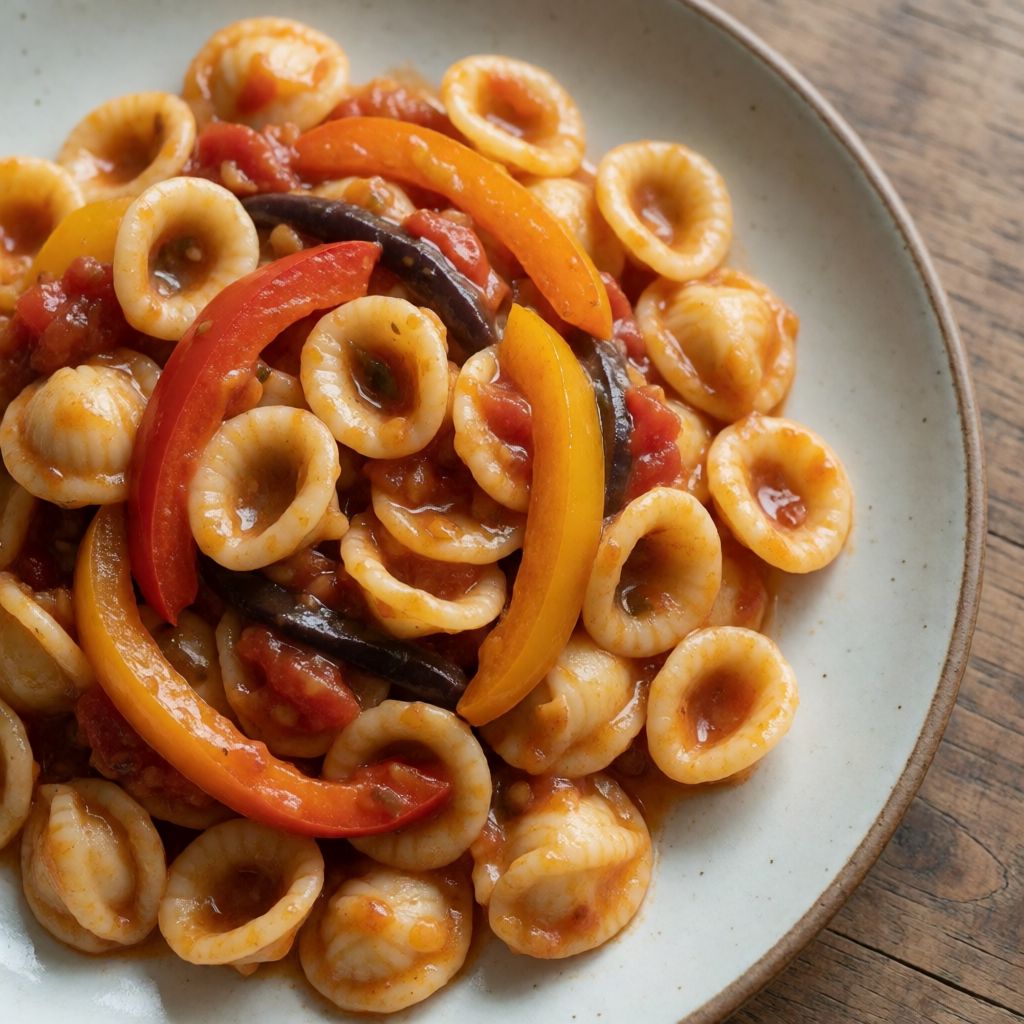
 AI photo
Orecchiette with Bell Peppers
A quick pasta dish of orecchiette tossed with bell peppers, tomato, garlic, olive paste and fresh basil.
Labels are worked out automatically from the ingredients and can be wrong. Check the packaging if it matters to you.
Ingredients
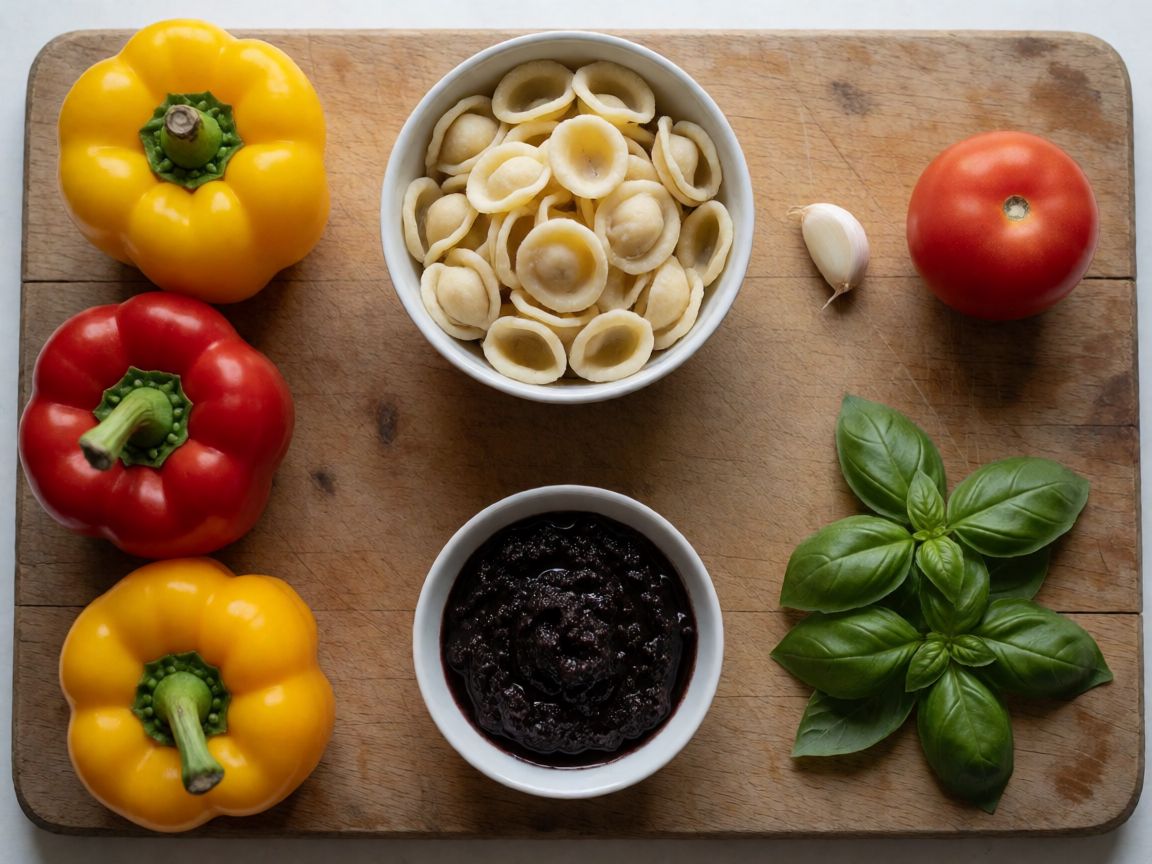
- 3 pcs Bell Pepper
- 500 g fresh orecchiette
- Olive Oil to taste
- 1 clove Garlic
- 1 pcs Tomato
- 3 tbsp black olive paste
- Salt to taste
- Black Pepper to taste
- Basil to taste, fresh









Steps
Wash the bell peppers, cut into pieces and fry in a pan with garlic and olive oil.
5 minAdd the washed and diced tomato, and cook for a further 5 minutes.
5 minRemove the garlic. Meanwhile, cook the orecchiette in plenty of salted water until al dente.
Drain the orecchiette and add to the pan with the peppers, sprinkle with black pepper, add the olive paste and basil, and toss everything together.
2 minServe hot.
This is Puglia's cucina povera on a plate: peppers, one tomato, black olives, durum wheat shaped by a thumb instead of a machine, because in that dry region you cooked with what grew and what kept. Orecchiette means "little ears" — the hollow isn't style, it's function. A flat noodle would let a chunky vegetable sauce slide straight off the fork; the cup in each disc catches it.
What decides if this works is the pepper, not the pasta. It has to go from brittle to soft — the flesh collapsing while the shape still holds, not turning to rag — and it has to get there before the garlic in the same oil scorches. Garlic flavours oil fast; peppers take longer to give up their structure. That gap is the whole risk of the dish, and it's why the garlic gets pulled out the moment it's done its job, not left to sit and darken underneath everything else.
Some say fry it hot and fast to get a bit of char on the skin, the way you'd blister a pepper for a salad. No — here that just burns the garlic black and crisps the outside while the inside is still raw and squeaking. You want the surface to relax, not catch. A sense cue, since no hob tells you a true number: the peppers should smell sweet and slightly toasted, not sharp and smoky, and they should bend without resistance when you press one with the spatula.
Peppers: go for red or yellow over green if the shop has a choice — riper fruit, more sugar, and sugar is doing real work here since nothing else in the pan is sweet. Cut them into strips or chunks with some size to them; cut small, they turn to mush before the tomato's even in, and you lose the point of having pepper at all rather than pepper-flavoured paste.
Garlic: one clove, crushed flat with the side of a knife rather than minced, so it stays in one piece you can hook out with a fork. It should go pale gold and fragrant in the oil, no further — past gold it's acrid, and acrid garlic poisons the whole pan, there's no rescuing it by adding more of anything else. If it goes dark, don't push on; wipe the pan, start the clove again. Cheaper than losing the dish.
Tomato: one, ripe, soft enough to dent under a thumb. UK supermarket tomatoes outside summer are often pale and firm — wrong texture, not enough acid, and they won't break down into the peppers' juices the way this needs. If that's what's in the bowl, a small tin of chopped tomatoes, drained a little, does the same job: it's there for brightness and a bit of liquid, not for tomato flavour as the star.
Olive paste: three tablespoons of a salty, concentrated black olive tapenade, folded through at the very end, off the direct heat the pan's been giving everything else. Its whole character is that concentration — simmer it and the salt and bitterness that normally sit in balance come forward and the rest goes dull. No shop-bought paste in the cupboard: chop pitted black olives fine, loosen with a spoon of their own oil, same hit of salt and brine, just a rougher crumb instead of a smooth paste. That's a fair trade, not a compromise.
Basil: torn, not sliced, and dropped in last of all. A blade bruises and blackens the cut edge within minutes; your fingers just tear the leaf along its grain and the aromatic oil stays where it should, in the leaf, releasing into the hot pasta rather than into a hot pan five minutes earlier. A windowsill basil plant from the supermarket is entirely in keeping with this dish's economics — it's cheap food from a poor region, not a dish that needs a grand bunch of anything.
Orecchiette: fresh, as the recipe asks, cooks quickly and has a spring to the bite that dried orecchiette (durum wheat and water, no egg) doesn't quite match — dried takes longer in the pot and you check it by biting one, never by the packet's clock, because every brand's water content differs. The patience in this recipe isn't in the pasta though, it's in the peppers: get them started well before the pasta water boils, let them take the time they need to soften properly, and let the pasta wait a minute in the colander if it finishes first. A late pasta reheats fine tossed hot through the vegetables. Scorched peppers don't come back from anything.