
 AI photo
Orecchiette with Sun-Dried Tomato and Rocket Pesto
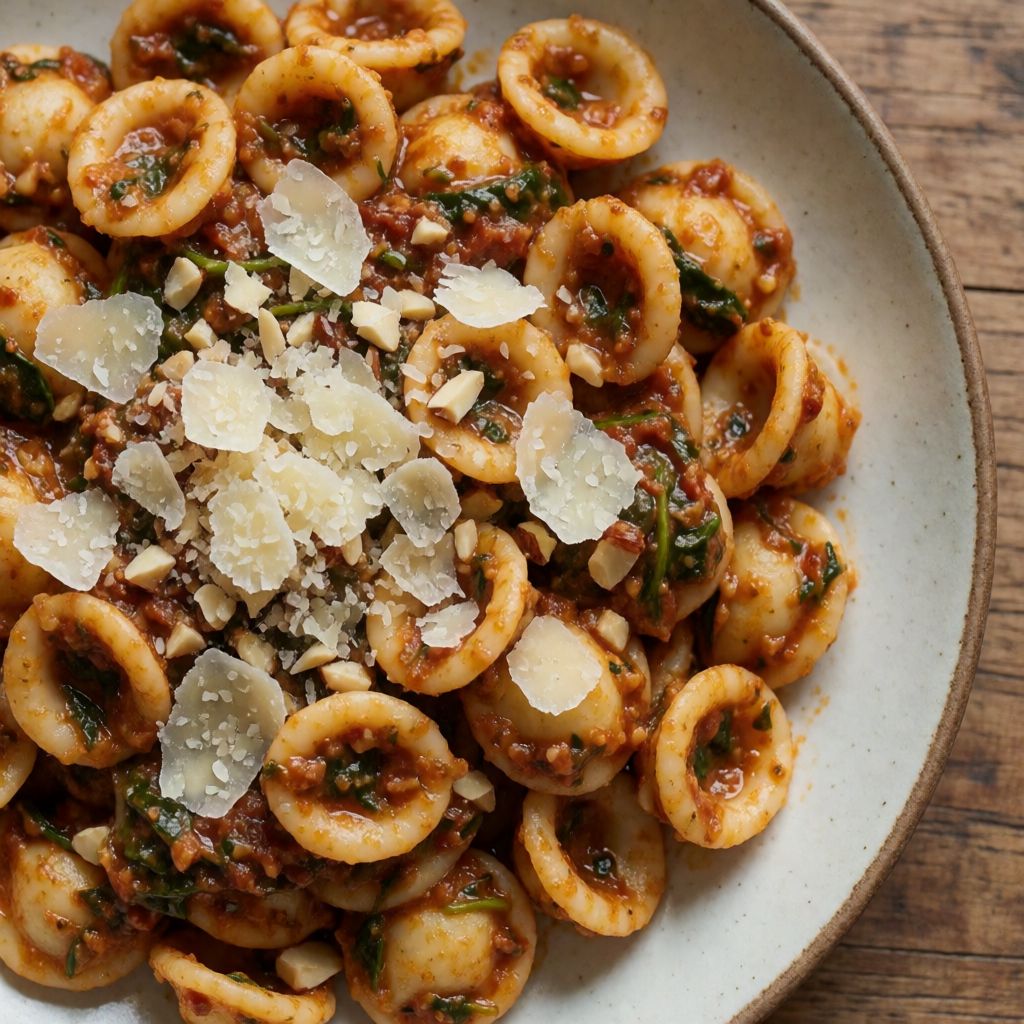
A quick pasta dish with a creamy no-cook pesto of rocket, almonds, parmesan and sun-dried tomatoes.
Labels are worked out automatically from the ingredients and can be wrong. Check the packaging if it matters to you.
Ingredients







Steps
Bring a large pot of salted water to the boil and cook the orecchiette.
Put the rocket in a blender with a pinch of salt and blend.
Add the almonds, grated parmesan and sun-dried tomatoes.
Pour in the olive oil in a thin stream and blend until you get a smooth, creamy pesto.
Cook the pasta until al dente, drain and toss with the pesto.
Serve, sprinkling with extra grated parmesan if you like.
This is not a cooked sauce, it's an assembled one — raw pesto, folded through hot pasta at the very end. Nothing here gets simmered except the pasta water, so everything that decides the dish happens in the blender, not on the hob. That's worth saying plainly, because people expect a pasta sauce to need a pan and heat, and this one doesn't — the only job of heat is to warm the pesto through the pasta, not to cook it.
The shape matters more than it looks. Orecchiette are little cupped ears for a reason: this pesto isn't smooth like a basil one, it has grit in it — ground almond, chewed bits of sun-dried tomato. A long smooth noodle would let that slide straight off. The dimple in an orecchietta catches it and holds it in the bite. If you only have penne or fusilli in the cupboard, use them — a shape with a ridge or a tube still traps sauce, it's flat spaghetti that would leave you with pesto pooled at the bottom of the bowl.
The thing that actually makes or breaks this dish is how you add the oil. Pour it in all at once and it pools — you get oily grit at the bottom of the blender and a dry paste floating on top, because the solids haven't had the chance to take the fat up into themselves. Pour it in a thin stream with the blade running and it binds — the almond and parmesan fat emulsify with the oil the same way egg yolk and oil become mayonnaise. You're watching for a pesto that looks matte and creamy, not one with a separate oily sheen on the surface.
Rocket does the job basil usually does — bulk and a sharp green flavour the fat can carry — but it behaves differently under a blade. Basil bruises gently; rocket, if you run the blender too long or too fast, goes from peppery to properly bitter and the colour tips from bright green to a tired khaki. That's oxidation and heat from the blade, not anything wrong with the leaf. Pulse it in short bursts rather than one long run, and pick young rocket with narrow, tender leaves — the older, broader-leaved stuff sold cheap near its date is already heading toward bitter and no amount of blending fixes that, because nothing here gets cooked to soften it. A pinch of salt added with the rocket at the start isn't seasoning yet, it's mechanical: it draws moisture out of the leaf so the blade has something to grip instead of spinning uselessly on dry leaves.
Almonds stand in for pine nuts, and here they're not a substitution so much as the original choice in the dish's own lineage. What a nut does in a pesto is give fat and bulk, so the sauce has body rather than being thin green oil — any oily nut will do that job: walnut gives a more bitter, tannic edge, cashew gives a milder, almost sweet one. Buy them blanched if you can, skins add a slightly furry bitterness that's fine in small amounts but not something you want dominating a sauce this concentrated.
Parmesan gives salt and the long savoury depth that raw vegetables and oil alone can't — it's doing a second structural job too, its fat and protein help the emulsion hold the same way the almond does. Buy a block and grate it yourself if you can; the pre-grated bags are often cut with anti-caking starch that stops it melting into the paste properly, it just sits there gritty. Grana Padano is the easy swap, pecorino if you want more bite and don't mind the saltier, sharper edge of sheep's milk.
Sun-dried tomatoes bring the sweetness and the deep, almost roasted savoury note this pesto depends on, since nothing in the method is actually roasted. If you buy them dry, in the cellophane packet rather than the jar, soak them in warm water first — blended dry they're tough and leathery and the blender just shreds them into fibres rather than a paste. The jarred ones sitting in oil on the supermarket shelf are easier: drain them, and use some of that flavoured oil as part or all of your olive oil, it's already carrying tomato flavour and nothing goes to waste.
On the oil itself: this is one of the few times you don't want a neutral oil, because nothing here is cooked — the oil is tasted raw, exactly as it comes out of the bottle, so its own character matters. Go for a fruity, rounded extra virgin rather than an aggressively peppery one, which will fight with the pepper already coming off the rocket. If all you have is a flat, flavourless cooking oil, it'll work mechanically — the pesto will still emulsify — but it'll taste thin, like dressing with water.
Last thing, and it's not an ingredient but it behaves like one: patience with the pasta water. Keep a cupful back before you drain the orecchiette. This pesto is thick, almost a paste, and tossed straight onto dry pasta it clings in patches rather than coating evenly. A splash of the starchy cooking water loosens it just enough to run through the whole bowl, and it's the same starch that helps bind oil and pasta together rather than the sauce sitting as a separate layer. Drain the orecchiette when they still have a little resistance at the centre — they're thicker at the knot than at the rim, and that's where bite tells you they're done, not a clock.