
 AI photo
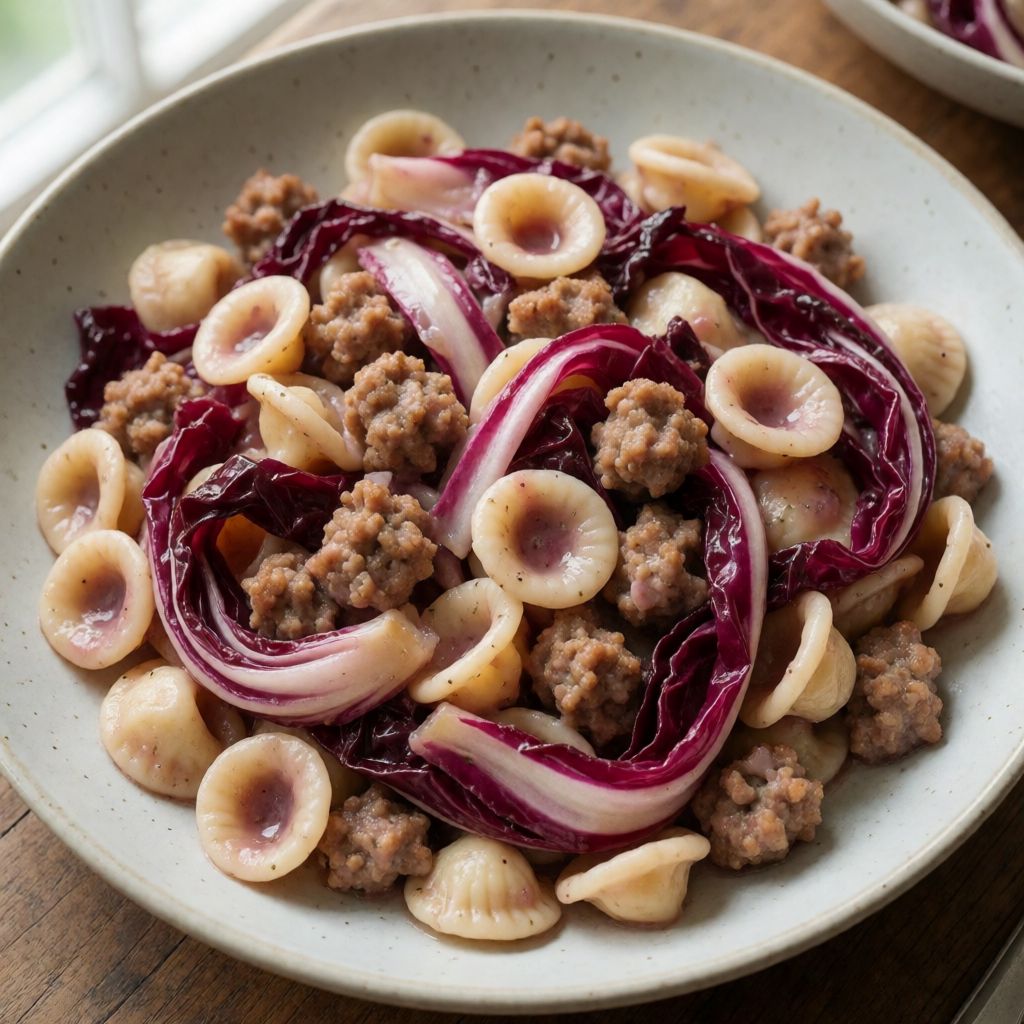
Orecchiette with Sausage and Radicchio
Orecchiette pasta tossed with crumbled sausage and radicchio in a creamy sauce.
Labels are worked out automatically from the ingredients and can be wrong. Check the packaging if it matters to you.
Ingredients
- 400 g Orecchiette
- 1 pcs Onion
- 120 g Sausage skinless
- 1 pcs Radicchio
- Salt to taste
- Black pepper to taste
- 120 g Cream cheese
- 120 ml Red wine
- 1 tbsp Vegetable stock
- Olive oil to taste
- Parmesan to taste










Steps
In a pan, fry the chopped onion in 2 tbsp of olive oil. Add the sausage, cut into pieces.
Brown it, then pour in the red wine and let it evaporate.
Cook for a few minutes, then add the radicchio and a little vegetable stock. Doneness: 70°C inside.
Season with salt to taste and add the cream cheese.
Meanwhile, cook the orecchiette in plenty of salted boiling water until al dente.
Drain the pasta and transfer it to the pan, adding 2 tbsp of Parmesan.
Sauté for a few minutes and serve.
Orecchiette with sausage and radicchio is a Puglian weekday dish wearing a few Sunday clothes — the pasta shape is pure south, the cream cheese and wine sauce is someone's kitchen improvisation on top of it. "Orecchiette" means little ears, and the shape is not decoration: that curled disc is built to catch a thick, clingy sauce rather than let it slide off the way a smooth penne would. If you use a different pasta here, use one with a rough or cupped surface — otherwise half your sauce stays in the pan.
What decides whether this works is the radicchio, not the sausage. Radicchio is bitter by design — that's chicory, not lettuce — and bitterness needs two things to behave: heat to soften it into something more vegetal than sharp, and fat or sugar to balance it. The cream cheese does the balancing job here; without it, you'd have a genuinely bitter plate, which is not a mistake, it's the point of the vegetable, just unmanaged.
Browning the sausage before the wine goes in matters for a specific reason: raw meat releases liquid and steams rather than browns, so you sear it first to build the base flavour, then deglaze with the wine — which also means scraping up whatever's stuck to the pan, that's where the taste actually is, not in the wine itself.
Some say sausage for pasta has to come "in the skin" and you squeeze it out. No — skinless sausage meat fries into smaller, looser pieces that pick up sauce instead of sitting as whole discs, which is exactly what you want when the final dish is meant to coat, not chunk.
The onion goes in first and alone, in oil, because it needs time to turn from raw and sharp to soft and sweetish before anything else competes with it. You're not looking for colour here, you're looking for it to go translucent and collapse a little — if it still squeaks when you push it with a spoon, it's not ready, no matter what the clock says.
The "70°C inside" for the sausage-radicchio mixture isn't a target you need a thermometer for in a home kitchen, though if you have a cheap probe thermometer lying around from roasting a chicken, use it. Without one, go by what you can see: the sausage loses its pink, the radicchio has gone from stiff purple-white to limp and darker, and the pan smells like cooked meat, not raw. That's your cue, the number is just the lower bound dressed up.
Red wine here does a job, not a flavour. It lifts the browned bits off the pan base (deglazing) and its acidity cuts slightly into the richness that's coming from the cream cheese later — balance again, same trick as with the radicchio. Any dry red without a sweet or fruity signature works; you're not drinking it, you're using its acid and its ability to evaporate cleanly, leaving flavour behind, not a wine taste. A splash of red wine vinegar diluted with a bit of water in a pinch does a rougher version of the same job.
Cream cheese is doing the work that cream or mascarpone would do in other versions of this family of sauce — fat and body, something to make the sauce coat the pasta rather than pool at the bottom of the bowl. Any soft, mild, spreadable cheese with no strong character of its own will do the same thing; ricotta loosened with a spoon of the pasta water is a reasonable swap if cream cheese isn't in the fridge.
The vegetable stock is there for one tablespoon's worth of seasoning depth and a little extra liquid so the radicchio has something to steam-soften in rather than just fry dry. Don't reach for a whole stock pot's worth — a tablespoon of concentrate or a splash of ready-made stock is genuinely the measure, more will thin the sauce you've just thickened with cheese.
Finishing the drained pasta in the pan with Parmesan, not alongside it, is what makes this a sauced dish instead of a dish with sauce poured over it: the starchy pasta surface and the hot pan let the cheese melt into everything rather than sit as grated flakes on top. Keep a cupful of the pasta cooking water aside before you drain — if the sauce looks tight or claggy once the pasta's in, a splash of that water loosens it without watering down the taste, because it's salted and already carries a little starch. This feeds four as a main course, and if your pan is the width of a normal domestic hob ring and not a wide trattoria one, do the final toss in two batches rather than crowding it — a crowded pan cools down and steams instead of sautéing, and you lose the glossy finish you're working for.