
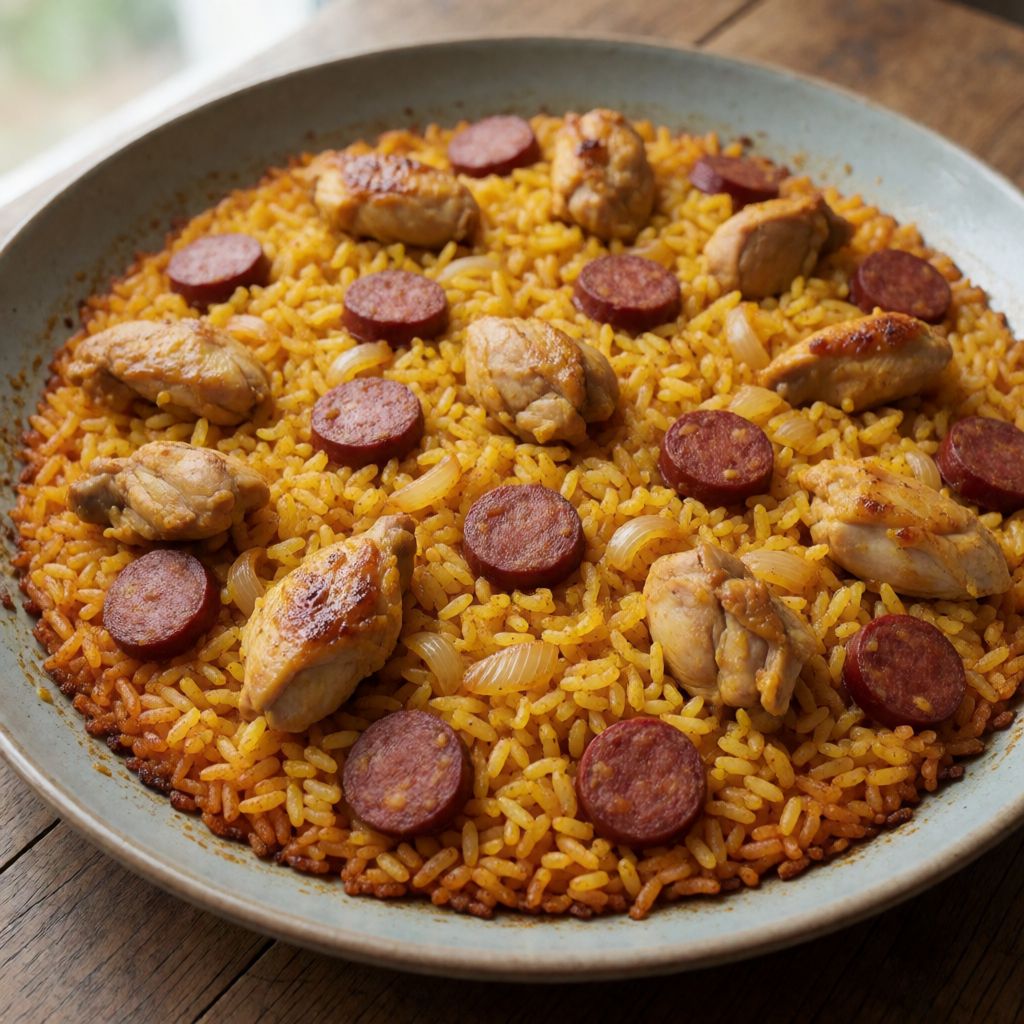
 AI photo
Chicken and Chorizo Paella
A one-pan chicken and chorizo paella with saffron rice, baked in the oven until tender.
Ingredients
- 1 pcs Onion finely chopped
- 75 g Chorizo cut into small cubes
- 1 pcs Whole chicken whole, cut into small pieces
- 350 g Risotto rice
- 1 pinch Saffron crushed
- 1 tsp Paprika sweet
- 200 ml White wine
- 700 ml Stock
- 3 clove Garlic crushed
- 2 pcs Celery stalks, coarsely grated
- 1 pcs Pepper cut into small cubes
- 400 g Chopped tomatoes canned, chopped
- 50 g Tomato paste
- 50 g Peas
- 1 bunch Parsley finely chopped
- 1 pcs Lemon unwaxed, zest finely grated
- 2 tbsp Olive oil for frying
- Salt
- Black pepper freshly ground
















Steps
Fry the onion and chorizo in a large ovenproof pan with olive oil until the onion is soft.
Add the chicken to the pan, skin-side down, and fry well until the skin is a good colour and crisp.
Add more olive oil if needed.
Remove the chicken pieces and set them aside on a plate.
Add the rice, saffron, paprika and wine to the pan and stir well for a few minutes.
Add the stock, garlic, celery, pepper, chopped tomatoes, tomato paste and peas, and stir well.
Lay the chicken pieces on top of the dish.
Cover with a lid and place in a preheated fan oven at 180°C for 20-25 minutes.
Check if the rice is cooked; if not, leave it for another 5 minutes until the rice is perfect.
Season with salt and pepper, and sprinkle with finely chopped parsley and finely grated lemon zest before serving.
Let's be honest about what this is first: it's not paella. Real paella — the one from the rice fields around Valencia — happens in a flat, wide pan over an open fire, where the liquid can evaporate fast and leave you that crust on the bottom, the socarrat. You, in a flat with an oven and an ordinary pan with a lid, are making a very good chicken-and-chorizo rice bake that borrows paella's seasoning logic. Nothing wrong with that — just don't expect the crust, and don't let anyone tell you it's not "real" because of it. It's real for what it is.
What decides whether this works is the order of frying, not the rice. You fry onion and chorizo first so the fat that comes out of the chorizo — paprika-red, smoky — becomes the cooking medium for everything after. Then the chicken goes in skin-down, and you leave it until the skin actually browns, not just turns from pink to pale. That browning is flavour, caramelised fat and protein, and it's also insurance: chicken skin that hasn't crisped in the pan will go rubbery and grey once it's steaming under a lid in the oven, because wet heat can't brown anything. So the crisping has to happen now, in dry fat, in the open pan, or it never happens at all.
Rice absorbing stock does the rest of the work later, but the rice itself needs a minute in the hot fat with the saffron and paprika before any liquid touches it — that's not decoration, it's how the grain picks up colour and a faint toasted note rather than tasting like plain boiled rice with saffron floating on top.
The onion is there for sweetness and bulk, cooked slowly enough that it goes soft and translucent rather than browning hard — if it catches colour too fast you'll taste bitterness later, so keep the heat low enough that it softens before it colours.
Chorizo gives you paprika, fat, and salt in one ingredient — it's doing the seasoning job of three things at once, which is exactly why Spanish and Portuguese cooking relies on cured sausage so heavily: one ingredient, bought once, flavours a whole pot for a week. If you can't get it, you're looking for something smoked, cured, and fatty enough to render — a smoked streaky bacon with extra paprika stirred in gets you close, though you lose the particular tang of the cure.
Chicken cut into small pieces, skin on, bone in — the bone gives you more flavour into the sauce as it braises, and the skin, once crisped, keeps the meat from drying out under forty-odd minutes of oven heat. Boneless breast here would just go dry and stringy; this dish wants the forgiving cuts, thighs and legs.
The rice: risotto rice (arborio or similar) is chosen for starch content, which thickens the stock around it as it cooks rather than leaving separate dry grains — a short-grain, high-starch rice is the real criterion; paella rice (bomba) is the traditional choice for dry-pan cooking, but since you're covering this and baking it, starchier rice behaves better, not worse.
Saffron is there for a particular bitter-floral note and that yellow colour no other spice fakes convincingly — a pinch really is a pinch, because too much turns medicinal rather than fragrant. If you genuinely have none, a good sweet paprika alone (which you're using anyway) will still give colour and warmth, just without saffron's particular perfume — don't bother with turmeric as a swap, it colours but doesn't taste anything like it.
White wine deglazes the pan — lifts the browned bits stuck from frying the chicken and chorizo, which is where a lot of flavour is hiding, stuck to the metal rather than lost. Any dry white does this job; you're not drinking it, you're dissolving fond with it.
Stock, garlic, celery, pepper, tinned tomatoes and tomato paste together build the braising liquid the rice will actually cook in — the tomato paste thickens and deepens colour, the tinned tomatoes add acidity to balance the richness of chicken fat and chorizo. Peas go in raw because they'll cook through gently in twenty-five minutes of oven heat without turning to mush, which is also why they're added at the start rather than at the end — a lesson for most English veg cookery generally, where boiling to grey submission is the old habit this dish quietly avoids.
The oven at 180°C with the lid on is doing the job an open flame can't do safely in a domestic kitchen — even, steady heat all round the pan rather than one scorching patch under the pan, with the lid trapping steam so the rice actually cooks through rather than drying out on top while staying hard underneath. Check at twenty minutes by biting a grain, not by the clock — if there's a hard chalky centre, give it the extra five, because the oven's real temperature always wavers a little from the dial's claim, and that's a fact of ordinary ovens, not a flaw in you.
Parsley and lemon zest go on at the very end, off the heat, because both lose their brightness fast under heat — zest turns bitter, parsley wilts and goes flat. Scatter them on just before it reaches the table, and that lift is the last thing the dish needs after forty-five minutes of slow building underneath.