
 AI photo
Palermo-Style Sfincione
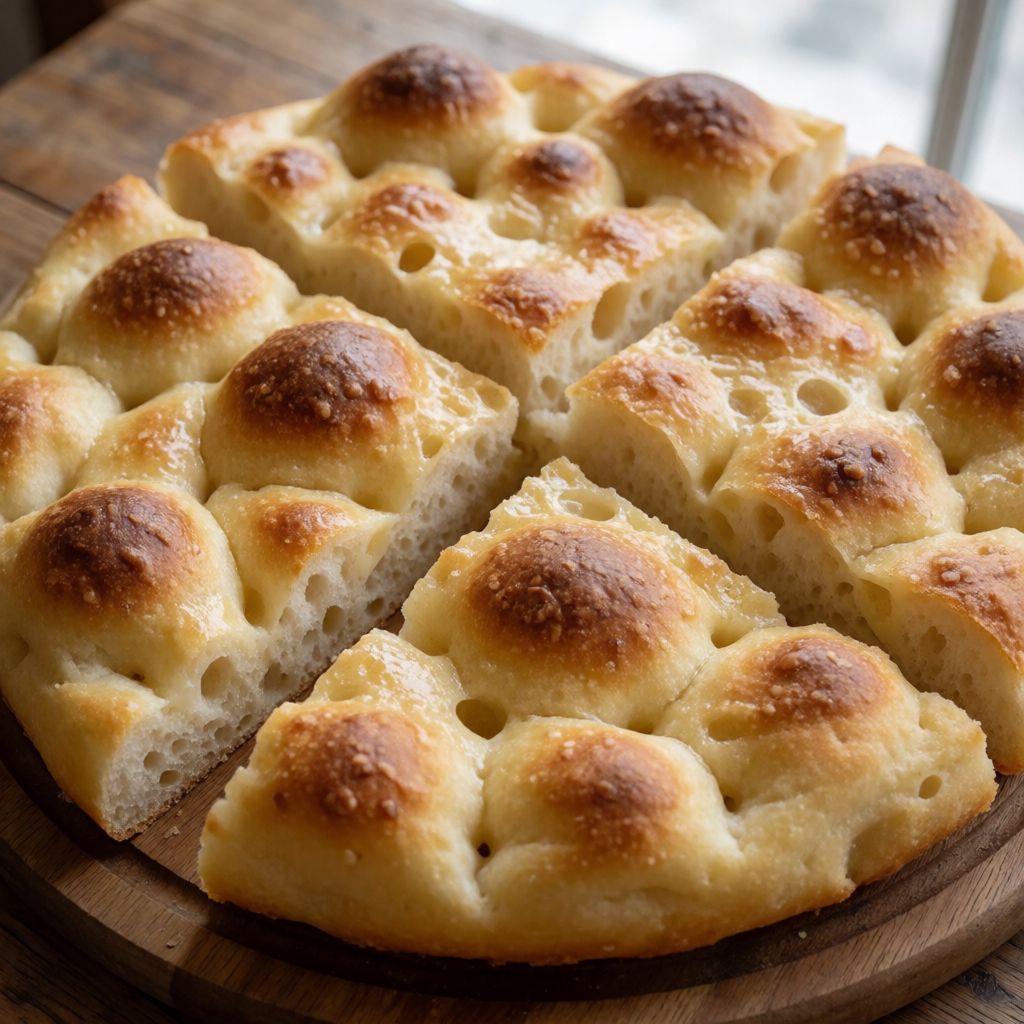
A thick, spongy Sicilian pizza from Palermo, topped with a rich tomato and onion sauce, caciocavallo cheese and breadcrumbs.
Labels are worked out automatically from the ingredients and can be wrong. Check the packaging if it matters to you.
Ingredients
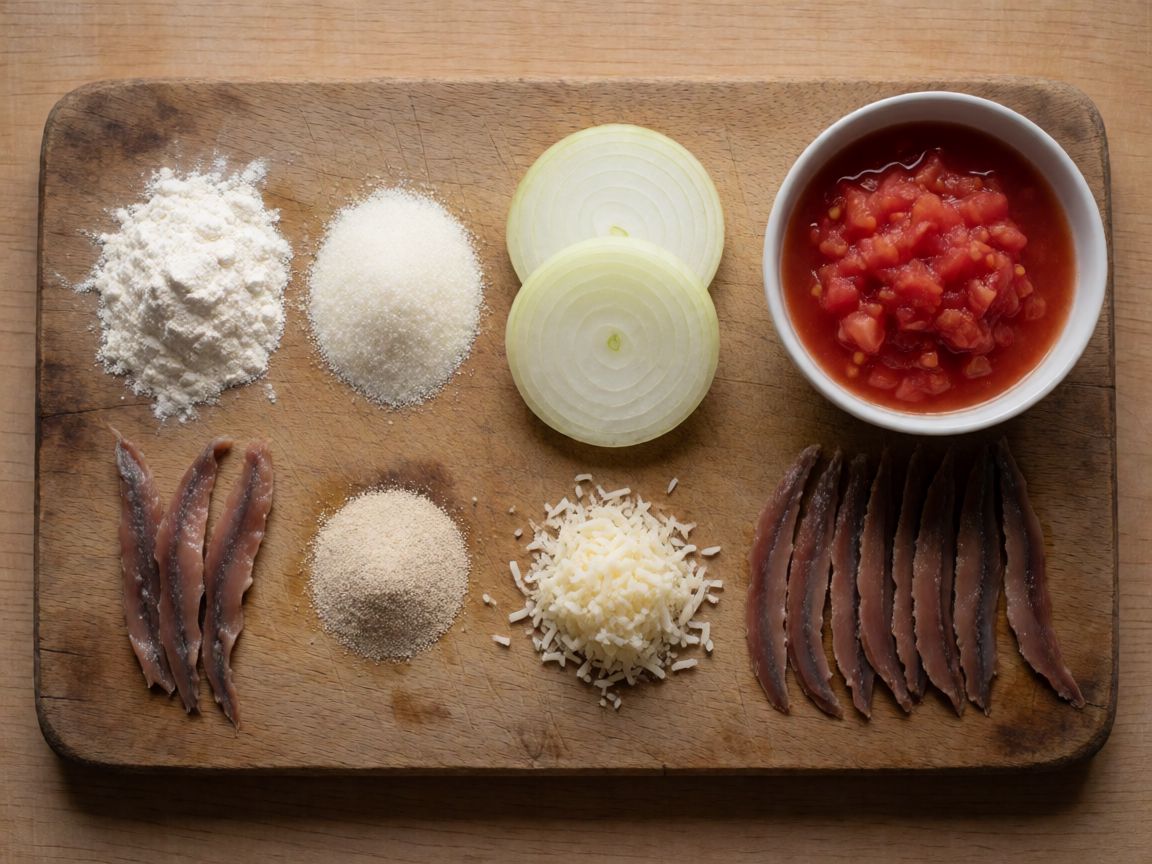
- 400 g Plain flour
- 100 g Semolina
- 300-350 g Water warm
- 10 g Yeast
- 10 g Olive oil
- 10 g Salt
- 2 pcs Onion thinly sliced
- 500 g Canned chopped tomatoes
- Olive oil to taste
- 3-4 pcs Anchovies
- Salt to taste
- 200 g Caciocavallo
- 7-8 pcs Anchovies cut into pieces
- Oregano to taste
- Breadcrumbs to taste








Steps
Tip the flour and semolina into a bowl, add the warm water with the yeast, mix, then add the olive oil and salt. Knead the dough until smooth.
10 minShape the dough into a ball, place in a bowl, cover and leave to rise.
180 minHeat the olive oil, melt in the anchovies, add the thinly sliced onion and cook over medium-low heat.
10 minAdd the canned tomatoes and simmer the sauce with the onion, stirring. Season with salt to taste.
30 minCut the caciocavallo into small chunks, keeping a couple of tablespoons grated aside.
Turn the dough out onto a floured surface and spread it into a baking tin.
Arrange the cut anchovies on top and leave the dough to rest.
20 minSpread the sauce over the surface, add the caciocavallo chunks, sprinkle with the grated caciocavallo, oregano and breadcrumbs.
Leave to rise again before baking.
60 minBake the sfincione at 250°C in a preheated static oven.
Sfincione is Palermo's answer to a question nobody in Naples ever had to ask: what do you do when you're poor, it's a feast day, and you still need bread to feel like an event? The answer is a thick, spongy slab — closer to focaccia than to pizza — built to carry a wet, oniony tomato sauce and salty fish without collapsing, because the dough itself is half the meal, not a crust for toppings to sit on.
Some say sfincione is "just Sicilian pizza". No — because the whole architecture runs backwards from pizza logic. Pizza dough is thin and dry-ish so it can crisp under a hot stone. Sfincione dough is wet, semolina-fortified, and left to balloon twice, precisely so it stays soft and bready under a sauce that's been simmered down and is still fairly loose. The crumb needs to be open enough to soak sauce without turning to paste. That's the semolina's job — it stiffens the gluten network just enough that the dough can take on water and oil without sagging into a puddle.
What decides whether this works is almost entirely the rise, not the topping. Two risings, roughly 180 then 60 minutes, aren't a formality — they're what turns a dense slab into something with lift. Rush either one and you get a biscuit with tomato on it, not sfincione. The dough tells you when it's ready by doubling and holding a dimple when poked, not by the clock; the times given are the minimum, not a deadline.
Flour and semolina together, not flour alone, because plain flour gives you elasticity but not backbone — on its own it would stretch under the weight of sauce and chunks of cheese and thin out at the edges. Semolina is coarser and higher in protein; it's the reason this dough can carry a wet topping and come out of the oven still looking like bread, not like a soggy pancake. If you can't get semolina, use strong bread flour in its place — not more plain flour, which won't fix the problem, only make more of it.
The water is "warm", not hot, for one plain reason: yeast is a living thing, and above body temperature you start killing it rather than waking it. Warm like a bath you'd actually get into — that's the sense cue, because nobody's kitchen thermometer agrees with another's.
Onions cooked low and slow in oil with anchovies melted into it first isn't a flourish — the anchovies dissolve into the fat and season it from the inside, so the onion cooks in a savoury oil rather than a neutral one, and you get depth without anyone biting into an actual fish. This is the same trick behind anchovy-and-garlic bases in half of Italian cooking: fish as seasoning, not as a visible ingredient, because whole anchovies were once the cheap, salted, keeps-all-winter protein of a poor coastal kitchen, not a luxury.
Caciocavallo is a stretched-curd cheese, firm, slightly sharp, made to be cut in chunks and still hold shape under heat rather than flood the surface like mozzarella would. If you can't find it, a mature provolone or even a firm pecorino-adjacent cheese gets you closer than mozzarella ever will — the criterion is a cheese that melts without turning liquid, not a specific brand.
Breadcrumbs scattered over the top: any dry, plain breadcrumb works, the point is dryness, not flavour — stale bread blitzed in a processor does the job for free, and is, if we're honest, probably closer to how this got invented than anything bought in a packet.
A static 250°C oven, not fan-forced, because sfincione wants heat that sits and bakes through rather than heat that's blown around and dries the surface fast. Most UK domestic ovens top out around there or just under — get it as hot as it goes and preheat properly, meaning give it the full warm-up time before the tray goes in, not the moment the light clicks off. A baking tin with some depth, not a flat tray, because this dough rises again inside the tin during that final 60 minutes and needs walls to climb against — without them it just spreads thin and you've made something else entirely.
And the patience point, because it's the one people skip: three separate waiting stretches, roughly four hours of mostly doing nothing, is not dead time to be shortened. It's the ingredient that turns flour and water into something with air in it. Skip the wait and you can still eat the result — it just won't be sfincione, it'll be a tomato bread you made in a hurry, which is a perfectly fine thing to eat, just not this thing.