
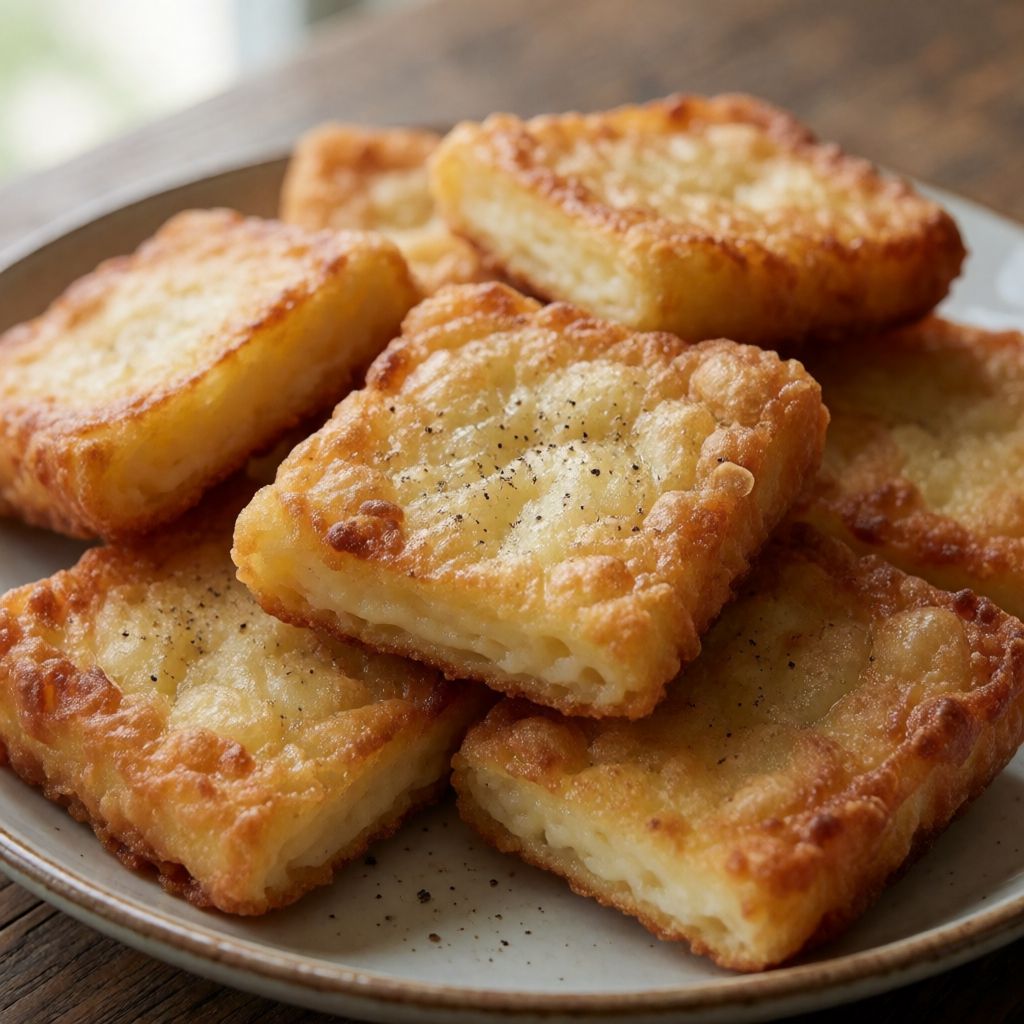
 AI photo
Panissa
A classic Ligurian chickpea flour cake, set until firm, then cut into pieces and fried until golden and crisp.
Labels are worked out automatically from the ingredients and can be wrong. Check the packaging if it matters to you.
Ingredients
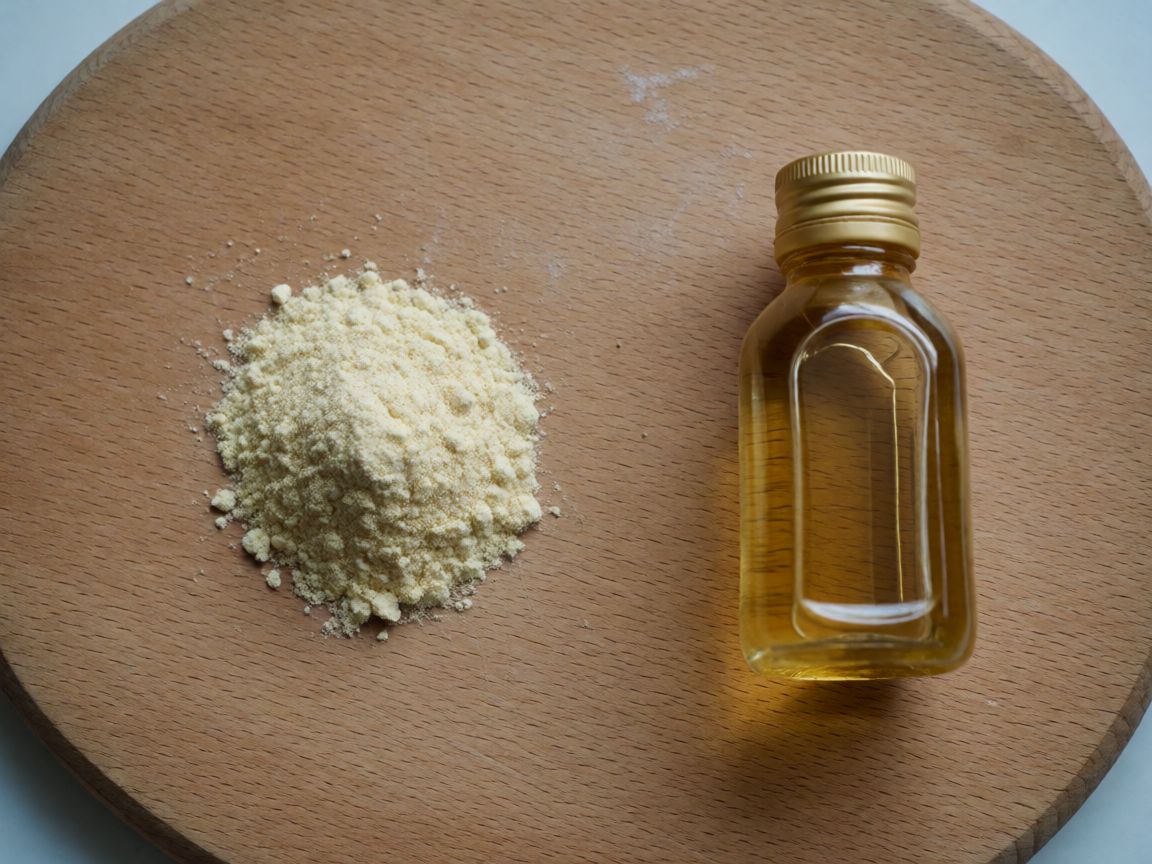
- 300 g Chickpea Flour
- 1 l Water
- 5 g Salt
- Black Pepper to taste
- Olive Oil to taste
- Peanut Oil to taste




Steps
Sift the chickpea flour into a bowl, add the salt and black pepper, mix, then gradually pour in the water in a thin stream, stirring continuously.
10 minPour the mixture into a saucepan and place over a very low heat, stirring continuously until it thickens, switching from a whisk to a spatula.
20 minLet the mixture cool at room temperature or in the refrigerator in a rectangular 20x25 cm dish, covered with cling film.
Turn the cooled panissa out onto a board and cut into cubes or batons.
5 minHeat the oil in a pan to 170°C and fry in small batches until golden and crisp.
10 minDrain on a paper towel, season with salt and serve hot.
Panissa is chickpea polenta, cooled until it sets, then cut and fried. That's the whole arc: liquid batter, thickened gel, firm block, crisp fried stick. The "cooking" step isn't really cooking a raw ingredient so much as persuading starch to swell until it binds all that water into something solid; frying afterward gives it a crust and a second life, not a finish to something undercooked.
What decides whether it works is the saucepan stage. You need continuous heat and continuous stirring at a pace the starch can tolerate: too fast and the outside of each granule gels before heat reaches its centre, so you get lumps with raw flour sealed inside - the panissa equivalent of lumpy porridge, and once it's happened, no amount of later stirring undoes it. Get it wrong once and you won't forget how it looked.
The second hinge is cooling. People impatient to fry will try to cut the mixture while it's still warm and soft - it won't hold a cube shape, it'll smear, because the structure that gives it edges only locks in as the temperature drops. Patience here isn't a virtue, it's an ingredient with its own name, and skipping it doesn't give you panissa a bit early, it gives you warm hummus porridge that collapses in the oil.
Myth worth killing: some think this is a fritter built from raw batter, like a pancake. No - by the time it meets the oil, it is already fully cooked. Frying adds nothing to doneness; it adds crust, colour, crunch. That changes how you fry it: you're not racing to cook the inside, you're racing to crisp the outside before it drinks the oil.
Chickpea flour is the whole dish; everything else seasons or finishes it. Buy it finely milled and sift it before mixing - raw chickpea flour clumps the moment it meets damp air, and an unsifted lump dropped into water becomes a dry pocket wrapped in wet paste that stirring later will never dissolve. There's no substitute that behaves quite the same: other pulse flours, lentil or fava, will gel for the same starch-and-protein reasons, but the flavour shifts, so reach for them only when chickpea flour genuinely isn't on the shelf.
Water is mechanical work, not dilution - it's the medium the starch swells into. The ratio here, roughly a litre to 300 g flour, is thin enough to pour but thick enough to set. Add it in a thin stream while whisking for the same reason you do with bechamel or risotto stock: dump it in all at once and the flour on top seals itself off from the flour underneath before the two can hydrate together, and you're back to lumps.
Salt and pepper go into the raw batter at the start, because that's the only point this dish can take seasoning evenly - once it sets, seasoning only sits on the surface. The pinch of salt added after frying is a different job entirely: it seasons the crust, where oil and salt actually meet, not the body of the thing.
Peanut oil is the frying oil here for one reason - it tolerates the heat without smoking or lending its own smell to the crust. "170°C" isn't a number to worship, it's shorthand for a state: oil hot enough that a cube of bread or a drop of batter sizzles and colours within a few seconds of going in. Too cool, and the panissa sits in the oil long enough to drink it, turning heavy and greasy instead of crisp, because the crust that should seal it hasn't formed fast enough. Any neutral oil with a high smoke point and no character of its own does the same job - sunflower, groundnut, a flavourless vegetable oil. Olive oil, by contrast, appears here to taste, off the heat or warmed gently, where its flavour survives. It's not built to be the frying medium at this temperature - not because of the old scare story that olive oil "burns" at frying heat, it doesn't, not on a home hob - but because it costs more than peanut oil and you'd be throwing its character into a pan of bubbles for nothing.
On your hob: a wide saucepan beats a narrow one for the thickening stage, because panissa needs the whole base in contact with heat evenly, and a tall pot concentrates the flame under a smaller patch and scorches there first - watch for a sticky dark ring forming on one side, that's your cue to move the pan, not just lower the gas. For frying, you don't need a deep-fat fryer; a wide pan with oil a few centimetres deep, batons going in uncrowded, does the job. Crowd the pan and the cold mass of panissa drops the oil's temperature all at once, and you're back to greasy rather than crisp. A thermometer helps if you own one; the bread-crumb test worked in kitchens long before thermometers did.
One more thing worth knowing, because it explains the shape of the dish rather than decorating it: chickpea flour was the cheap flour of the Ligurian coast, eaten by dock workers and sailors who needed food that travelled and reheated well. The same batter, baked thin and soft, is farinata; cooled solid and fried, it's panissa - two answers to two different jobs, not two versions of one sacred original. Treat it the way the economics that made it would want: don't dress it up, don't rush the pan, and don't cut it while it's still warm.