
 AI photo
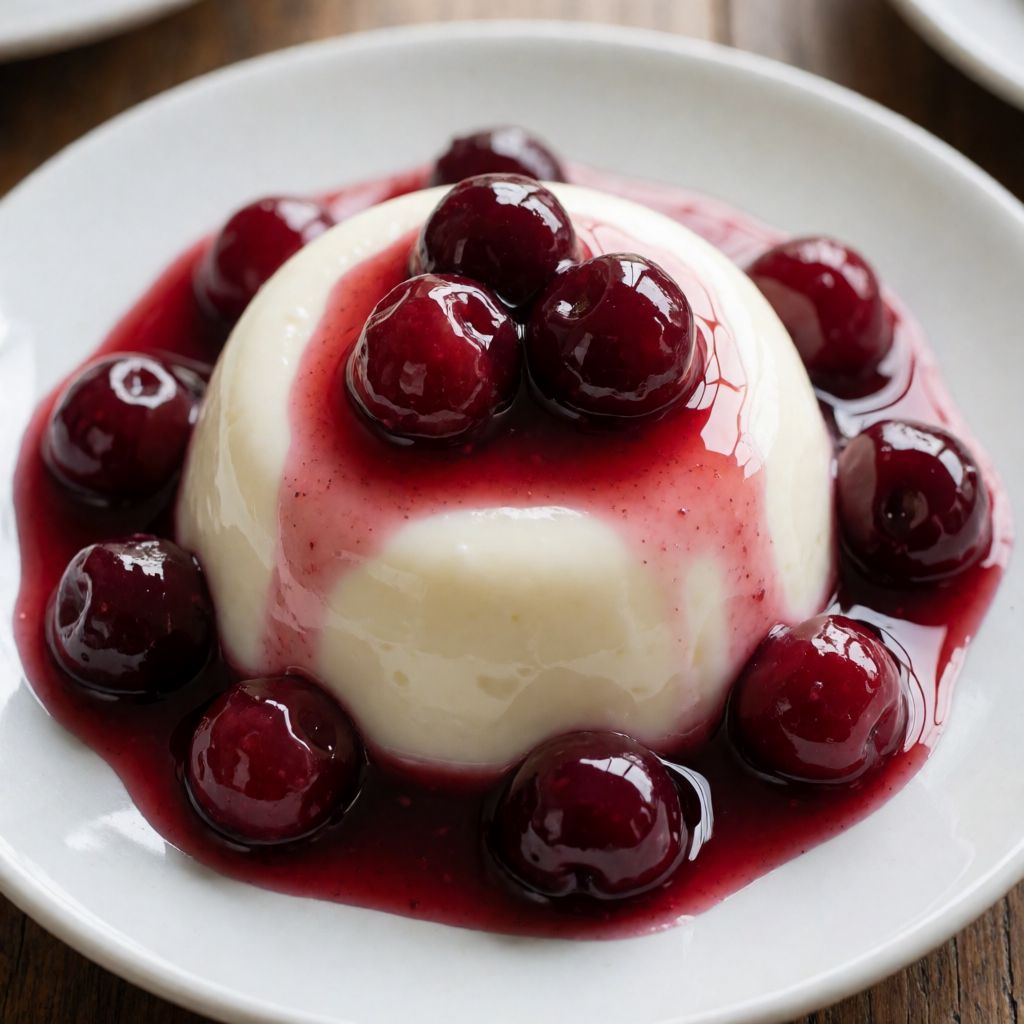
Panna Cotta with Cherries
A silky vanilla panna cotta topped with a glossy cherry sauce and a thin layer of cherry jelly.
Labels are worked out automatically from the ingredients and can be wrong. Check the packaging if it matters to you.
Ingredients
- 3 pcs Gelatine sheets
- 1 pcs Vanilla Pod
- 50 g Caster Sugar
- 500 ml Double Cream
- 100 ml Milk
- 1 pcs Lemon organic, zest
- 200 ml Cherry Sauce
- 0.5 pcs Gelatine sheet



Steps
Soak the gelatine in a bowl of cold water for 10 minutes.
10 minSplit the vanilla pod, scrape out the seeds and mix them with the sugar.
Put the sugar, vanilla seeds, vanilla pod, double cream, milk and lemon zest into a pan and heat, stirring, almost to the boil.
Squeeze the water from the gelatine and dissolve it in the hot vanilla cream.
Strain the cream mixture through a fine sieve into a bowl and let it cool to room temperature.
Mix well and pour into serving glasses.
Chill in the fridge for at least 3 hours or until the next day.
180 minPour the cherry sauce on only once the panna cotta has set.
Soak the gelatine for the cherry jelly in a bowl of cold water for 10 minutes.
10 minHeat the cherry sauce to the boil, then squeeze the water from the gelatine and stir it into the hot sauce.
Strain out any berries, let the cherry jelly cool to room temperature, then spread a thin layer over each portion of panna cotta.
Chill in the fridge and keep for at least 3 hours before serving.
180 min
What was changed
Double Cream replaces the original whipping cream with double cream, the cream British shoppers normally buy.
Panna cotta is Italian for "cooked cream" — which is a bit of a joke, because nothing here is cooked so much as set. What you're actually making is a cream flavoured with vanilla and lemon zest, stabilised with gelatine so it holds its shape in a glass, then crowned with a layer of cherry jelly that's basically the same trick played a second time with fruit instead of fat. Two separate sets, two separate waits. Rush either one and you get a mess instead of two clean layers.
The whole dish stands or falls on the gelatine ratio and on patience, not on technique. Three sheets for 600ml of liquid gives you something that holds a shape when turned out but still trembles and coats the spoon — firm enough to slice, soft enough that it isn't rubber. Too much gelatine and you've made a dairy jelly, not a panna cotta; too little and it won't leave the glass. Since you're serving these in glasses rather than turning them out onto a plate, you have a little more room for error on the low side — the glass itself is doing some of the structural work a mould would otherwise demand.
Some say panna cotta needs to be boiled. No — you take the cream only to the point just before it breaks into a simmer, because above that the proteins in the cream start to seize and you lose silkiness, and if you actually boil it the vanilla and lemon oils cook off into the air of your kitchen instead of staying in the dessert. "Almost to the boil" means small bubbles forming at the edge of the pan, not a rolling surface.
Gelatine sheets rather than powder: sheets give a cleaner, more predictable set because you're not guessing at bloom strength, and they melt without the grainy specks powder sometimes leaves if it isn't fully dissolved first. Soaking in cold water for ten minutes lets the sheets absorb water gently — drop them straight into hot liquid and the outside of the sheet can seize into a skin before the inside has softened, leaving little lumps that never fully melt. If you only have powdered gelatine, use roughly the same weight, bloom it in a small splash of cold water first, then melt that into the hot cream — the principle is the same, just skip the squeeze-and-wring stage.
Double cream is non-negotiable in spirit even if you can't get exactly that: you need a cream with enough fat (upwards of about 36%) that it doesn't simply go watery and separate once chilled. The milk is there to loosen that fat content slightly so the set isn't so dense it eats like butter — cream alone, fully set, is heavier than you want on the tongue. If you've only got single cream, don't substitute it one-for-one; you'll need more gelatine to compensate for the lower fat, and the result will taste thinner no matter what you do.
Vanilla pod, split and scraped: the seeds go into the sugar first so the sugar crystals rub the tiny flecks apart and distribute them evenly through the cream, rather than the seeds clumping together in one spot. The empty pod still goes into the pan — there's flavour left in the husk, and discarding it unused is just wasting half the pod you paid for. No pod, use a good vanilla extract, added after the cream comes off the heat, since extract loses aroma if it's heated hard.
Lemon zest: use an unwaxed or organic lemon specifically because you're taking only the oil-rich skin, not the juice, and commercially waxed peel carries that wax straight into your cream. If you only have a waxed lemon, scrub it hard in hot water first. The zest is there to cut the richness of all that cream and vanilla — without it the dessert reads as flat and one-note sweet.
Straining the hot cream through a fine sieve isn't fussiness — it's removing the zest shreds and the spent vanilla pod before they go into the glass, so what you're left with is smooth cream, not something you have to pick bits out of with a spoon. Skip this and you get a perfectly good panna cotta with an unpleasant surprise texture running through it.
The cherry sauce does double duty: most of it stays as the sweet layer you pour over after that first set, and a smaller portion gets its own half-sheet of gelatine and becomes the thin jelly top layer. Boiling this sauce briefly before adding the gelatine isn't about cooking the fruit further — it's to make sure the sauce is hot enough to melt the gelatine completely, same mechanism as before, just with fruit juice standing in for cream. Straining out the berries here matters for the same reason as straining the cream: you want a clear, glassy jelly layer, not a lumpy one. If you're making your own cherry sauce rather than buying it, poach stoned cherries with a little sugar and barely any water until they collapse, then that's your base — frozen cherries work as well as fresh here, since they're going to be cooked and strained anyway, and in the UK that's often the more reliable route than hoping for good fresh cherries out of season.
This serves four in glasses, and the long chill — three hours twice, so realistically you're planning this the night before if you want it for tea or after a Sunday roast — is not something you can shortcut by using the freezer to speed things along. A fast chill can set the outside before the inside, giving you an uneven texture; a slow, even fridge chill is what gives you a panna cotta that's the same softness all the way through.