
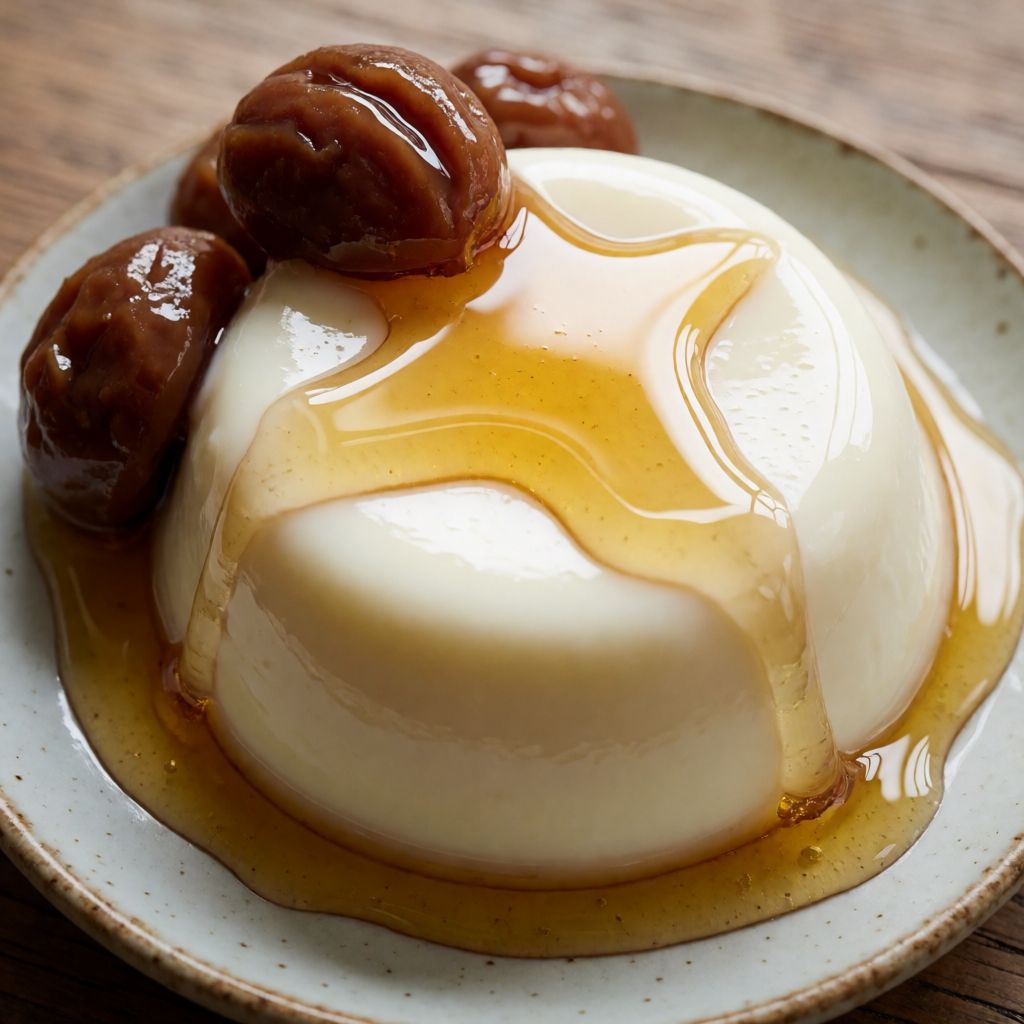
 AI photo
Panna Cotta with Honey
A silky set cream dessert sweetened with chestnut honey and chestnuts in syrup.
Labels are worked out automatically from the ingredients and can be wrong. Check the packaging if it matters to you.
Ingredients
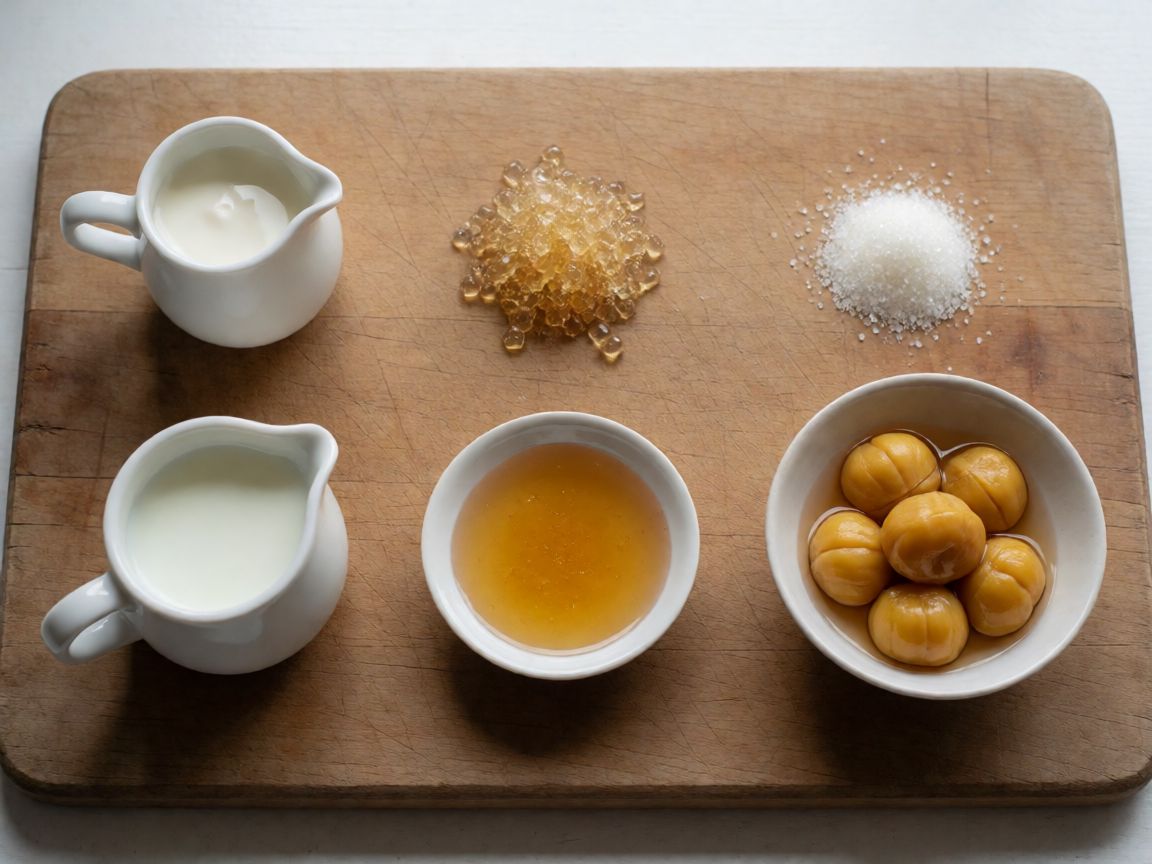
- 350 ml Double cream
- 15 g Gelatine
- 50 g Caster sugar
- 150 ml Milk
- Chestnut honey to taste
- 6 pcs Chestnuts in syrup






Steps
Soak the gelatine in cold water for a few minutes until softened.
Pour the cream into a saucepan, add the sugar and stir.
Place the saucepan over moderate heat and bring to the boil.
Remove the gelatine from the water, squeeze out excess water and stir into the hot cream.
Mix the milk with the chestnut honey in a bowl.
Pour the milk-and-honey mixture into the cream in a thin stream.
Cook over moderate heat for 10 minutes from the start of boiling.
10 minRemove from the heat and pour the mixture into a mould.
Leave to cool at room temperature.
Transfer the mould to the fridge and chill for at least 2 hours.
120 minDip the mould briefly in hot water to help release the panna cotta.
Cut the panna cotta into 6 portions and decorate with honey and chestnuts.
Panna cotta is Italian for "cooked cream" — which tells you exactly what it is and isn't. It's not a custard, there's no egg holding it together, no oven involved. The structure is pure gelatine suspended in fat and sugar, set by cold rather than heat. That's why the whole dish lives or dies on two things: how much gelatine you use relative to liquid, and how gently you treat it once it's dissolved.
What decides success here is restraint. Fifteen grams of gelatine against 500ml of liquid (cream plus milk) is a fairly firm set by panna cotta standards — this one is meant to hold a clean cut, not wobble on the plate like the ones you see on food telly where someone shakes the plate for the camera. If you want the classic trembling version, you'd drop the gelatine back; but then you risk it not releasing cleanly from the mould, which is the real reason most home versions get set firmer than chefs admit to.
The honey isn't decoration, it's a flavour decision disguised as a garnish. Chestnut honey is bitter-sharp, almost smoky, nothing like the clover honey you stir into tea — and against cream that heaviness earns its place instead of just sitting there being sweet. The chestnuts in syrup echo it rather than repeat it: same tree, different texture, so pudding and topping are a conversation, not two separate ideas on a plate.
Start with the gelatine bloom — the soak in cold water before anything touches heat. Skip this and you get gritty strands that never fully melt into the cream; you'll be chewing little threads of rubber in your pudding and blaming the recipe instead of the step you cut. Leaf gelatine wants cold water specifically because warm water starts dissolving the surface unevenly, leaving a slimy outside and a hard core — cold swells it uniformly, so when it meets the hot cream it disappears completely instead of partially.
The cream and sugar go in together and are brought to the boil over moderate heat — meaning the heat that lets you watch the surface start to tremble and rise, not a heat so high you catch your eye off it and come back to a boiled-over pan and a burnt rim. Double cream is non-negotiable in character even if not in brand: you need enough fat to carry flavour and to set into something sliceable rather than something that separates into water and curd when it meets gelatine. Thinner cream (single, or anything under about 35% fat) will set softer and can weep in the fridge — fine for a spoon pudding, wrong for the clean-cut slices this recipe wants.
The milk and honey are mixed separately and added in a thin stream — not dumped in. This matters because honey is dense and sugary; poured straight into hot cream in one go, it can seize or clump before it has a chance to distribute, especially since you're not whisking continuously at this stage. A thin stream gives the two liquids time to meet gradually, so the honey's flavour spreads evenly through the custard instead of pooling in sweet veins. If chestnut honey isn't to hand, anything dark and bitter — heather honey, even a spoon of treacle cut with regular honey — will do the job; what you're replacing is the bitterness, not the sweetness, since caster sugar already handles that.
Ten minutes at a gentle boil after the gelatine goes in isn't arbitrary dawdling — it's the time needed for the gelatine to fully integrate and for the mixture to reduce slightly, concentrating flavour before the cold takes over and locks it in place. After that, the two cooling stages — room temperature first, fridge second — exist because gelatine that goes straight from hot pan into a cold fridge sets unevenly, firm on the outside walls of the mould and loose in the centre. Let it come down gently first; the fridge then just finishes the job rather than fighting a temperature shock.
The hot-water dip at the end solves a problem every custard-based pudding has: gelatine clings to cold metal or ceramic by capillary action, and no amount of jiggling the mould will shift it cleanly. A few seconds in hot water melts a whisper of the outer layer, breaking the seal without melting the structure inside — dip too long and you'll lose the crisp edge of your slice, not just the stuck patch.
As for mould: ramekins give you individual puddings and an easy unmould; a loaf tin or pudding basin gives you the six slices this recipe is written for, cut like a terrine. Either works — what doesn't work is a mould with an undercut or fancy shape, because gelatine has no structural memory once it's released; it holds the shape it's given, nothing more forgiving than that. And patience, here, really is the ingredient doing the heaviest lifting — the two hours in the fridge aren't a suggestion to round down because you're hungry; cut it early and you'll get cream soup with good intentions.