
 AI photo
Pardulas Sarde (Sardinian Saffron Ricotta Pastries)
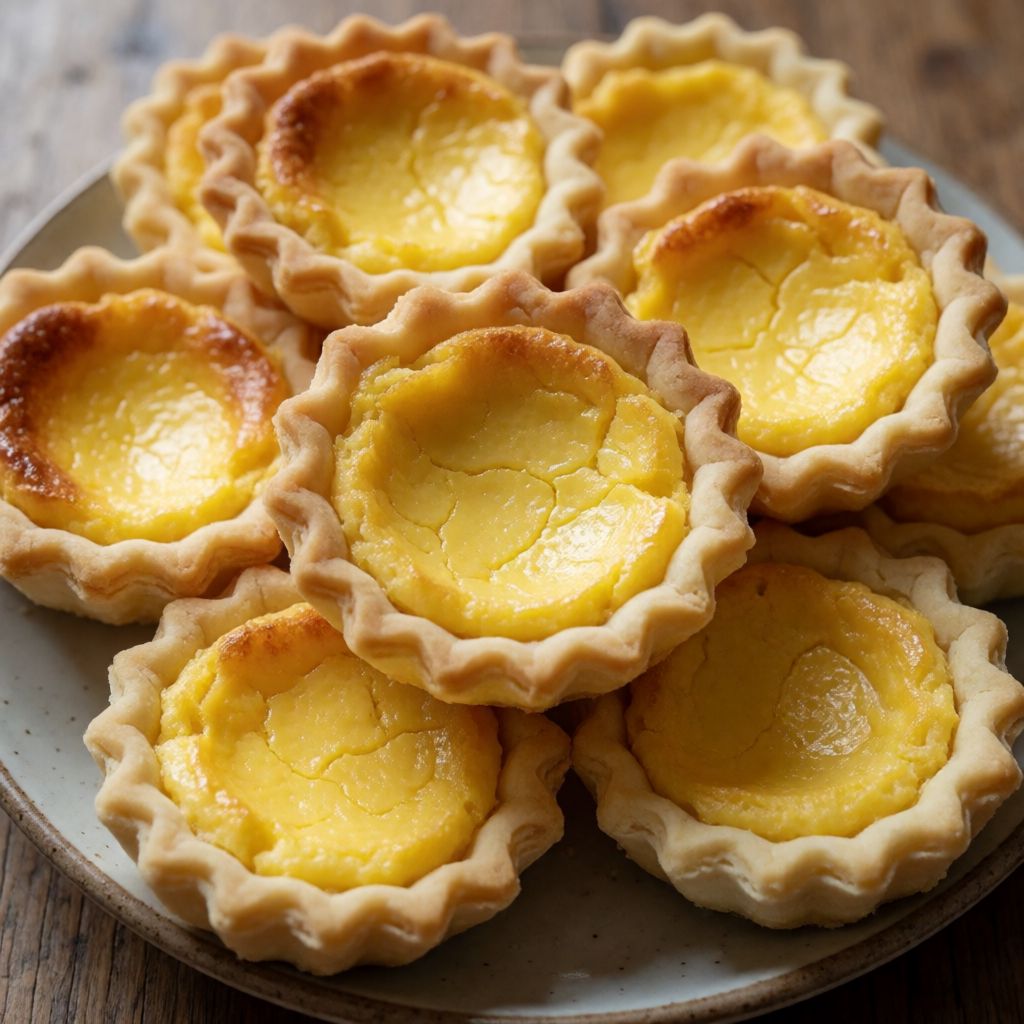
Little Sardinian ricotta and saffron pastries, pinched into eight-pointed baskets and baked until golden.
Labels are worked out automatically from the ingredients and can be wrong. Check the packaging if it matters to you.
Ingredients
- 260 g semolina flour
- 100 ml water
- 30 g butter
- 500 g sheep's milk ricotta
- 100 g caster sugar
- 3 pcs egg yolks
- 25 g saffron
- 1 pcs lemon zest
- 1 pcs orange zest
- milk as needed
- icing sugar as needed









Steps
Set the sheep's milk ricotta to drain in advance — the night before or a few hours ahead.
Tip the semolina flour into a bowl, add the butter and rub in by hand, then add the water and knead energetically to a firm dough.
Wrap the dough in cling film and leave to rest at room temperature.
Put the drained ricotta into a bowl, add the caster sugar, 2 egg yolks, part of the semolina, the saffron, and the lemon and orange zest, and mix well.
Put the filling in the fridge to rest.
Roll out the dough with a rolling pin to a thickness of 1-2 mm and cut out circles at least 10 cm in diameter.
Place a tablespoon of filling in the centre of each circle and pinch the edges, shaping a basket with eight points.
Lay the pardulas on a baking tray lined with parchment and brush with a mixture of 1 egg yolk and milk.
Bake in an oven preheated to 150°C for about 40 minutes, then dust with icing sugar once done.
40 min
Pardulas are Sardinia's Easter-time ricotta tartlets, except nobody told them to limit themselves to Easter — you'll find them year round, which tells you they're not really ceremonial food, they're what you make when sheep's milk ricotta is good and you want something that isn't quite a cake, isn't quite a pie. A disc of semolina dough, a spoonful of saffron-scented ricotta inside, the edges pinched up into a little basket with eight points so the filling sits exposed and gets a bit of colour on top. That open top is the whole design: this isn't a sealed pasty where you're hiding the inside, it's a tart that wants you to see what's in it.
What decides whether it works is the ricotta's water content, not the oven. Ricotta is curd suspended in whey, and if you don't drain it the night before, that whey comes out in the oven and you get a wet, slumping centre instead of one that sets to a soft curd. Draining isn't a formality — it's the one irreversible step. Do it badly and no baking time fixes it.
The dough itself is semolina, water and butter — no egg, no sugar — because its job isn't to taste of anything, it's to hold a shape and give a bit of bite against the soft filling. Semolina dough is stiffer and more elastic than a normal pastry; it won't shatter the way butter pastry does, which is exactly why it can be pinched into points without cracking.
Semolina flour (260 g) with only water and butter rubbed in gives you durum's particular toughness — it's the same flour that makes pasta hold its bite, and here it means a dough you can roll thin and crimp without it tearing. If you can't get semolina flour, a strong bread flour will hold together but will feel softer and less "toothy" against the filling; it's a substitution of structure, not of taste, so judge it by whether the dough stretches without splitting at the pinch points, not by how it tastes raw.
Sheep's milk ricotta (500 g) is specified for a reason that's about fat and flavour together — sheep's milk ricotta is richer and slightly more savoury-sharp than cow's, which balances the sugar and saffron instead of just being sweetened cream. Cow's ricotta will work, but drain it harder and longer, because it tends to hold more water than the sheep's version — the recipe assumes you're starting from a curd that's already fairly dry.
Saffron (25 g, which — be honest with yourself — is almost certainly a typo in the original for 25 threads or a fraction of a gram; actual saffron at 25 g would cost more than the rest of the ingredients combined many times over) does two jobs: colour and a faint bitter-floral edge that stops the filling tasting like plain sweetened cheese. Use a pinch, steeped in a spoonful of warm milk or water first so it actually releases colour into the mix rather than sitting as dry threads. There's no real substitute for saffron's flavour — turmeric will give you yellow and nothing else, so only use it if colour alone is the goal.
The lemon and orange zest aren't decoration, they're there to cut through the ricotta's richness and the saffron's muskiness — use a fine zest, no pith, because pith brings bitterness you don't want fighting the saffron's own bitterness.
Egg yolks (3, split between filling and the wash) bind the filling so it sets rather than weeps, and the one brushed on with milk is purely for colour and shine on top, catching heat in the oven the way a flat dough surface never would on its own.
On temperature: 150°C is a gentle oven, well below what you'd use for most pastry, and that's deliberate — these are small, open-topped, filled with egg-set custard essentially, and a hotter oven would colour the points before the centre sets, leaving you with burnt corners round a raw middle. Forty minutes is the lower bound Stalic's rule insists on, not a deadline — judge it by the filling: it should look set, faintly puffed, no longer glossy-wet in the centre, and the pastry points should have gone from pale to lightly golden. In a domestic fan oven, which runs hotter and faster than a Sardinian home oven, check from about 30 minutes rather than waiting the full stretch.
Patience here is mostly upfront — the ricotta draining, the dough resting at room temperature so the gluten relaxes enough to roll thin without springing back, the filling chilling so it's firm enough to spoon and shape rather than slump. None of that patience is optional busywork; skip any of it and you're fighting the dough or the filling at the point where you can least afford it, mid-assembly, with sticky fingers and eight points to pinch.