
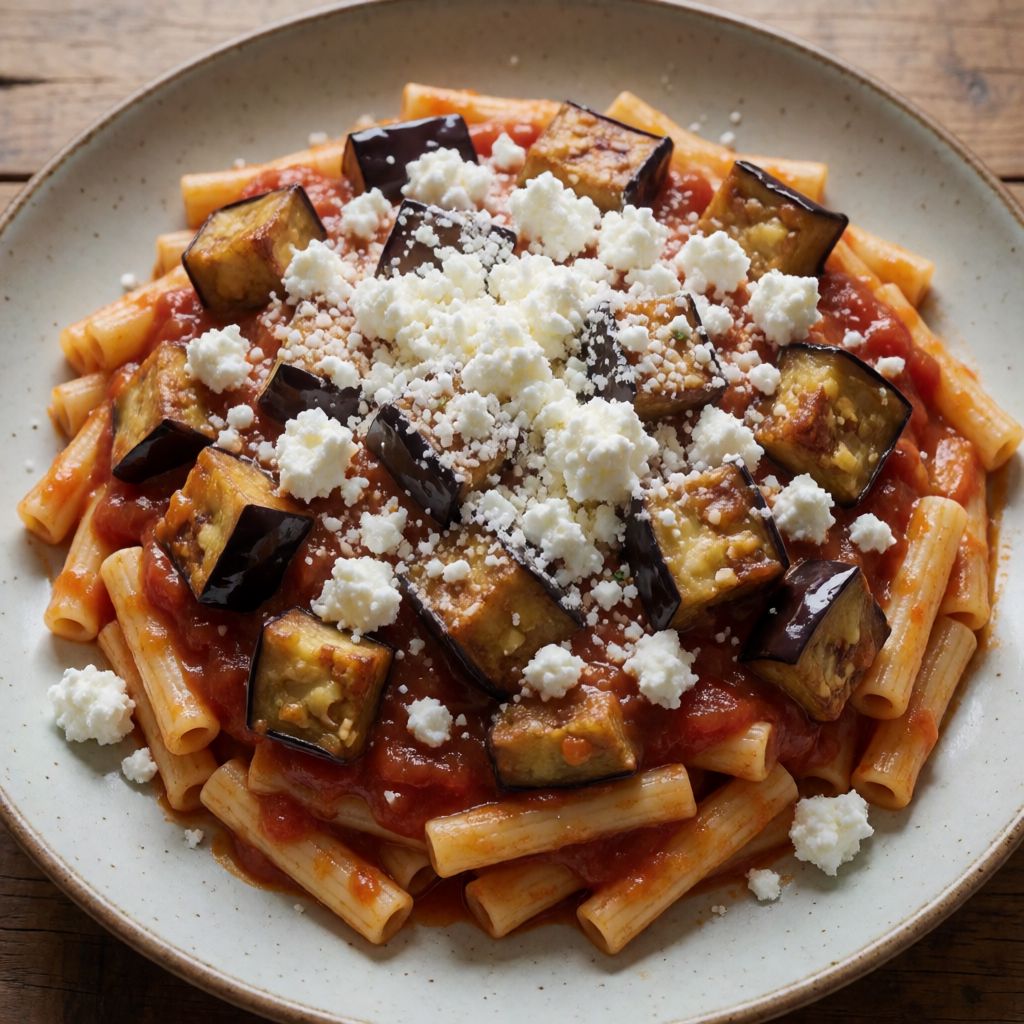
 AI photo
Pasta alla Norma
A classic Sicilian pasta with eggplant, tomato sauce, basil and salted ricotta.
Labels are worked out automatically from the ingredients and can be wrong. Check the packaging if it matters to you.
Ingredients
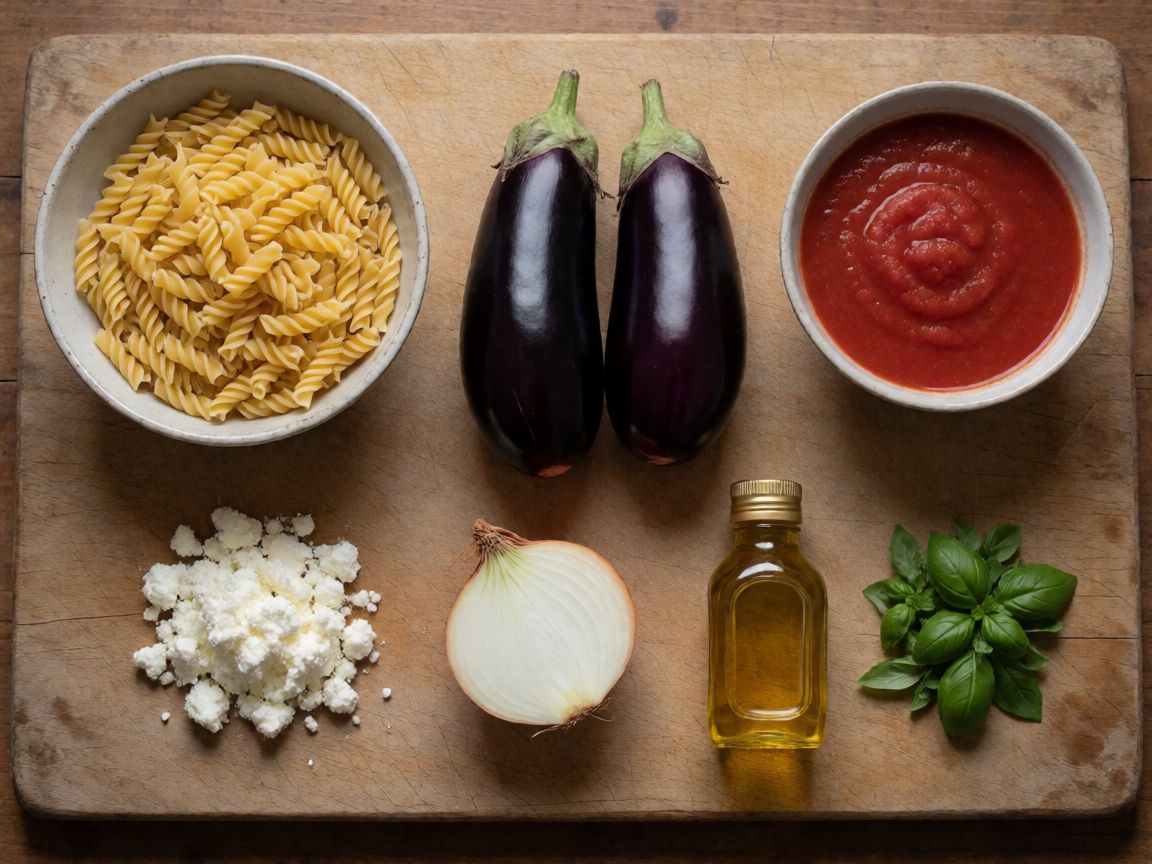
- 320 g Pasta
- 2 pcs Aubergine
- 500 ml Tomato Passata
- 1/2 pcs Onion
- Salted Ricotta to taste
- Olive Oil to taste
- Salt to taste
- Peanut Oil to taste
- Basil to taste




Steps
Wash and dry the aubergines. Cut into slices of equal thickness.
Layer the aubergine slices in a colander, sprinkling each layer with salt. Press down.
60 minPour olive oil into a pan, add the chopped onion and sauté until soft.
Add the tomato passata, season with salt to taste and cook the sauce.
20 minFlavour the sauce with chopped basil and set aside.
Bring a large pot of lightly salted water to the boil.
Rinse the aubergines to remove excess salt, then dry well.
Fry the aubergines in hot peanut oil until golden.
Place the fried aubergines on a paper towel. Lightly salt.
Cook the pasta until al dente.
Add the pasta to the tomato sauce. Mix well.
Add the aubergine slices. Flavour with basil and mix.
Add grated salted ricotta and mix. Serve onto plates.
Garnish with extra grated ricotta and serve immediately.
Pasta alla Norma is Catania's answer to what to do with aubergine when you have a lot of it and not much else — tomato, basil, salted ricotta, and whatever pasta shape holds sauce in its creases. It's named, so the story goes, after Bellini's opera, because someone in Catania thought the dish was a masterpiece too. Nice story. Doesn't tell you anything about why it works or doesn't.
What decides it is the aubergine, twice over. First you salt it and let it sit — not for flavour, for water. Aubergine flesh is a sponge of bitter juice and air pockets; salt pulls the juice out by osmosis, and with the juice goes most of the bitterness and all of that spongy structure that would otherwise just soak up oil like a towel soaks up a spill. Skip this step and you don't get a bitter dish exactly — modern aubergines are bred milder than they used to be — but you do get a greasy one, because every pocket that isn't pre-collapsed with salt will collapse in the fryer, pulling oil in behind it.
Second: the frying has to be hot enough that the surface seals before the oil has time to crawl in. That's the actual reason for peanut oil over olive oil here — not tradition, not cost, but smoke point. Olive oil starts breaking down and tasting burnt well before aubergine wants to fry; a neutral oil lets you get the pan properly hot and hold it there, which is what gives you gold rather than grey-brown sog.
On the aubergine itself: pick ones that feel heavy for their size and give very slightly under thumb pressure — that's flesh, not air pockets. Wrinkled skin or a hollow feel means it's been sitting around losing moisture, and no amount of salting will fix that later. Two medium aubergines, sliced to an even thickness, is what lets every piece salt and fry at the same rate — uneven slices mean some pieces are done while others are still raw in the middle, which you'll only discover at the table.
The salting step wants a colander, not a bowl — the whole point is that the water has somewhere to go. In a British kitchen this is easy: stand the colander in the sink or over a bowl, weigh the slices down with a plate, and leave it the hour the recipe asks for. That hour is a lower bound, not a target — you're waiting until the slices go from springy to limp and faintly damp-looking on the surface, not watching a clock. Rinse and dry thoroughly afterwards, because any surface water left on the slices will spit violently in hot oil and also steam the aubergine instead of frying it.
Passata is just tomatoes passed through a sieve — pulp, no skin, no seeds. If you only have a tin of whole or chopped tomatoes, blitz them smooth or push them through a sieve yourself; either gets you the same even, cling-to-pasta consistency that chunky tinned tomato won't. The onion is sautéed in olive oil first because olive oil, here, isn't doing the high-heat work — it's a flavour oil, cooked gently just long enough for the onion to go soft and faintly sweet rather than coloured. "Any oil with no flavour of its own" is the wrong oil for this particular step; you want the opposite, something that tastes of itself.
Basil goes in at the end, off the heat or near it, because basil's aroma lives in volatile oils that cook off fast — simmer it in the sauce from the start and you'll have spinach-flavoured tomato by the time you serve. Add it twice, once to the sauce and once with the aubergine, because you're really adding it twice to make up for how quickly it fades, not for some doubled flavour effect.
On pasta: the dish is traditionally made with a short, ridged shape because ridges and holes catch both sauce and small aubergine fragments — a smooth long pasta will just let both slide off. 320g for four people is standard restaurant portioning for a main course, not a starter; cook it properly al dente because it finishes its last minute of cooking in the pan with the sauce, picking up a little more bite as it sits — pull it too soft from the pot and it'll be mush by the time it reaches the plate.
One domestic-kitchen honesty: a UK hob rarely gets a pan of oil as fiercely hot as a professional fryer, and a crowded pan drops the oil temperature further and fast. Fry the aubergine in batches, in a single layer, rather than tipping it all in at once — crowding is the single most common reason home-fried aubergine comes out soft and oily instead of golden, because each slice steams its neighbours instead of frying beside them.