
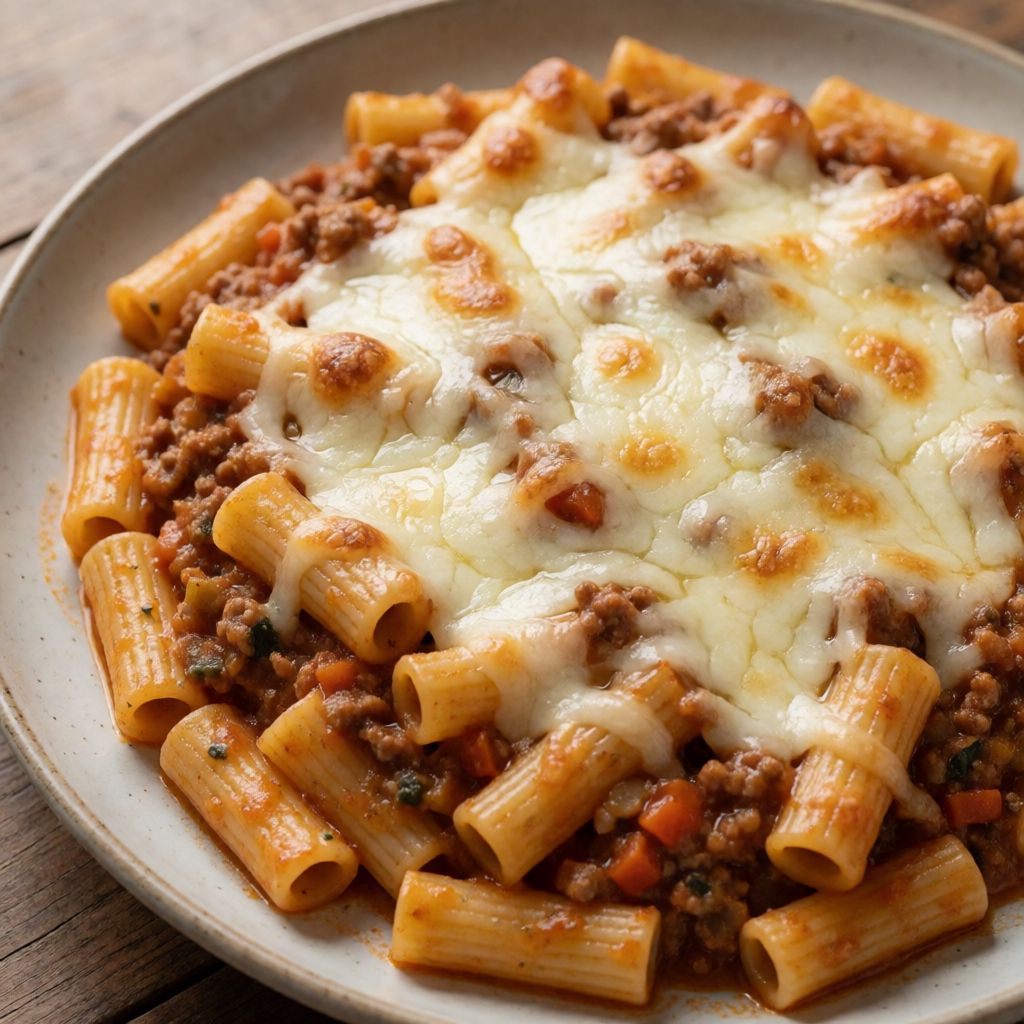
 AI photo
Pasta Bake with Ragù and Mozzarella
A hearty baked pasta with meat ragù, béchamel and melted mozzarella, topped with Parmesan.
Labels are worked out automatically from the ingredients and can be wrong. Check the packaging if it matters to you.
Ingredients
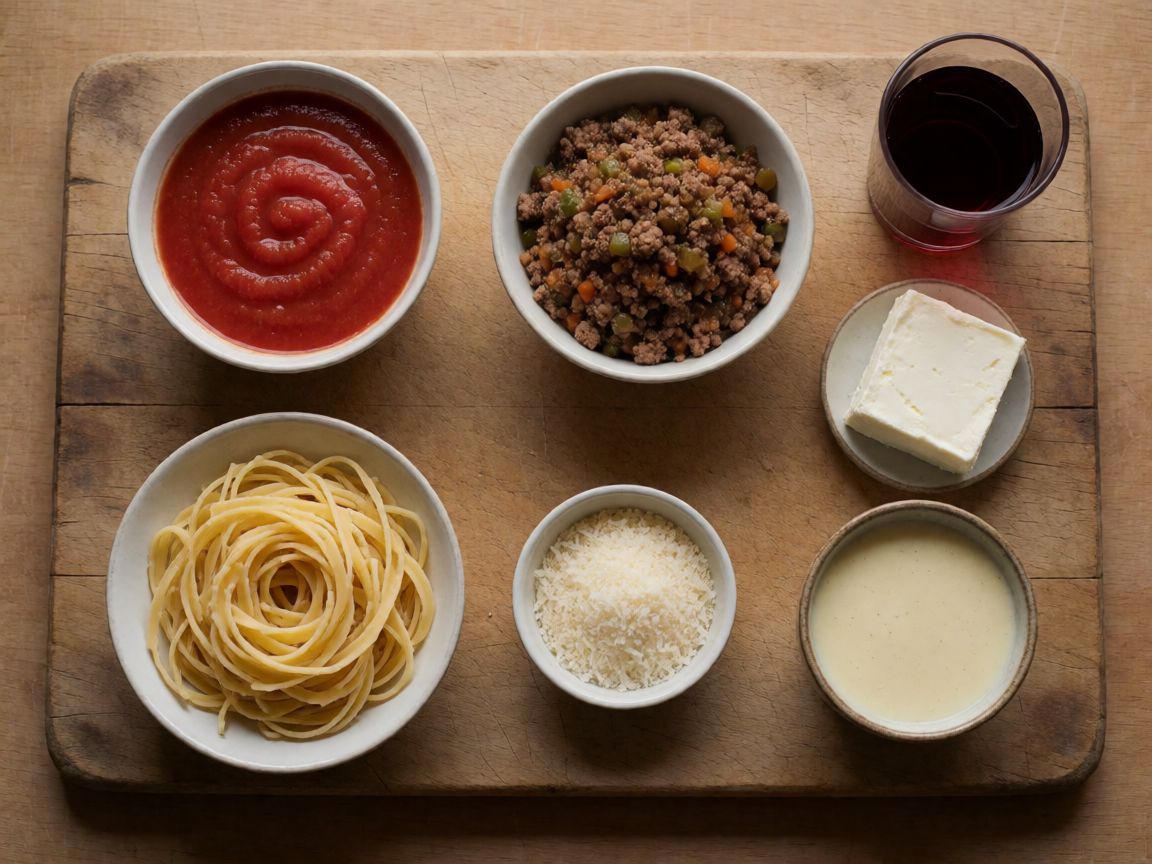
- 500 g Short pasta (mezze maniche)
- 250 g Tomato passata
- 500 g Veal and pork mince
- 80 g Soffritto mix carrot, celery, onion
- Salt to taste
- Black pepper to taste
- 2 tbsp Olive oil
- 125 g Mozzarella (fior di latte)
- Parmesan to taste, grated
- 500 ml Béchamel sauce
- 125 ml Red wine











Steps
Fry the soffritto in olive oil, add the mince and brown it well.
Pour in the red wine and let it evaporate completely, then cook for a further 10 minutes.
10 minAdd the tomato passata, season with salt and black pepper to taste, and keep cooking the ragù.
Cook the pasta until al dente, then drain.
Spoon a generous layer of ragù into the bottom of a baking dish, then add the pasta on top.
Cover with the rest of the ragù, add the diced mozzarella, pour over the béchamel and sprinkle with Parmesan.
Bake at 200°C on the grill setting.
15 min
This is a pasta bake built on a proper ragù, not a sauce poured over pasta as an afterthought. Three separate things have to be right before it ever sees the oven: a ragù that's actually been cooked down, not just simmered for ten minutes and called done; a béchamel that's thick enough to sit on top of the pasta rather than drown it; and pasta that's deliberately undercooked, because it finishes its journey in the oven, not in the pot.
What decides whether this works is the browning in step one. "Brown the mince" sounds like a throwaway instruction, but it's the whole flavour base — that's the Maillard reaction, the crust of caramelised proteins and sugars that gives you savoury depth you cannot get by just boiling meat in liquid. If you dump the wine in too early, before the mince has actually browned, you steam it instead, and you get grey meat in a thin sauce. Some say wine "cooks off the raw meat smell" — no, the smell goes because the alcohol evaporates and the sulphur compounds from raw meat get driven off by heat and time, not by the wine itself. The wine's job here is acid and sweetness, nothing mystical.
The second hinge is the pasta. Mezze maniche cooked to al dente in the pot, then layered raw-ish into a hot oven surrounded by ragù and béchamel, will keep absorbing liquid and heat for the full bake. If you cook it fully in the pot first, by the time it comes out of the oven it's mush — this is the actual reason "undercook it by a minute or two" exists in every baked pasta recipe, not tradition for its own sake.
On a domestic hob, "fry the soffritto" means get it hissing, not weeping. Carrot, celery and onion diced small release water as they cook; if your oil is too cool they just stew in their own liquid and go limp without ever taking on colour. You want the pan hot enough that the onion moves from white to pale gold at the edges before you add the mince — that's your cue, not a clock. A wide pan stands in for a kazan badly here, because a wide pan spreads heat thin and lets moisture escape fast, which actually helps this step: you want evaporation, not a sweat.
The mince: veal and pork together is an economic choice as much as a flavour one — pork brings fat the leaner veal lacks, so you don't need to add extra fat to keep the ragù from tasting dry. If you only have beef, use a fattier cut or add a spoon more oil, because leanness here reads as toughness in the finished sauce. Push the mince to the edges of the pan or brown it in batches if it's crowding — a crowded pan drops in temperature the instant the meat hits it, and that's the difference between browning and boiling.
Red wine: any dry wine with real acid, not necessarily anything grand — a Sunday-roast leftover works fine. Its job is to lift the fond stuck to the pan and cut through the fat of the mince; you let it evaporate completely because wine that hasn't cooked off leaves the ragù sharp and thin-tasting, not rounded. If you've no wine, a splash of red wine vinegar diluted with water gets you the acid without the alcohol.
Tomato passata rather than whole or chopped tinned tomatoes because it's already smooth and reduced — less water to cook off, less time standing over the pan on a weeknight. Salt and pepper go in once the passata is added, not before, because salting raw mince early draws out moisture and you lose some of that browning you just worked for.
Béchamel is the one component with no real substitute if you want this dish — it's flour and butter cooked into fat before milk goes in, which is what stops it going lumpy or thin. Buy it ready-made if you're short on time; nobody's checking your card for it. What matters is consistency: it should coat a spoon, not run off it, because a thin béchamel soaks straight into the pasta below instead of forming its own layer on top, and you lose the contrast that makes this a bake rather than a soup.
Mozzarella fior di latte, diced rather than sliced, because diced pieces melt into pockets through the dish instead of forming one skin on top — you want surprise and pull, not a single lid of cheese. If fior di latte isn't to hand, any mild, low-moisture melting cheese does the job; just drain anything sitting in brine or whey first, or that water ends up as unwanted liquid in your bake. Parmesan on top isn't there to melt into anything — it's there to brown and crisp under the grill, so grate it fine and don't be shy with it on the surface specifically.
One more thing worth saying plainly: fifty minutes total sounds generous for a weeknight, but the ragù genuinely needs that stretch — not because a recipe says so, but because connective tissue and raw tomato both need time to soften and round out, and there's no shortcut that doesn't taste like one. Patience here is an ingredient exactly as much as the mince is.