
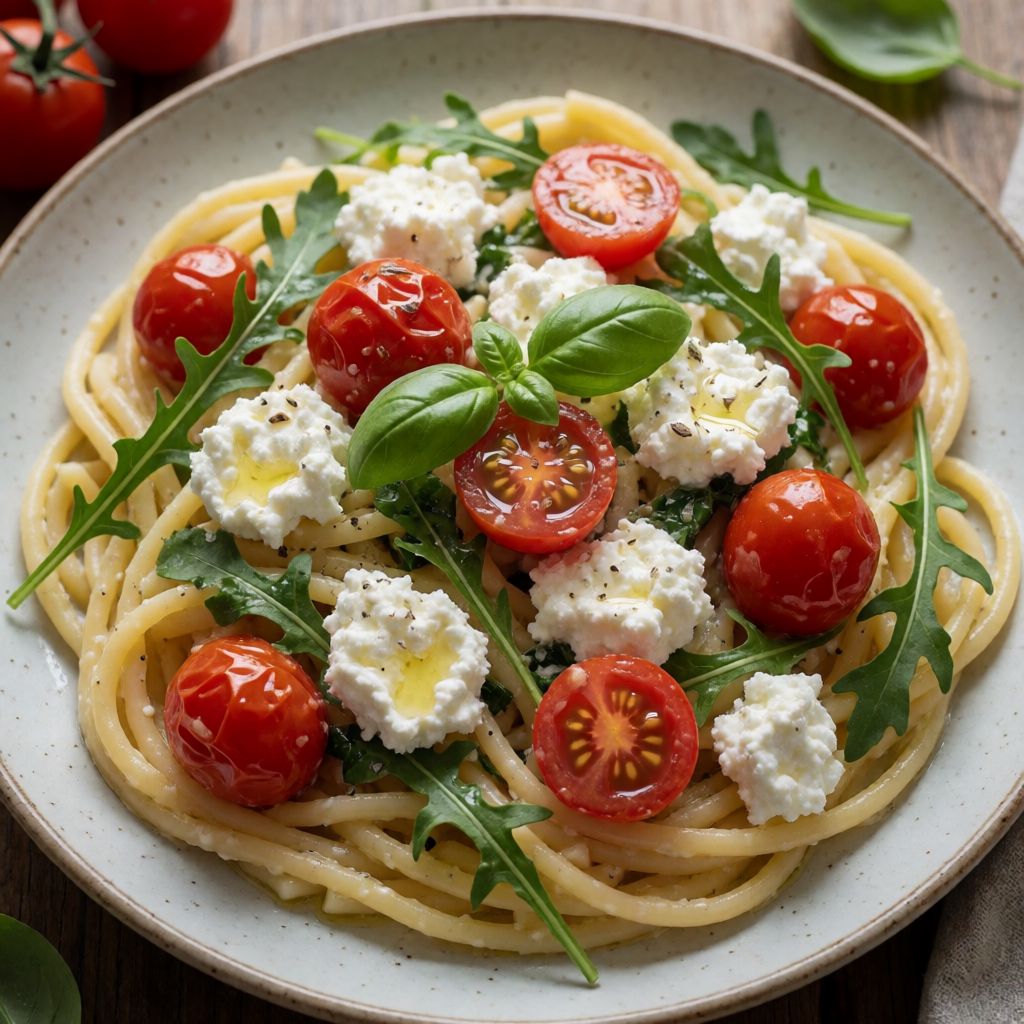
 AI photo
Pasta with Cherry Tomatoes and Ricotta Salata
A quick, no-cook summer sauce of marinated cherry tomatoes and ricotta salata tossed with pasta and rocket.
Labels are worked out automatically from the ingredients and can be wrong. Check the packaging if it matters to you.
Ingredients
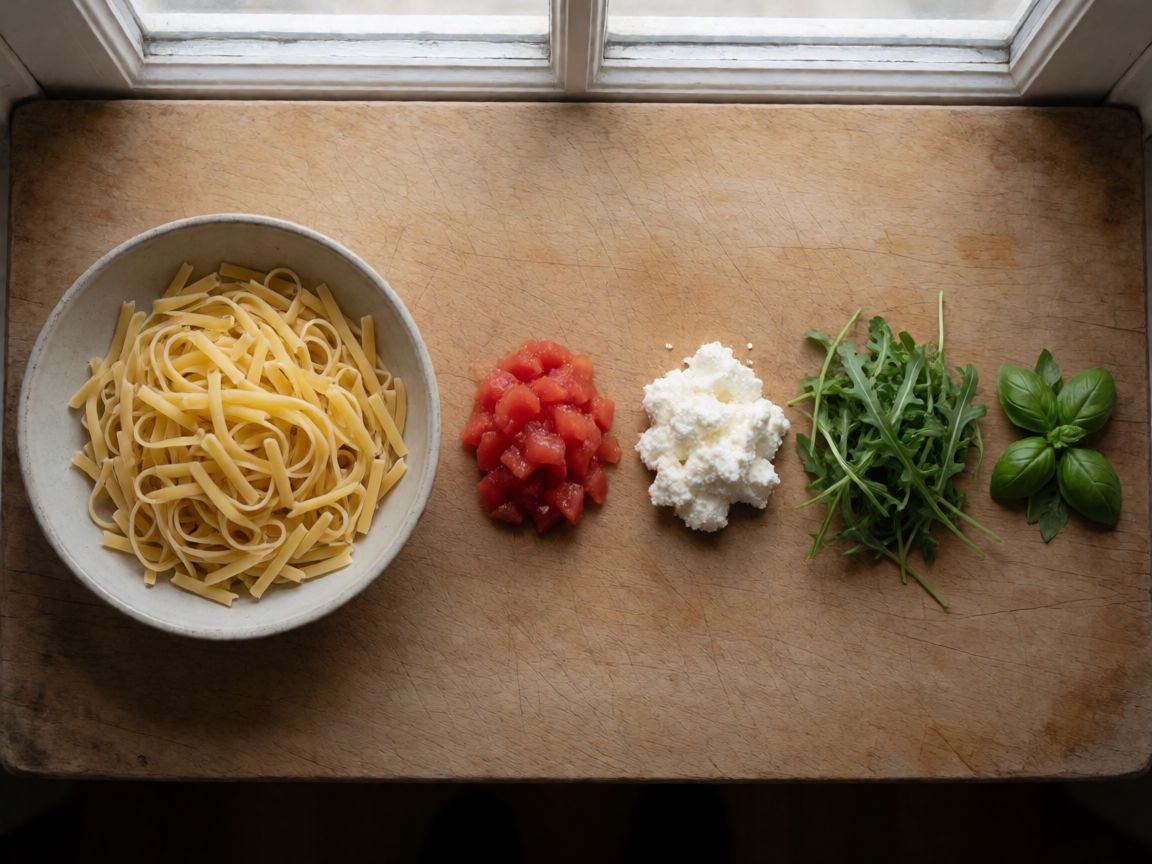







Steps
Wash the cherry tomatoes and dice them, place them in a bowl and season with salt and olive oil.
Grate the ricotta salata on a coarse grater and add it to the tomatoes, without mixing.
Cover the bowl with cling film and put it in the fridge to let the mixture rest.
Bring a pot of water to the boil, add salt and cook the pasta for as long as stated on the packet.
Wash, pat dry and tear the rocket by hand.
Drain the pasta and transfer it to a serving plate, then add the tomatoes with ricotta salata and the rocket.
Mix everything thoroughly, sprinkle extra ricotta salata on top and garnish with fresh basil leaves.
This is not a tomato sauce you cook — it's a tomato sauce you make by waiting. You salt diced cherry tomatoes and leave them under oil in the fridge, and salt pulls water out of the cells by osmosis — the tomato can't hold onto its own juice once you've broken its skin and disturbed the balance. That juice, mixed with the oil, becomes the sauce. No pan, no heat, no reduction. The only heat this dish ever sees belongs to the pasta, and that's deliberate: hot pasta, tossed straight from the pot into the cold tomatoes, warms the mixture just enough to round off the sharp edges of raw tomato and barely soften the rocket, without cooking anything through. It's residual heat doing a cook's job.
What decides whether it works is almost entirely patience and timing, in that order. Skip the resting time and you have diced tomato with salt on it — technically correct, actually thin, no body to coat the pasta. Rest it too long uncovered and you lose the oil's protective layer, the surface dries, it goes tired rather than ripe. And then at the end: drain the pasta fast, toss it in while it's still steaming, because this whole dish survives on borrowed heat with a short lease.
Pasta: short shapes work better here than long ones, because the sauce is chunky and loose rather than silky — it needs somewhere to collect, a ridge or a hollow, not a strand to cling to. Use whatever dried pasta you've got in the cupboard; this dish doesn't care about pedigree, it cares about surface. Cook it in plenty of well-salted water, salted the way the sea is salted, not the way you'd season a soup — pasta water should taste distinctly of salt before the pasta goes in, because that's your only chance to season the pasta itself from the inside.
Cherry tomatoes are the whole dish, so don't economise here. You want ones that smell faintly of tomato through the punnet before you've even cut into them — supermarket cherry tomatoes vary wildly in this, and the vine-ripened ones, even slightly more expensive, earn their keep because this recipe has nowhere to hide a bland one. If your tomatoes taste of water, no amount of salt and oil will rescue them; salt draws out what's there, it doesn't invent flavour.
Ricotta salata is ricotta that's been salted and pressed and dried — a different animal entirely from the soft, spreadable ricotta in a tub, closer in texture to a firm, crumbly feta but drier and less sour. If you can't find it, a young pecorino shaved thin, or feta drained and patted dry so it doesn't weep extra liquid into the tomatoes, will do the job: something salty and firm enough to grate or flake, not melt.
Olive oil here is doing two things — carrying the tomato juice into a dressing, and coating the pasta so the sauce clings instead of pooling at the bottom of the plate. Use one with flavour you actually like, since nothing is cooked out of it; this is one of the few dishes where the oil's taste survives to the table intact.
Rocket and basil are there for bitterness and scent respectively, and both are flexible — watercress or baby spinach instead of rocket if that's what's in the fridge, any soft herb instead of basil if you're out. Tear the basil by hand rather than cutting it with a knife; a knife bruises the leaf edge and you lose fragrance into the chopping board instead of into the bowl.
None of this needs a kazan, a special pan, or any equipment beyond a pot for boiling and a bowl with cling film over it — a plate pressed over the bowl works just as well if you're out of film. The only genuinely scarce ingredient is time: give the tomatoes their fifteen minutes in the fridge, don't rush the toss at the end, and the dish does the rest on its own.