
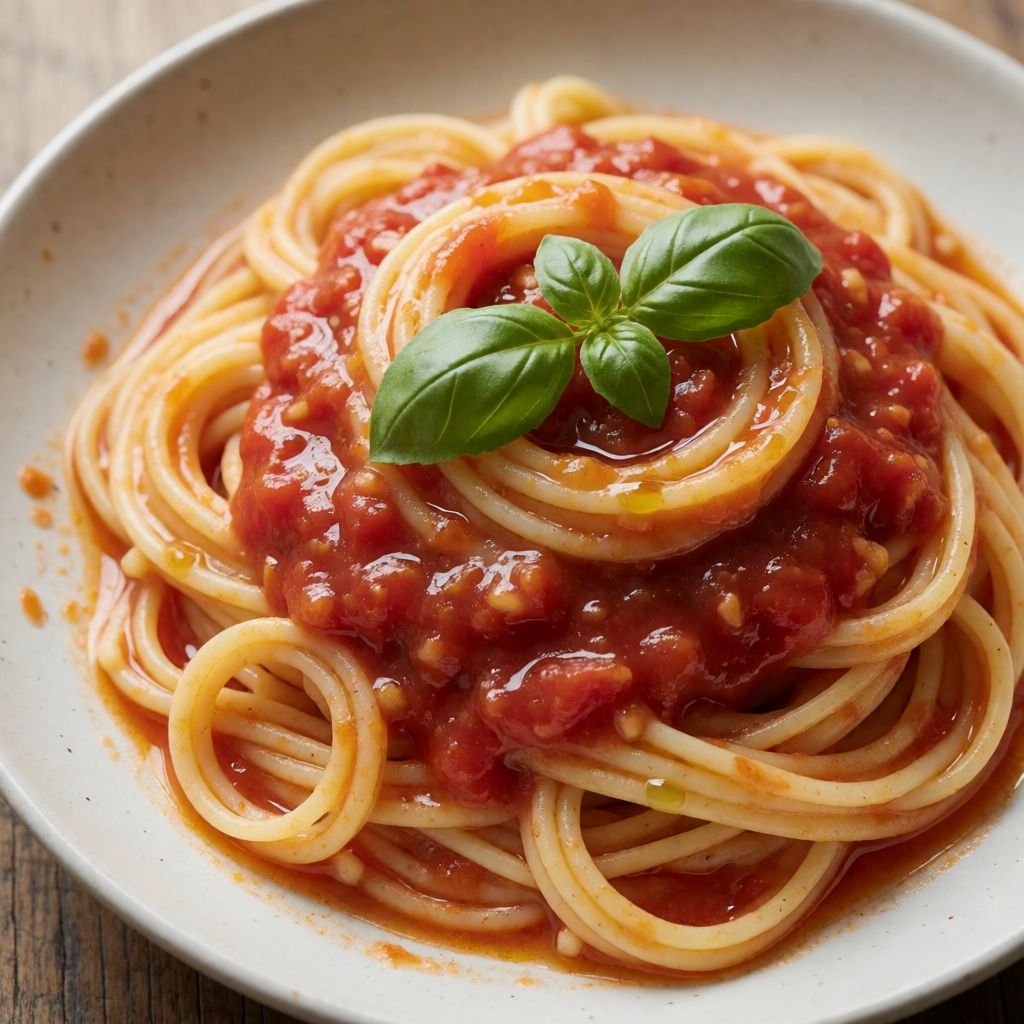
 AI photo
Pasta with Tomato Sauce
A simple pasta tossed with a fresh tomato and basil sauce.
Labels are worked out automatically from the ingredients and can be wrong. Check the packaging if it matters to you.
Ingredients






Steps
Thoroughly wash the tomatoes under running water to remove any soil or debris.
Cut off the top of each tomato with a knife and halve it. Gently squeeze by hand to remove the seeds and excess liquid.
Heat the olive oil in a saucepan, add the garlic and sauté lightly for a few seconds.
Add the tomatoes, season with salt, add the basil and simmer over medium heat without a lid.
10 minStir the tomatoes, cover with a lid and continue cooking.
15 minLet the sauce cool, then pass it through a sieve or food mill for a smooth texture.
Bring a pot of water to the boil, season with salt, and cook the pasta until al dente, then drain.
Combine the hot pasta with the hot sauce and toss together in a pan.
2 minServe hot, finished with Parmesan or Pecorino Romano, or a drizzle of olive oil and fresh basil.
This is not a jarred sauce dressed up — it's tomato reduced down from its own water until what's left is flesh and flavour, with nothing added but oil, garlic, basil, salt. Four portions, a short list, but everything rides on how much water leaves the pan before the pasta goes in.
What decides whether it works: how you handle the liquid. 750g of tomato is mostly water — you squeeze the seeds and juice out early, not because seeds taste bad on their own, but because that gel carries most of the sourness and all the extra moisture that would otherwise dilute the sauce and force you to boil it down hard later, which scorches the sugars and turns sweetness into bitterness.
Myth: you must peel tomatoes before you cook them. No — here you cook them whole-fleshed, let them collapse, then pass the lot through a sieve. The sieve catches the skin and any stray seed in one go; blanching and peeling raw tomatoes by hand is work this recipe simply skips, because the heat does the loosening for you.
Heat here is a hob setting, not a flame height, and "medium" tells you nothing on its own. Watch the pan: you want a lazy bubble, tomatoes slumping and giving off steam, not a rolling boil spitting sauce up your cooker hood. The garlic goes in for seconds, not minutes — past the point where you can smell it, it turns bitter, and bitter garlic is a defect no amount of salt fixes afterwards.
Tomatoes — choose by flesh, not by colour. You want the kind that's mostly wall and little seed cavity: plum-shaped, sauce-type tomatoes beat the round salad tomato bred in Britain to look good on a sandwich rather than cook down into anything. Out of season — and here that's most of the year — a tin of whole peeled Italian tomatoes will give you a better sauce than a greenhouse tomato grown for shelf life, not shelf flavour. That's not cheating, just swapping one kind of ripening, on the vine, for another, ripe and preserved fast in the tin.
Garlic — one clove is there for scent, not to be tasted as garlic itself. The two-stage simmer, lid off then lid on, exists because of what happens to water at different stages: with the lid off, surface moisture evaporates fast and the sauce thickens from the outside in; once it's thick enough that a hard boil would spatter and catch on the base, the lid goes on and steam finishes the softening instead of direct heat doing it roughly.
Basil — fresh, added while there's still heat in the pan, but not held at a simmer the whole time, because its aromatic oils are volatile and cook off: the longer it sits in hot liquid, the less basil smell survives to the plate. Dried basil is a different herb in practice, flat and grassy with none of the top note — usable in a pinch, but know you're making a related dish, not a lesser version of this one.
Olive oil's job here is to carry the garlic's smell into the tomato, so you want something clean rather than loud — a plain olive oil for cooking, keeping anything special for the drizzle at the end where it's actually tasted, not cooked off. Any oil with no strong smell of its own will get you through the sauté stage without ruining anything; a neutral vegetable oil just leaves out a note the olive oil was quietly adding.
Pasta shape matters more than the brand on the packet: this sauce is smooth and fairly thin, so it wants something with surface to hold onto — spaghetti, linguine — rather than a shape built to trap chunks that aren't there. Salt the pasta water properly, because that's the only seasoning the strands get on their own; sauce and pasta are salted separately and need to arrive balanced, not with underseasoned pasta leaning on the sauce to save it. Toss the hot pasta into the hot sauce in the pan rather than ladling sauce over a plated mound — tossing lets the pasta's own surface starch bind oil and tomato into something that actually clings, where pouring over just leaves a puddle at the bottom of the bowl.
In an Italian kitchen this sauce is a weekday thing, built around other jobs, because patience here doesn't mean hovering — it means letting the tomatoes give up their water on their own schedule, not yours. If you're making this around a Sunday roast, start the sauce first and leave it on its lazy bubble while the oven does its work; it won't mind waiting, and the one shortcut that actually costs time is turning the heat up to rush it — a scorched pan means starting again.