
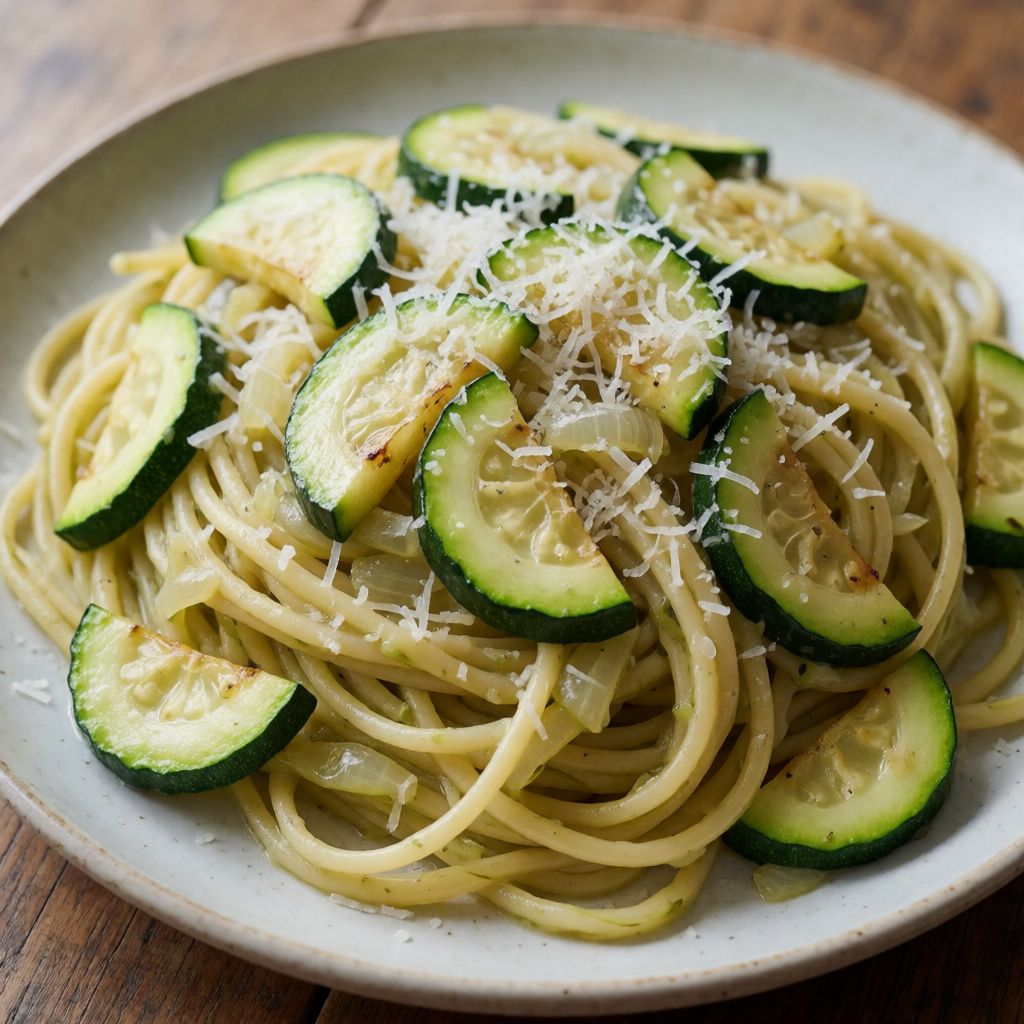
 AI photo
Pasta with Courgettes
A quick pasta dish with courgettes, onion, white wine and parmesan.
Labels are worked out automatically from the ingredients and can be wrong. Check the packaging if it matters to you.
Ingredients
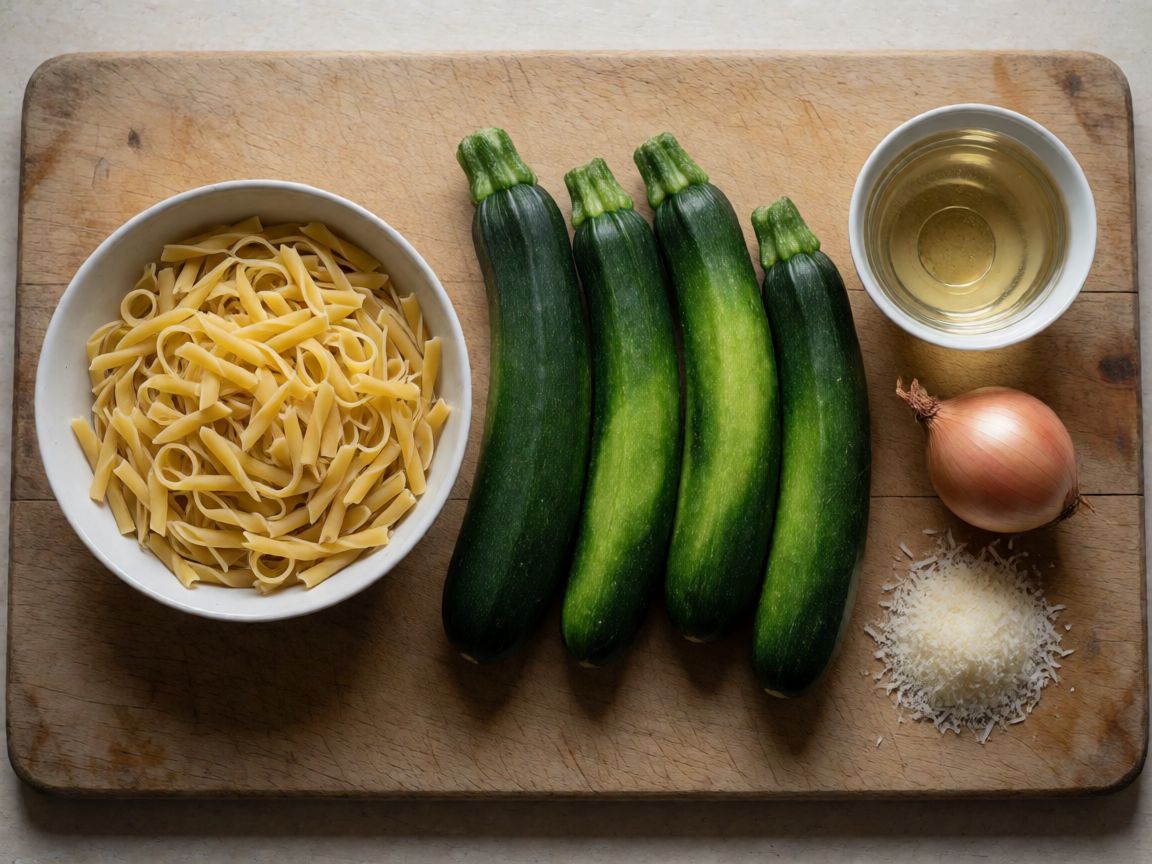
- 320 g Pasta
- 4 pcs Courgette
- 125 ml White wine
- 1 pcs Onion
- 50 g Parmesan
- Salt to taste
- Black pepper to taste
- Olive oil to taste







Steps
Wash the courgettes, pat dry, trim the ends and cut into even cubes.
Fry the onion in olive oil, add the courgettes, pour in the white wine, then season with salt and pepper.
Cover with a lid and simmer the courgettes until soft.
Meanwhile, bring a pot of water to the boil and season with salt.
Cook the pasta until al dente.
Drain the pasta and transfer it to the pan with the courgettes.
Stir-fry the pasta with the courgettes over high heat for a few minutes, stirring constantly.
Sprinkle generously with grated parmesan and serve immediately.
Courgette pasta looks like nothing much — grey-green cubes, a splash of wine, cheese on top. That's exactly the point. Courgette itself carries almost no taste of its own; it's 95 percent water wrapped in a thin green smell that vanishes the moment you heat it. What you're actually building here isn't a vegetable dish, it's a small machine for turning that water into a sauce, using onion fat, wine acid and parmesan salt to give the dish a flavour the courgette can't supply by itself.
What decides whether it works is how you manage that water. Cut the courgette into cubes of the same size — uneven pieces release water at different rates, so some turn to mush while others stay raw in the middle. Fry the onion in the oil on its own first, not together with the courgette, so there's already fat and flavour sitting in the pan before the courgette starts weeping. Then the lid goes on, not to brown anything but to trap the steam the courgette is giving off and let it cook in its own breath.
Some say you should salt courgette and squeeze the water out of it, the way you'd treat an aubergine before frying. Not here — that water, mixed with the wine, is going to be your sauce. You want it staying in the pan, not down the sink.
Doneness is a spoon question, not a clock one: the courgette should give under the back of a spoon and stop squeaking against the pan, and the raw green smell should have turned into something rounder, closer to cooked onion. If it still squeaks, the lid goes back on — there's no number of minutes that overrides that.
The final toss, once the pasta joins the courgette, isn't for colour — it's to drive off the last of the liquid fast, so the starch clinging to the pasta's surface from boiling (never rinse it away) can grab what's left in the pan and turn loose vegetables and loose pasta into one dressed thing. Keep stirring, because this stage burns through its window quickly: a domestic hob concentrates its heat into a narrow ring under a wide pan, and the pan can go from glossy to sticking in under a minute. Parmesan goes on once the pan is off that high heat, ideally even on the plate — melted straight into the boil it turns into a stringy, greasy puddle; added at the edge of the heat it stays a coating.
Pasta: any short shape with ridges, tubes or curls will hold onto cubed courgette better than a long strand does, but if all you've got is spaghetti, snap it and use it — there's no clinging sauce here to protect, just vegetable asking to be coated.
Courgette: pick ones that feel heavy and firm for their size, skin taut, no give at the ends. Four medium courgettes — about cucumber-sized each — land you around 700–800g, enough to carry the dish rather than decorate it. An oversized courgette, the kind a neighbour with an allotment leaves on your doorstep in August, is mostly water and seed by comparison; if that's what you have, cut the spongy, seedy core out before you dice it.
Onion: a plain yellow or white one, chosen for the sweetness it releases once it softens in the fat. Red onion stays sharp and crunchy rather than melting, so it fights the mechanism instead of feeding it.
White wine: by the time it's simmered under the lid, the alcohol has gone and what's left behind is acidity — the thing stopping this dish from tasting flat and vegetal-sweet. No open bottle in the house? A squeeze of lemon at the end does the same job of cutting through, though it arrives late rather than cooking in alongside the vegetables, so the effect lands a little differently.
Parmesan: any hard, aged, salty cheese with a dry, crumbly grate will do this job — parmesan is simply the one everyone's heard of. Grana padano, an aged pecorino, even a mature cheddar grated fine, all bring the salt and the little bit of fat that binds the final toss. Olive oil: any oil with no smell of its own and a tolerance for the heat under frying onion — olive oil is traditional because it was what sat in the cupboard where this dish comes from, not because nothing else works; sunflower or another neutral oil runs the same mechanism.
And patience belongs on the ingredient list, not just in the method: this whole dish depends on waiting for the courgette to give up its water in its own time. Push it with high heat too early and you get a scorched onion sitting next to a raw, squeaking cube in the same spoonful. The lid is what buys you that patience — treat it as part of the recipe, not a pause in it.