
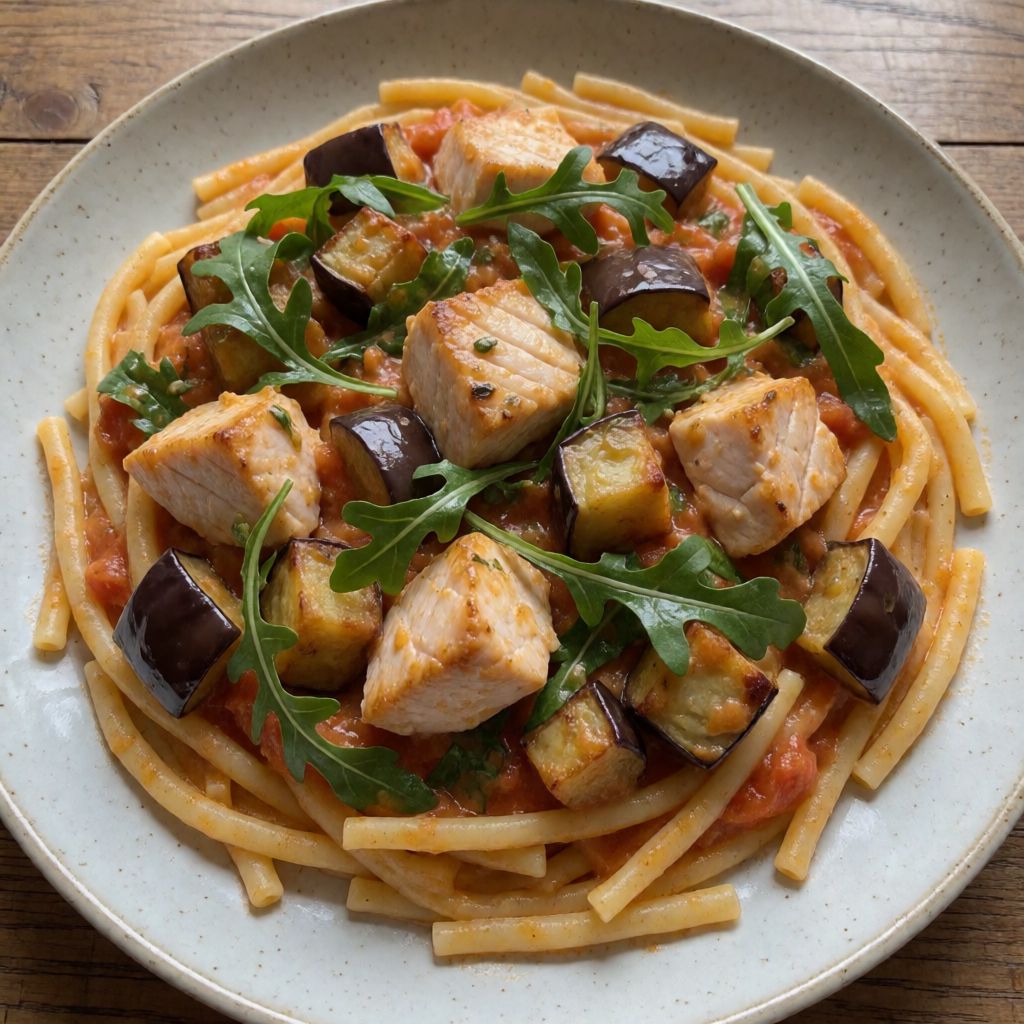
 AI photo
Pasta with Swordfish and Aubergine
A quick pasta dish with pan-seared swordfish, fried aubergine and a fresh rocket finish.
Labels are worked out automatically from the ingredients and can be wrong. Check the packaging if it matters to you.
Ingredients
- 400 g Casarecce
- 300 g Swordfish
- 1 pcs Aubergine
- 200 ml Tomato Passata
- 1 bunch Rocket
- 50 ml White Wine
- Olive Oil to taste
- Groundnut Oil for frying
- Salt to taste
- Black Pepper to taste








Steps
Remove the skin from the swordfish and cut it into cubes. Heat some olive oil in a pan, add the fish cubes and fry over high heat for a few minutes until lightly browned. Doneness: 63 °C at the thickest point.
5 minPour in the white wine and let it evaporate. Add the tomato passata and bring to the boil.
3 minBring a large pot of lightly salted water to the boil for the pasta. Cut the aubergine into cubes.
10 minFry the aubergine in plenty of hot groundnut oil for a few minutes, then drain on kitchen paper.
5 minAdd the fried aubergine to the sauce, let it warm through together and season with salt and black pepper.
3 minCook the casarecce until al dente, drain and tip into the pan with the sauce, adding a few spoonfuls of the pasta water.
10 minToss the pasta over the heat for a few seconds, add the chopped fresh rocket and serve immediately.
2 min
This is a Sicilian idea dressed in Italian clothes: meaty fish, fried aubergine, tomato, pasta — three things cooked apart and married at the last second in the pan. Nothing here is complicated. What decides whether it works is timing two things that have opposite tempers: a lean fish that dries out if you blink, and a vegetable that needs real heat to stop being a sponge for oil instead of flavour.
Swordfish is not steak, though people treat it like steak because it comes in steaks. A beef sear can stay pink in the middle and be glorious. Fish like this, past a point, is not pink and lovely — it's raw and slightly mushy, with a texture your mouth doesn't trust. That's why the recipe gives you a number, 63°C at the thickest cube, instead of a colour. Below it, the fish is unpleasant; a minute or two past it, the proteins tighten up and squeeze out their own moisture, and you've got cubes of dry cotton wool in a nice sauce. High heat at the start isn't about speed for its own sake — it's so the outside browns and seals before the inside overshoots.
Casarecce is a short pasta rolled into a loose scroll, and that shape is doing a job: the curl traps little bits of aubergine and fish instead of letting them slide off, which a flat shape like tagliatelle wouldn't do here. Any short pasta with some grip — fusilli, penne, even conchiglie — will stand in for it. Avoid anything too smooth and long; this sauce has solid pieces in it, and smooth pasta and chunky sauce don't talk to each other.
Swordfish is chosen for being firm and meaty enough to survive frying in cubes without falling apart, with almost no bones to pick through. If you can't find it or don't want the price, any dense, lean fish that holds its shape under heat works on the same logic — tuna is the obvious stand-in, monkfish too. Avoid anything flaky and delicate like cod; it'll disintegrate into the sauce before you've got it out of the pan, and you'll have fish soup, not fish pasta.
The aubergine wants to be one that's firm and heavy for its size, with taut, unwrinkled skin — that's water content, and water content is exactly what you're fighting when you fry it. One medium aubergine for four people is modest; the vegetable is there for texture and a faint smoky sweetness, not to fill the plate.
White wine is acid and a little sugar, and its job is to cut through the richness of fried fish and fried aubergine before the tomato goes in — without it the sauce sits heavy and flat. If you've no wine open, don't skip the acid: a splash of lemon juice loosened with a spoonful of water does the same cutting, just without the depth wine gives from evaporating alcohol and leaving behind its flavour compounds. Don't substitute vinegar — too sharp, no roundness.
Groundnut oil for frying the aubergine is picked for one reason: it can get properly hot without smoking or tasting of itself. Any oil that fits that description — sunflower, a plain vegetable oil, refined rapeseed — does the job. Save your good olive oil for the fish at the start, where you want its flavour, and for the one at the table if you like a last drizzle; it's wasted and scorched if you use it for deep, hot frying of the aubergine.
Rocket brings pepper and a raw green snap against all that cooked fat and tomato — it's a contrast ingredient, not a garnish. If you're out of it, baby spinach will wilt the same way but gives you none of the peppery bite; a handful of flat-leaf parsley with a little lemon zest gets you closer to the same job, sharpness against richness, even if the flavour isn't a match.
None of this moves fast, and that's worth saying plainly: the fish wants undivided attention for its few minutes, the aubergine wants to fry properly rather than be rushed into a crowded pan, and the final toss wants you standing at the hob, not checking your phone. A wide domestic frying pan does this fine — you don't need a kazan's heat, just patience in the right places and haste in the right ones, and knowing which is which is most of the recipe.