
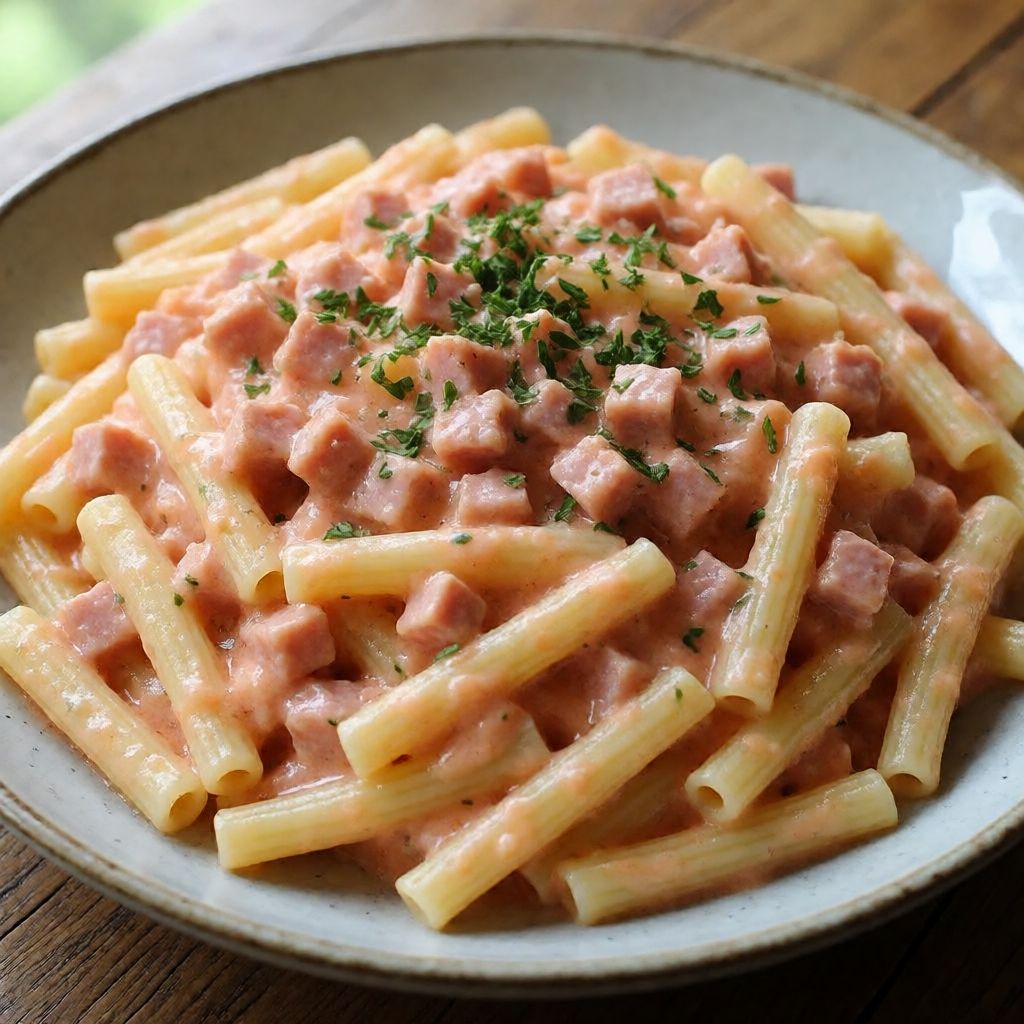
 AI photo
Creamy Mortadella Pasta
A quick, creamy pasta with mortadella and a light tomato sauce.
Labels are worked out automatically from the ingredients and can be wrong. Check the packaging if it matters to you.
Ingredients
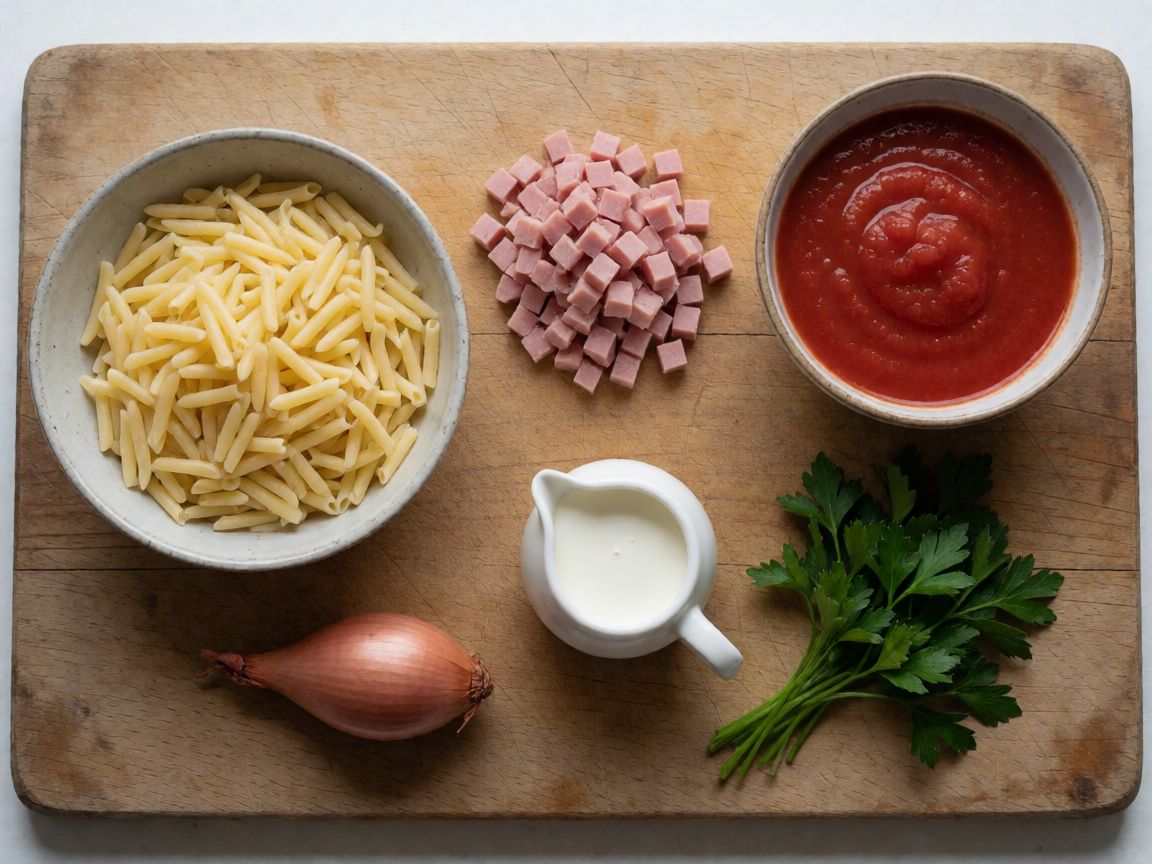
- 320 g Short pasta
- 150 g Mortadella
- 200 g Tomato passata
- 250 ml Double cream
- 1 pcs Shallot
- 1 bunch Parsley
- Olive oil to taste
- Salt to taste
- Black pepper to taste






Steps
Peel the shallot and chop it finely with a knife.
Pour a generous drizzle of olive oil into the bottom of a pan, add the chopped shallot and fry for a few minutes over high heat.
Cut the mortadella into pieces and finely chop it with a knife or in a blender.
Add the mortadella to the shallot and let it fry together for a few minutes.
Add the tomato passata and stir.
Continue cooking for 4-5 minutes, stirring constantly with a spoon.
5 minSeason with a pinch of black pepper and add more salt if needed.
Add the double cream and stir it together with the tomato sauce.
Bring water for the pasta to the boil, salt it and cook the short pasta until al dente.
Drain the pasta and immediately add it to the sauce.
Fry everything together in the pan for a few minutes and sprinkle with fresh finely chopped parsley.
Serve the pasta hot.
This is a pink sauce pasta, and the pink isn't a trick — it's cream and tomato fighting to a draw, with mortadella doing the job bacon or pancetta usually does. What decides whether it works is fat: mortadella is already about a third fat, so it doesn't need a splash of oil to crisp it, it needs heat gentle enough that the fat melts out slowly and carries flavour into the shallot rather than seizing into rubber.
Some say mortadella is "just fancy ham" and you can swap it one-for-one for bacon with no change in method — no, because bacon renders and crisps, mortadella mostly just softens and perfumes the fat around it. Treat it like bacon, fry it hard and fast, and you get little dry pellets sitting in a sauce that tastes of nothing but cream.
The whole dish is really an argument between two sauces: a quick tomato ragù and a cream sauce, poured into each other before either has time to become itself. That's why the passata only gets five minutes — long enough to lose its raw, tinny edge, not long enough to reduce and concentrate the way a proper ragù would. The cream goes in after, off the fiercest heat, so it thickens by clinging to the pasta rather than by boiling down and splitting.
Shallot instead of onion is a flavour choice, not snobbery — it's sweeter and less sulphurous raw, which matters when it only gets a few minutes in the pan before mortadella and cream arrive to mute it further. An onion works too, just chop it finer, since it needs longer to lose its bite and you haven't got the time here to give it.
Mortadella: look for one with visible flecks of fat and maybe pistachio, not the thin pre-sliced kind sold for sandwiches, because what you want is fat that renders into the pan, and the thin stuff is mostly already dried at the edges before it hits the heat. Chopping it fine — knife or blender — isn't fussiness, it's surface area: more cut surface means more fat meets the pan and melts rather than staying locked inside a lump that just warms through. No mortadella, no problem — any fatty cured sausage with a soft, almost pâté-like texture (a mild salami, even a good frankfurter in a pinch) does the same job; what you're replacing is fat-plus-savour, not a specific meat.
Tomato passata rather than whole tinned tomatoes or fresh ones is about time, not purism: passata is already broken down, so five minutes is enough to cook off its rawness. Fresh tomatoes would need to collapse first, and canned whole ones would need crushing — both doable, neither faster.
Double cream is the one place not to improvise down. Single cream or "cooking cream" has less fat and will split the moment it meets acidic tomato over heat, going grainy instead of silky — that's the defect people blame on "bad luck with cream" when really it's a fat-content problem. If you're using what's in a British fridge already for tea, it isn't the same cream — double cream for this dish is the thick stuff, 48% fat or so, sold specifically as double, not whipping or single.
Parsley at the end isn't garnish for photographs, it's the one fresh, bitter-green note in a dish that's otherwise entirely soft, fatty, and sweet-savoury — without it the whole plate tastes one-dimensional by the third forkful. Olive oil here just needs to carry heat and have no voice of its own competing with mortadella's fat; any neutral oil works, though a cheap, unassertive olive oil is traditional simply because it's what's in most Italian kitchen cupboards already, not because the dish demands it.
On a domestic hob, "high heat" for the shallot and mortadella means the loudest sizzle your biggest ring gives a wide pan before the shallot starts catching black at the edges — watch the shallot, not the clock, for that shift from translucent to pale gold. Push past gold into brown and you've burnt sugar, not softened onion, and no amount of cream fixes bitterness. Patience here is short but real: the five minutes with the passata is the only stretch where rushing shows later, as a sauce that tastes of tin rather than tomato.