
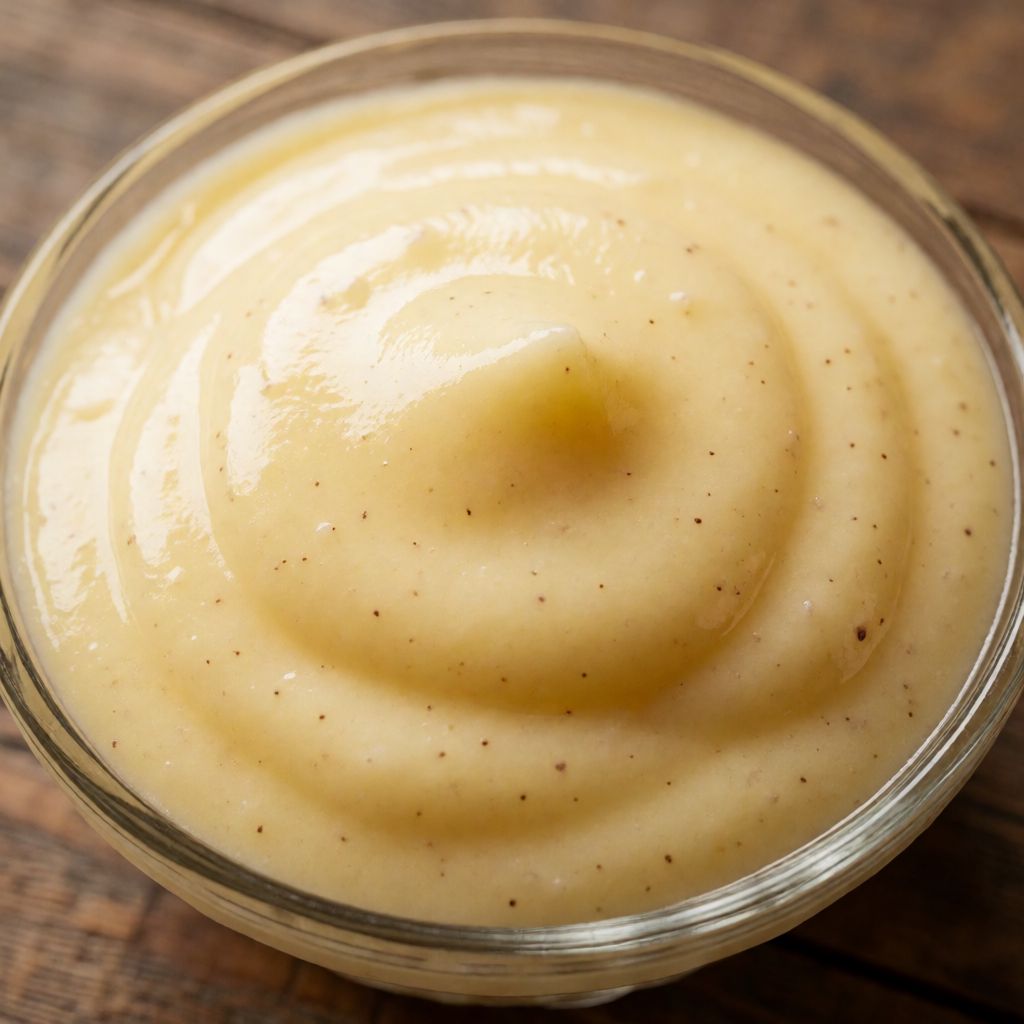
 AI photo
Pastry Cream
A silky vanilla pastry cream lightened with whipped cream, perfect for filling cakes and pastries.
Labels are worked out automatically from the ingredients and can be wrong. Check the packaging if it matters to you.
Ingredients
- 1 pcs vanilla pod
- 120 g caster sugar
- 6 pcs egg yolks
- 30 g cornflour
- 500 ml milk
- 150 ml double cream






Steps
Cut the vanilla pod lengthways and scrape out the seeds. Mix the vanilla seeds with the caster sugar.
3 minThoroughly mix the vanilla sugar, egg yolks and cornflour in a saucepan. Pour in the milk, whisking constantly, and slowly bring to the boil, stirring continuously, until the mixture thickens into a rich, smooth vanilla custard.
Let it simmer gently for a few minutes, stirring, then pour the custard into a bowl, cover the surface with cling film and refrigerate until the pastry cream has completely cooled.
120 minWhip the double cream until light and fluffy, then gently fold it into the cooled pastry cream to create a light, delicious crème pâtissière.
This is crème pâtissière — the thick, custardy filling that holds up a mille-feuille, pads out a fruit tart, or fills a choux bun without turning it soggy. It's heavier and more stable than the pouring custard you'd put on a Sunday crumble, and that difference is entirely down to the cornflour. English custard (crème anglaise) is yolks and sugar and nothing else holding the milk together — which is why every recipe for it screams "don't let it boil, it'll scramble." True for that custard. Not true for this one.
Here, cornflour is doing structural work the yolks can't do alone: the starch granules swell, trap water, and physically get between the egg proteins so they can't bond into curdled lumps. That's why this mixture can actually be brought to a gentle simmer — needs to be, in fact, because starch only thickens properly once it's hot enough to fully gelatinise. Stop too early and you get a cream that looks thick in the pan but turns thin and starchy-tasting once it cools, with a raw, chalky edge on the tongue. So the boil here isn't a risk to manage around — it's the point.
What decides whether this works is two things: getting that starch properly cooked without scorching the bottom of the pan, and refusing to rush the cooling. Fold warm cream into whipped double cream and you don't get a light crème pâtissière — you get a puddle, because warmth collapses the air you just beat in and the fat starts weeping out of the cream.
Start with the pan you choose, because the main failure in this recipe happens at the bottom of it. A thin pan heats unevenly — the metal touching the egg-and-milk mixture gets hotter than the liquid above it, so the custard right at the base scrambles into little cooked threads before the rest of the pot has even warmed through. A heavier-bottomed saucepan spreads the heat out and buys you time to whisk continuously, which is the actual job here — not stirring occasionally, but keeping every bit of the mixture moving so no patch of it sits against hot metal long enough to overcook. If your pan runs thin, pull it off the heat for a few seconds whenever you feel it getting ahead of you and keep whisking off-heat. That's not fussiness, that's damage control.
The vanilla pod is there for the seeds, not the pod itself — rubbing them into the sugar first breaks them apart and spreads them through the mix instead of leaving them clumped. If you don't have a pod, vanilla paste gets you close because it still carries visible seed flecks and real extract flavour; plain extract will work but gives you a flatter, one-note vanilla with nothing to see. Either way, the sugar isn't just sweetness — caster sugar is fine enough to dissolve smoothly into raw egg yolk without leaving grit; if all you have is granulated, give it a few seconds in a blender first.
The egg yolks are your emulsifier and part of your thickener, but they're the fragile half of this mixture — which is exactly why they're whisked together with the sugar and cornflour before any milk goes near them. Mixing cornflour straight into yolk coats the starch and keeps it from clumping into little gel balls the moment it hits warm liquid; skip this and you'll be straining lumps out of your custard at the end. The cornflour itself is the backbone — any smooth, flavourless starch that turns clear and thick when cooked will do the same job, potato starch or arrowroot included, though arrowroot sets slightly looser once cold.
Milk gives you volume and a clean dairy base; whole milk is worth using here because the fat helps carry the vanilla and softens the eggy edge that skimmed milk leaves behind. The double cream, folded in only at the end, is what turns a dense custard into something you'd actually call light — whip it to soft peaks, not stiff, or you'll be folding lumps of butter-adjacent cream through your custard instead of blending it. Whipping cream will work in a pinch but you'll get a less rich result, since it carries less fat to hold the air.
Covering the custard with cling film pressed straight onto the surface — not stretched over the rim — stops a dry skin forming as it cools and stops condensation dripping back in and watering down the top layer. And the cooling itself, however long your fridge actually takes, isn't optional admin before the fun bit. It's the difference between a cream that folds in cleanly and one that melts your whipped cream back into milk. Six yolks and 500ml of milk will give you enough to fill a fair-sized tart or several dozen choux buns — plan for a table of six to eight, not for yourself alone.