
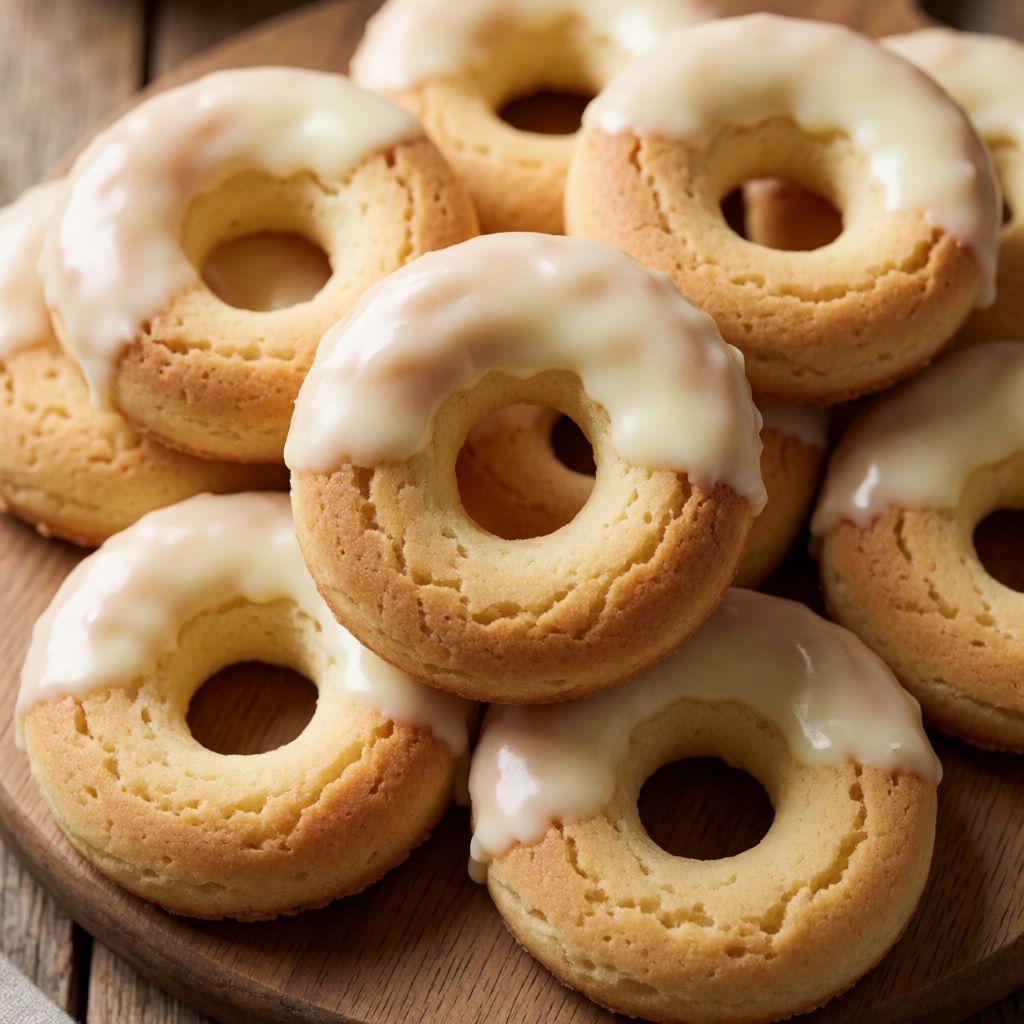
 AI photo
Easter Rings with White Chocolate
Soft Easter dough rings, baked golden and dipped in melted white chocolate with colourful sprinkles.
Labels are worked out automatically from the ingredients and can be wrong. Check the packaging if it matters to you.
Ingredients
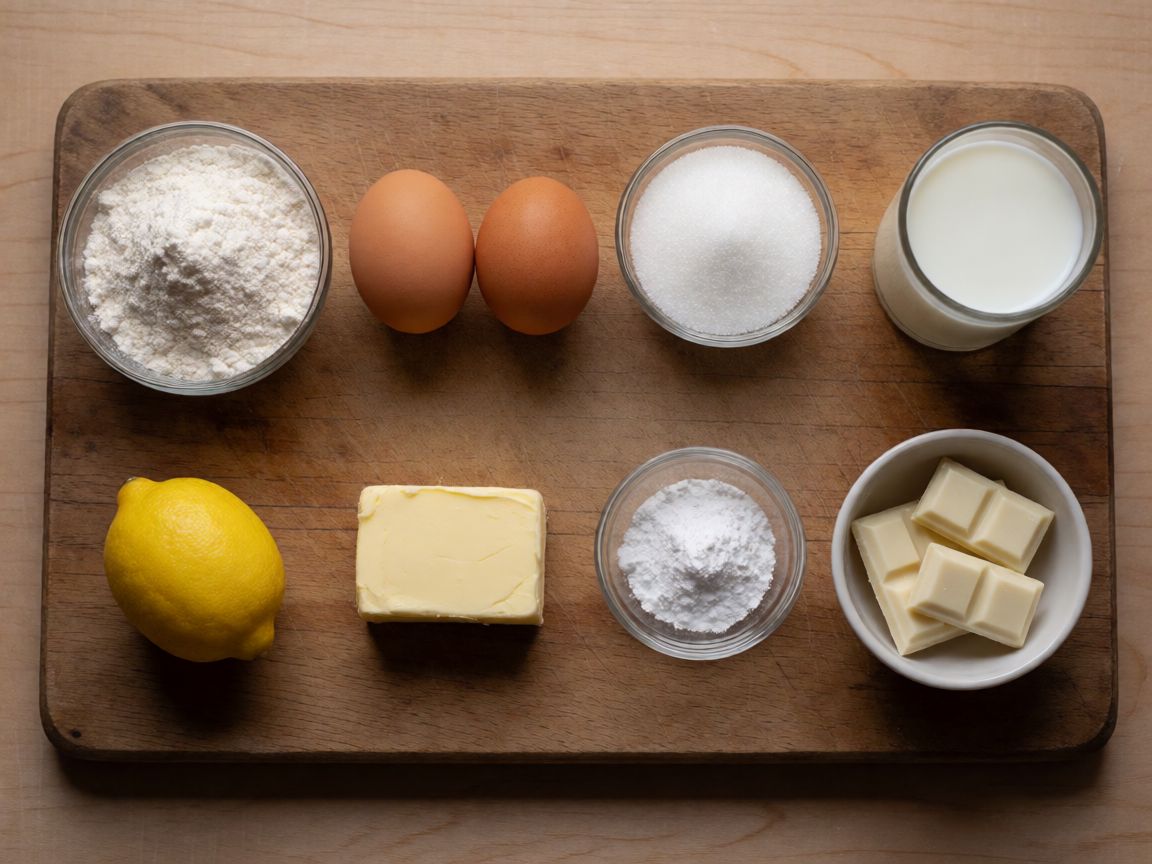
- 500 g Plain Flour
- 3 pcs Eggs
- 200 g Caster Sugar
- 140 g Butter
- 1/2 pcs Lemon zest
- 1 package Baking Powder
- Milk as needed
- 500 g White Chocolate








Steps
Sift the flour with the baking powder and pile it into a mound. Make a well in the centre, add the eggs, sugar, lemon zest and melted butter, and mix all the ingredients together.
Add enough milk to make the dough soft.
Shape the dough into many small ropes and join the ends to form small rings.
Place the rings on a baking tray greased with butter and dusted with flour.
Bake in an oven preheated to 180°C for about 25 minutes.
25 minRemove from the oven and let cool completely.
Melt the white chocolate and brush it over the rings, immediately sprinkling with colourful sugar sprinkles.
This is a dry, egg-rich biscuit dough shaped into little rings and finished cold with melted white chocolate and sprinkles — no yeast anywhere in it, so don't wait for it to rise and bloom like a bread. What decides whether it works is two things: how thin and even you roll the rope of dough, and whether you let the baked ring go stone cold before you touch it with chocolate.
The ring shape isn't decoration for its own sake — it's an old Easter habit, the unbroken circle standing for eternity, same idea behind plaited Easter breads across the Orthodox world. But the shape also solves a real baking problem: a thin rope of dough, closed into a loop, has no thick centre to stay raw while the outside turns dark. Roll the rope too fat and you'll get exactly that — a biscuit that's brown at the edge and doughy in the middle, because the heat never had time to reach the core before the crust set.
Some say add extra baking powder so the rings rise fluffier. No — because the amount in one sachet is already calculated against 500 g of flour, and past that point you don't get more lift, you get cracked rings and a metallic, soapy aftertaste from the leftover raising agent that never finished reacting. The lift here is modest by design: egg structure does most of the work, baking powder just nudges it.
Flour here means plain flour on purpose, not self-raising — the recipe already carries its own raising agent in that one sachet of baking powder, and self-raising flour would double the lift and crack the rings as they bake. If plain flour isn't in the cupboard, any low-protein flour without added raising agent does the same job; the criterion is 'no hidden leavening', not a brand.
Three eggs against 500 g of flour is a binding ratio, not a fluffing one — the eggs hold the dough together and give it enough structure to survive being rolled into thin ropes without snapping. Caster sugar, not granulated, because its finer grain dissolves into the egg-butter mixture quickly, rather than sitting as grit and later weeping moisture out of the baked biscuit.
The butter is melted, not creamed — that's a different biscuit from a creamed-butter shortbread. Creaming traps air; melting doesn't, so the texture here is close and short rather than light and flaky. That's the point, not a shortcut. Use unsalted if you have it, salted if you don't — the small amount of salt in it won't fight the sugar, it'll just round it off slightly. If you're avoiding dairy, a mild baking margarine with no strong flavour of its own will carry the fat role, though the biscuit loses a little of butter's own smell, which no substitute quite gives back.
Lemon zest is there for the oil sitting in the skin, not the juice — grate only the yellow, stop before the white pith, because pith brings bitterness with none of the perfume. Any citrus with a scented peel — orange, even a bit of lime — can stand in; the job is aroma, not acidity.
White chocolate is the part people get wrong most often, and it's not the chocolate's fault when it seizes into a grainy paste — it's the heat. Melt it gently, over not-quite-boiling water, no steam or splash of water allowed near it, because the cocoa butter in it is a soft, low-melting fat that breaks its structure the moment it's rushed or wetted. Buy chocolate that actually lists cocoa butter, not vegetable fat dressed up as 'white confectionery' — the cheap kind stays tacky forever and never sets with that faint snap. And the rings themselves must be completely cold before you brush it on, otherwise residual warmth melts the chocolate too thin and it slides off instead of coating. Scatter the sprinkles the moment the chocolate is brushed on, while it's still wet — once it starts to firm up, which happens fast in a cooler British kitchen, nothing will stick to it anymore.
One last practical note: the serving count of '1' on this recipe is really '1 batch', not one person's share. Half a kilo of flour, three eggs and half a kilo of white chocolate makes a proper tray — more like twenty to thirty small rings, enough for a full teapot's worth of guests, which is really what these were always for. They keep well in a tin for several days, so there's no harm making the whole batch even for a smaller household — treat this as an ingredient in itself: patience to let the dough rest a little before shaping, and patience again to let the baked rings go properly cold before you glaze them. Skip either and the rings will tell you.