
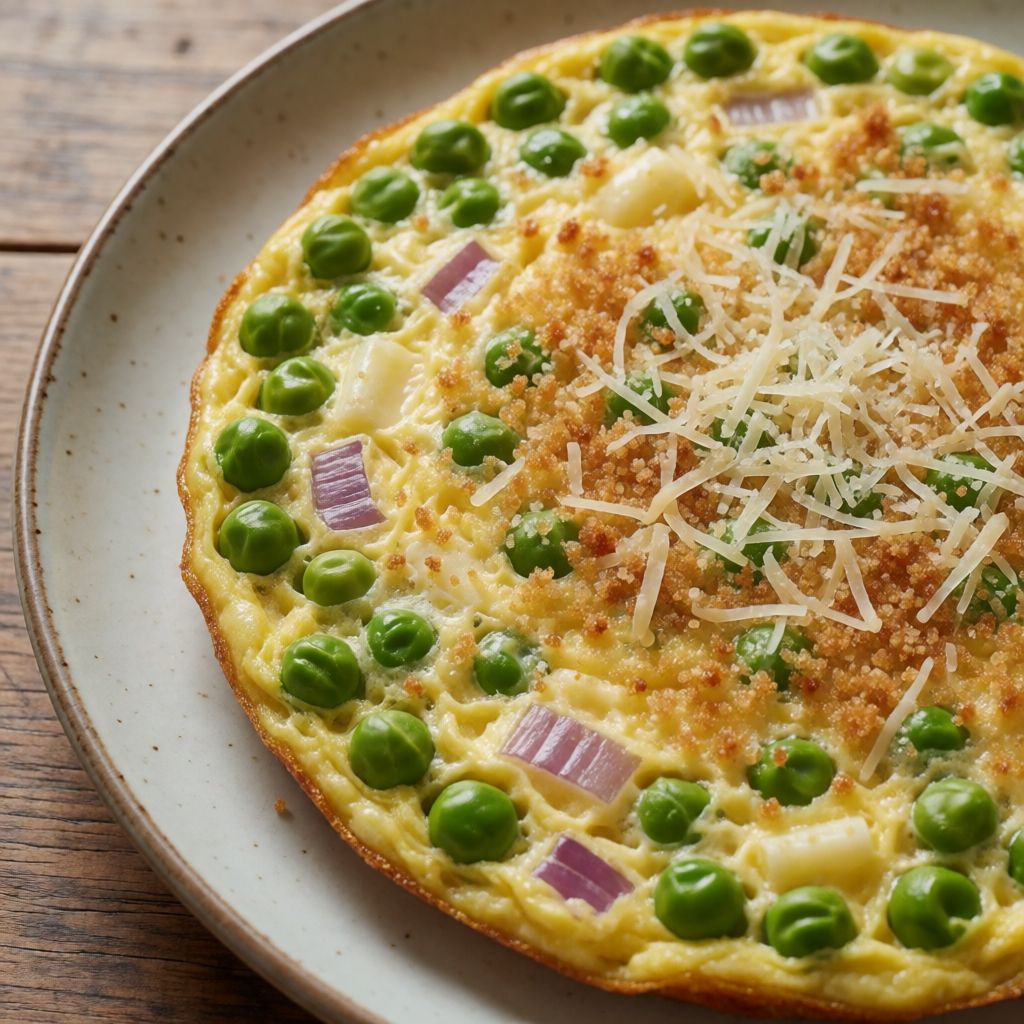
 AI photo
Pea Frittata
A simple baked frittata with sweet peas, Parmesan and a touch of butter.
Labels are worked out automatically from the ingredients and can be wrong. Check the packaging if it matters to you.
Ingredients
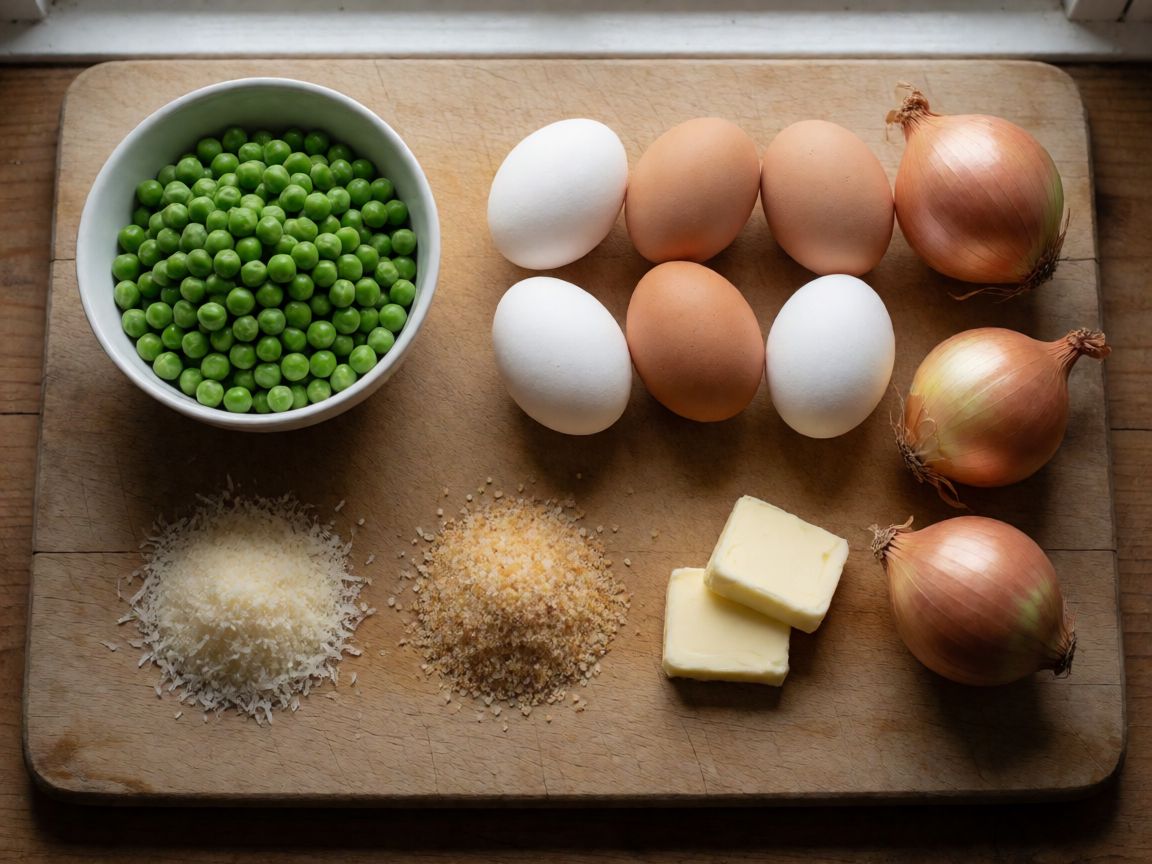
- 500 g Peas
- 7 pcs Eggs
- 50 g Parmesan
- 2 pcs Onion
- 2 pcs Butter
- Breadcrumbs to taste
- Salt to taste
- Black Pepper to taste








Steps
If using fresh peas, remove them from their pods, rinse and drain in a colander. If using tinned peas, drain the liquid, rinse and pat dry with paper towel.
Beat the eggs, add the Parmesan, salt and pepper. Whisk lightly.
In a frying pan, melt the butter and sauté the thinly sliced onion until lightly golden.
Add the peas to the egg mixture, stir and pour into the pan.
Bake the frittata in an oven preheated to 180°C.
Halfway through cooking, sprinkle the frittata with breadcrumbs and return it to the oven.
Check doneness with a toothpick — it should come out dry.
Let the frittata cool, turn it out onto a plate and serve whole or sliced.
A frittata is not an omelette that got ambitious — it's an egg custard, baked slowly all the way through instead of folded fast in a pan. That's the whole mechanism: egg proteins need gentle, even heat to set without squeezing out water. Push them too hard and they seize, weep, and you get a frittata sitting in a puddle, however good your peas were.
The peas carry sweetness and a bit of bite against all that soft egg — that's their job, not decoration. The onion goes in first and gets its own short cooking in butter, because raw onion inside a baked custard stays sharp and a little bitter; cooked first, it turns sweet and loses the edge that fights with the eggs.
What decides whether this works is moisture control, start to finish. Wet peas, wet onion, too much liquid anywhere — and the custard never fully sets, it just steams. Dry your peas properly, whether fresh or tinned, before they ever meet the egg.
The breadcrumbs on top, added halfway, aren't a crust for show. They sit on the surface and soak up the fat and moisture rising as the eggs cook, so the top dries instead of staying slick and sweaty. Skip that step and you'll wonder why the bottom is fine but the top never looks finished.
On the eggs: seven for six people, beaten lightly — not whipped to a foam. A foam traps air, and air pockets in a baked custard mean it rises uneven and sinks uneven when it cools. You want them loose and mixed, not aerated.
On the peas: 500g fresh, shelled and rinsed, is the better route if you can get them — they bring their own sugar and a cleaner bite. Tinned will do the job, that's not a compromise to be ashamed of, tinned peas are cooked peas in brine, nothing more sinister. The only discipline is drying them properly — pat them, don't just drain them, because the brine carries salt you haven't accounted for and water you don't want.
On the onion: two, sliced thin, cooked in butter until they turn from white to pale gold — not brown, you're softening them for the custard, not caramelising them for a soup. Butter here isn't sacred; any fat without a smell of its own will do the same chemistry — a mild oil, even a flavourless margarine in a pinch — but butter is cheap and does the job honestly, so there's no reason to reach past it unless you're out.
On the parmesan: fifty grams grated into the egg mixture isn't just for flavour, it's salt and a little extra protein that helps the custard hold its shape when you turn it out. Any hard, dry grating cheese with a similar bite works the same way — a mature cheddar will get you there, though the flavour shifts English.
On the oven at 180°C: that's the temperature at which egg proteins set steadily rather than violently. Hotter, and the outside firms before the centre has a chance to, so you cut it open to find a set edge and a wet middle. The toothpick test is the only honest check — it comes out dry when the whole mass, not just the surface, has gone from liquid to set.
Some say a frittata needs a proper kazan-style heavy pan to come out right — no, because what matters is that the pan or dish can go straight into the oven and the eggs are heated evenly from below and around, not from one fierce point. An ovenproof frying pan, or any oven dish of a similar depth, does this on an ordinary domestic hob and oven without complaint. The dish was born out of using up eggs and vegetables cheaply, not out of specialist equipment — that's worth remembering before you go shopping for anything exotic. Let it cool before turning it out; a hot custard is still finishing its set, and patience here is the difference between a frittata that holds its shape on the plate and one that collapses the moment you try to slice it.