
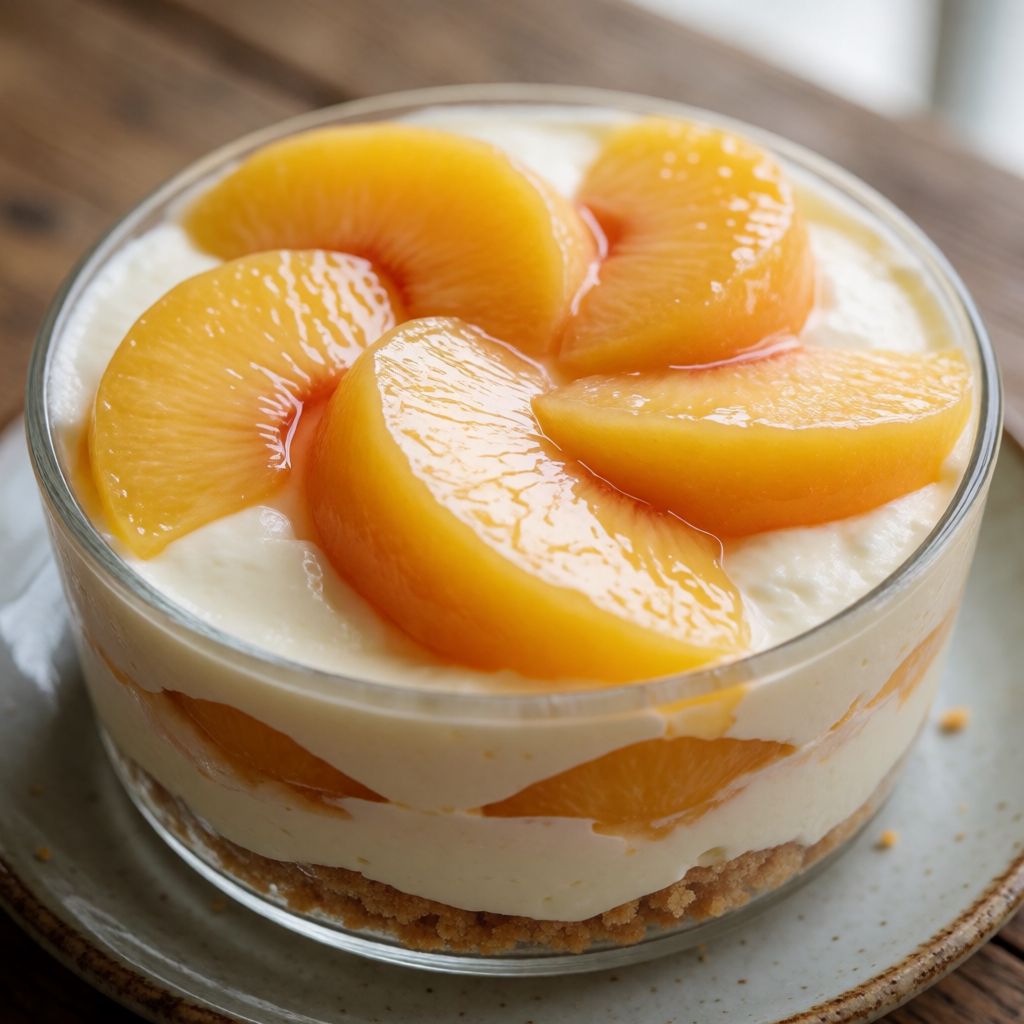
 AI photo
Layered Peach Delight
A chilled no-bake dessert with a buttery biscuit base, peachy cream cheese filling and whipped cream.
Labels are worked out automatically from the ingredients and can be wrong. Check the packaging if it matters to you.
Ingredients
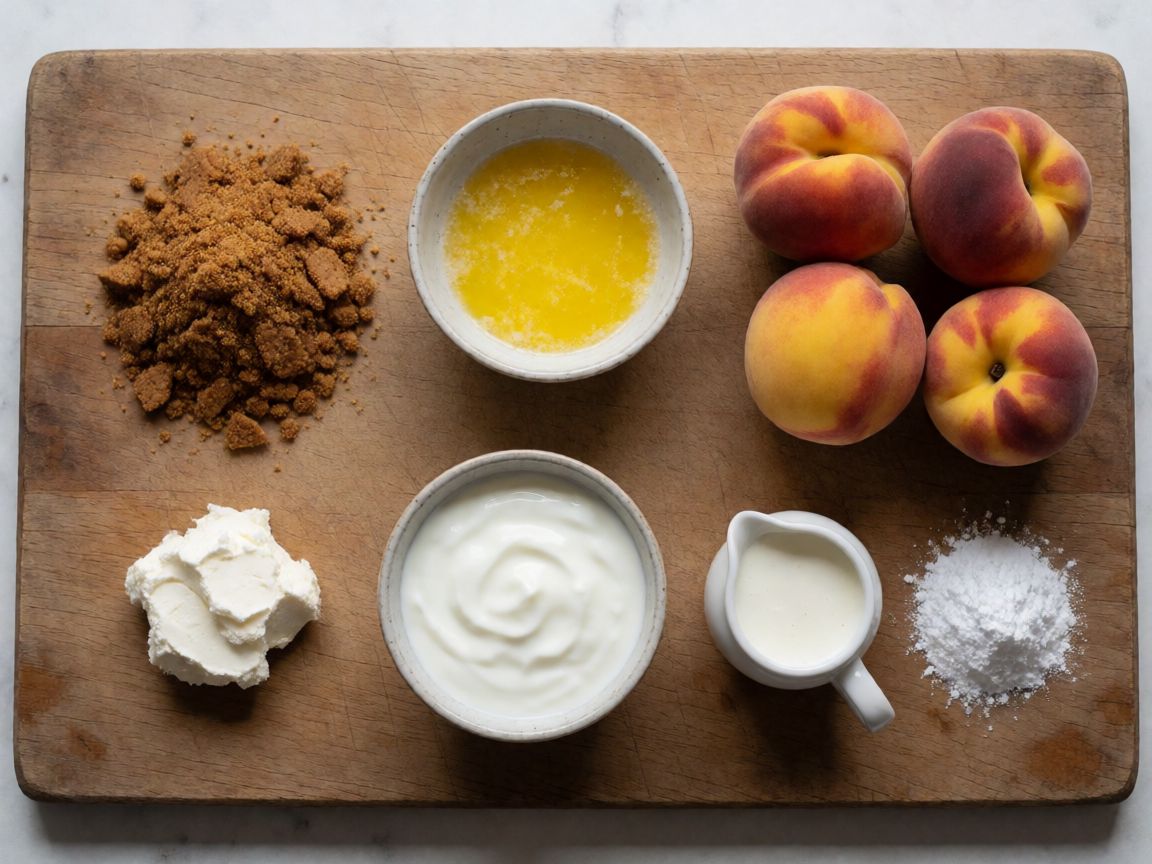
- 380 g Digestive biscuits
- 150 g Butter melted
- 3 pcs Peach
- 250 g Cream cheese
- 125 g Peach yogurt
- 200 g Double cream
- 80 g Icing sugar







Steps
Crush the digestive biscuits and mix with the melted butter until you get a crumbly mixture.
Spread two-thirds of the crumb mixture over the base of a 22 cm springform tin lined with baking paper, pressing down with the back of a spoon.
Put the tin in the fridge.
30 minMix the cream cheese with the peach yogurt until smooth.
Add the finely chopped peach and stir to combine.
Whip the double cream with the icing sugar until thick and fluffy.
Gently fold the whipped cream into the filling, using an upward motion.
Pour the cream over the chilled base and scatter the remaining crumbs on top.
Put the dessert in the fridge.
Serve the layered peach dessert chilled.
This is an English no-bake cheesecake dressed as a trifle — crumb base, creamy peach filling, same crumbs scattered back on top so you remember what's underneath. No oven, no eggs, no gelatine. The whole structure depends on two things setting cold: the butter in the crust and the fat in the whipped cream. Everything else is flavour.
The base isn't "biscuit with butter" — it's butter acting as glue, and glue only grips once it's gone solid again. That's what the fridge rest is actually for, not some ritual of letting flavours "mingle". Skip it and the crust stays sand; you'll get crumbs on the plate instead of a layer under the knife.
Same logic upstairs. Whipped cream folded into cream cheese isn't decoration, it's scaffolding — it's what keeps the filling thick enough to cut into wedges rather than slump into peach soup. Whip it to the point where it holds a soft shape and stops there; push past that and it turns grainy and weeps liquid later, because fat that's been forced apart doesn't come back together gently. Fold it in with an open hand, upward, like you're lifting air rather than beating it — mash it in with a spoon the way you'd stir porridge and you knock the air straight back out, and no amount of chilling restores it.
Some say a cheesecake like this needs longer in the fridge to "taste better". It doesn't get tastier with time — it gets firmer. Flavour is mostly set the moment the peach and cream cheese meet; what's happening in the fridge afterward is purely mechanical, fat crystals locking into place so the thing can hold its own weight when you slice it.
Digestive biscuits are the British default here because they're sturdy — enough bran and sugar to crush into coarse crumb, not so sweet they fight the filling. Any plain, dry biscuit with that same crumble-not-dust texture will do the same job: a shortbread, a graham cracker, even a plain oat biscuit. What won't work is anything soft or cream-filled — it won't take up butter evenly, it'll clump.
Butter is doing a structural job, not a flavour one, so melt it fully and let it cool just enough that it's still liquid but not hot — hot butter fries the crumb and makes it taste of nothing but grease; cold butter won't coat it at all. The two-thirds/one-third split matters for the same reason the crust needs its own set time: the base has to hold weight, the scattering on top is just texture and a visual cue that there's a biscuit base at all — it's doing no structural work, so don't stress over getting it even.
Cream cheese carries the body of the filling. You want a block-style one with real fat in it, not a "light" spread — low-fat versions carry more water, and water is the enemy of anything that's meant to set without gelatine; it'll weep and separate instead of holding a clean slice. Peach yogurt here is doing double duty — a little extra acidity to lift the cream cheese, and the peach flavour reinforced before the actual fruit goes in. If you can't find a peach yogurt, a plain full-fat yogurt with a spoon of peach preserve folded through gets you the same place.
Fresh peach, ripe enough to give under light thumb pressure, chopped fine — that's the texture you're after: flecks, not chunks, so every slice has peach rather than the occasional lucky bite. Underripe peach is stringy and sour and won't release any juice into the filling; tinned peach in syrup works as a fallback, but drain it hard first, or you've added water back into a filling that depends on staying dry enough to set.
Double cream is the one ingredient you genuinely cannot swap down. It's roughly 48% fat, which is what lets it whip to a shape that holds without any stabiliser — single cream, at half that fat, will never get past a slightly thick liquid no matter how long you beat it. If you're outside the UK, look for a cream labelled heavy whipping cream or anything around 35% fat and up; below that, don't bother, it's a different dessert. Icing sugar rather than granulated is about texture, not sweetness — it dissolves into the fat as you whip instead of sitting there as grit, which matters because this filling never sees heat to melt sugar the way a baked dessert would.
The tin is a springform for a practical reason that has nothing to do with looking professional: this is a dessert with no structural integrity until it's cold and set, and a normal tin would mean flipping it out while it's still soft, which ends in a collapsed crust and cream on the worktop. Line it with paper for the same reason — it's not neatness, it's the only way to get a clean release without the base cracking off in sheets. Patience is the real final ingredient in this one — there's no trick to speed up fat setting, and trying to serve it early just means a nice-tasting mess on a plate instead of a slice.