
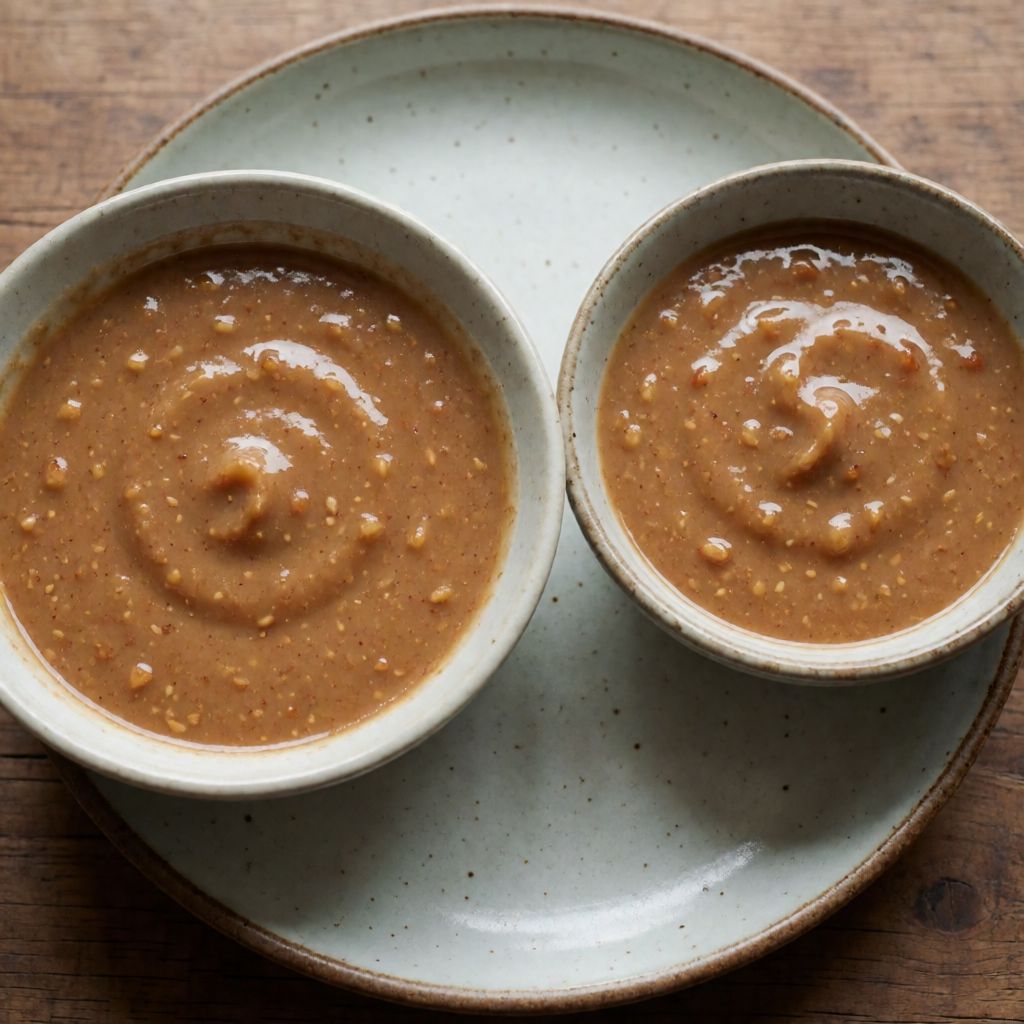
 AI photo
Peanut Sauce and Sweet-Sour Chilli Dip
A rich peanut sauce paired with a zesty sweet-sour chilli dip.
Labels are worked out automatically from the ingredients and can be wrong. Check the packaging if it matters to you.
Ingredients
- 1 pcs Lemongrass bruised lengthways and finely shredded
- 3 clove Garlic finely chopped
- 100 ml Water
- 4 tbsp Peanut Butter crunchy
- 1 tsp Sugar or coconut sugar
- 2 tsp Coconut Oil
- 1 tbsp Peanut salted, finely chopped
- 2 pcs Lime juiced
- 2 tsp Sugar
- 3 tbsp Fish Sauce
- 5 tbsp Water
- 2 clove Garlic finely chopped
- ½ pcs Red Chilli red, thinly sliced







Steps
Put the coconut oil, garlic and lemongrass into a small pan and warm through until a rich aroma develops.
2 minAdd the water, peanut butter and sugar and simmer gently for a few minutes, stirring constantly.
4 minRemove the lemongrass and pour the peanut dip into a glass or small serving bowl.
1 minDissolve the sugar in the lime juice, add the fish sauce, water, garlic and chilli, and mix well.
1 minAdjust the taste to your liking with more fish sauce or sugar, if desired.
Two sauces, really, sitting in one bowl at the table pretending to be one recipe. One is thick and nutty — peanut butter loosened with water and warmed through with garlic and lemongrass until it's a dip, not a paste. The other is thin, sharp, sweet-sour-salty — lime, fish sauce, sugar, raw garlic, chilli — closer to a splash than a sauce. You dunk satay sticks or grilled chicken in the first; you spoon the second over rice or alongside, for the bite the peanut doesn't give.
What decides whether this works is heat control on the peanut side and balance by taste on the chilli side — two completely different skills, and the recipe quietly asks for both. The peanut dip fails if you rush the first step: garlic and lemongrass in hot oil need long enough to actually release their oils into the fat, not just sit there going pale. You're not frying them to colour, you're warming them until the kitchen smells of it — that smell is the test, not a clock. Skip that and the dip tastes like peanut butter with bits in it, because that's what it is.
The thin sauce has no cooking at all, which means it has no safety net. Lime juice, fish sauce, sugar and water in roughly that order aren't a formula, they're a starting point you correct by tasting — too sharp, add sugar; too flat, add fish sauce; too sweet, more lime. Some say sauces like this have a fixed ratio you must hit exactly — no, because limes vary in sourness by the week and fish sauce brands vary in saltiness by the bottle, so the "adjust to taste" line at the end isn't an afterthought, it's the actual last step of the method.
Lemongrass bruised and shredded rather than just sliced — bruising splits the fibres so the oils inside actually meet the hot fat instead of staying locked in a tough stalk. You remove it afterwards because it's done its job and nobody wants to chew it; it's a flavouring vegetable here, not an ingredient you eat, same logic as a bay leaf. If you can't get it fresh, a strip of lime zest and a squeeze more lime in the dip gets you closer than the dried or paste versions, which taste more of storage than of lemongrass.
Coconut oil for the aromatics because it has almost no smell of its own once warmed and carries the garlic and lemongrass cleanly — "no smell of its own" is the actual criterion, so a flavourless groundnut or sunflower oil does the same job if coconut oil isn't in the cupboard; olive oil will fight the lemongrass rather than carry it, so leave it for the Sunday roast potatoes instead.
Peanut butter should be crunchy because the texture is meant to read as "peanut dip," not "smooth peanut soup" — smooth butter works, you just lose the bit of bite that the chopped peanuts on top are also there to give. Salted peanuts for the garnish matter more than they look: they're adding a second, drier texture against the warm smooth sauce, and if your peanut butter is already heavily salted, taste before you add fish sauce later or the whole plate tips salty.
Sugar twice, in two different sauces, is doing two different jobs — in the warm dip it rounds off the raw edge of peanut and garlic; in the cold sauce it's balancing lime's acid and fish sauce's salt in real time as you taste. Coconut sugar instead of white sugar brings a faint caramel note that suits the peanut side particularly well, but it's a preference, not a correction — white sugar from the baking cupboard does the balancing just as well.
Fish sauce is the ingredient most likely to be missing from a British kitchen, and there's no real substitute for its particular salty-savoury depth — a mix of soy sauce and a pinch of something fermented-tasting (a dash of Worcestershire sauce, oddly, gets closer than plain soy alone) will stand in, but go gently and taste, because you're guessing at a strength you don't have a reference for yet.
Lime over lemon because lime's acidity sits brighter and less rounded, which is what cuts through fish sauce and sugar without turning the whole thing into something resembling salad dressing — lemon works if that's what's in the fruit bowl, use a little more of it.
On a domestic hob, "a small pan" really does mean small — the point of step one is garlic and lemongrass surrounded by just enough oil to carry them, not swimming, and in a pan too wide for the amount of oil they'll catch and burn at the edges before the aroma has had time to build; a milk pan or the smallest one you own does this better than your big roasting pan's little cousin.