
 AI photo
Pear and Chocolate Cake
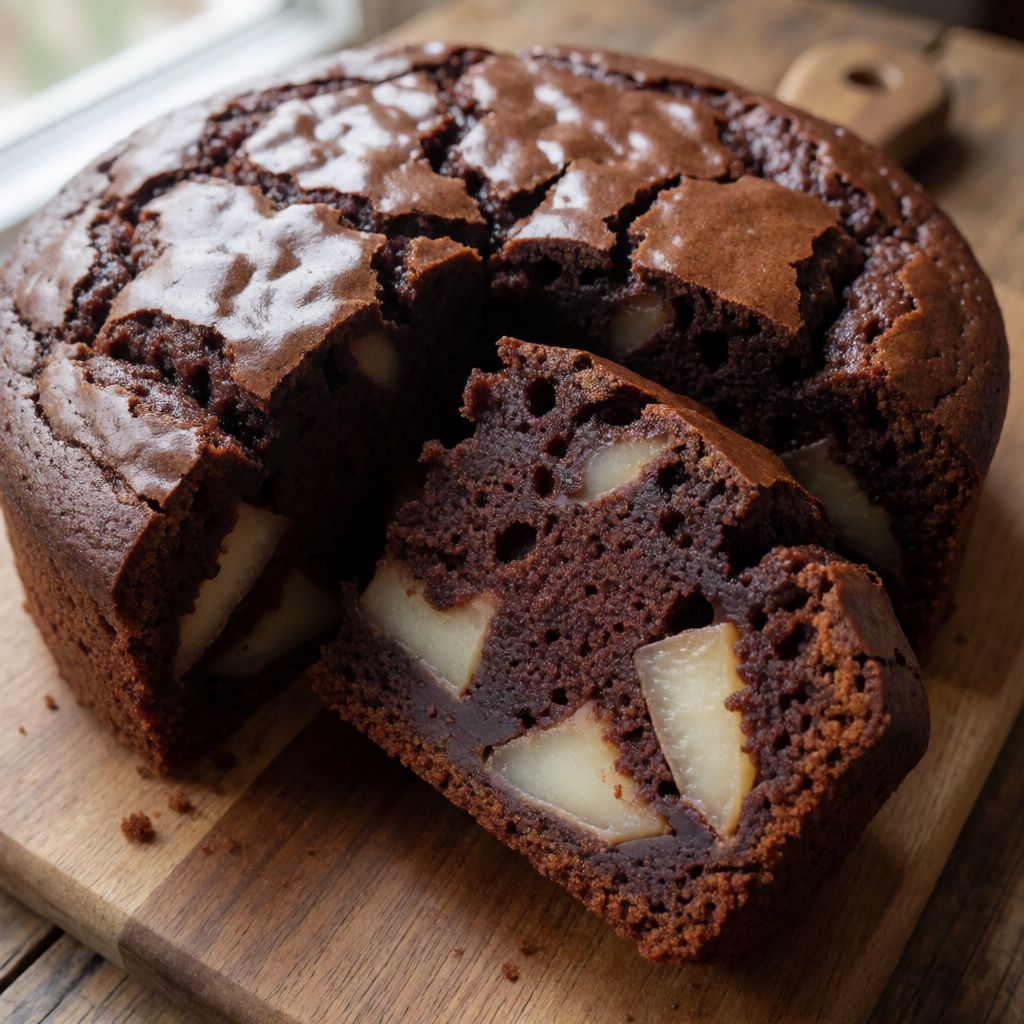
A rich chocolate cake studded with pear, topped with extra slices for decoration.
Labels are worked out automatically from the ingredients and can be wrong. Check the packaging if it matters to you.
Ingredients
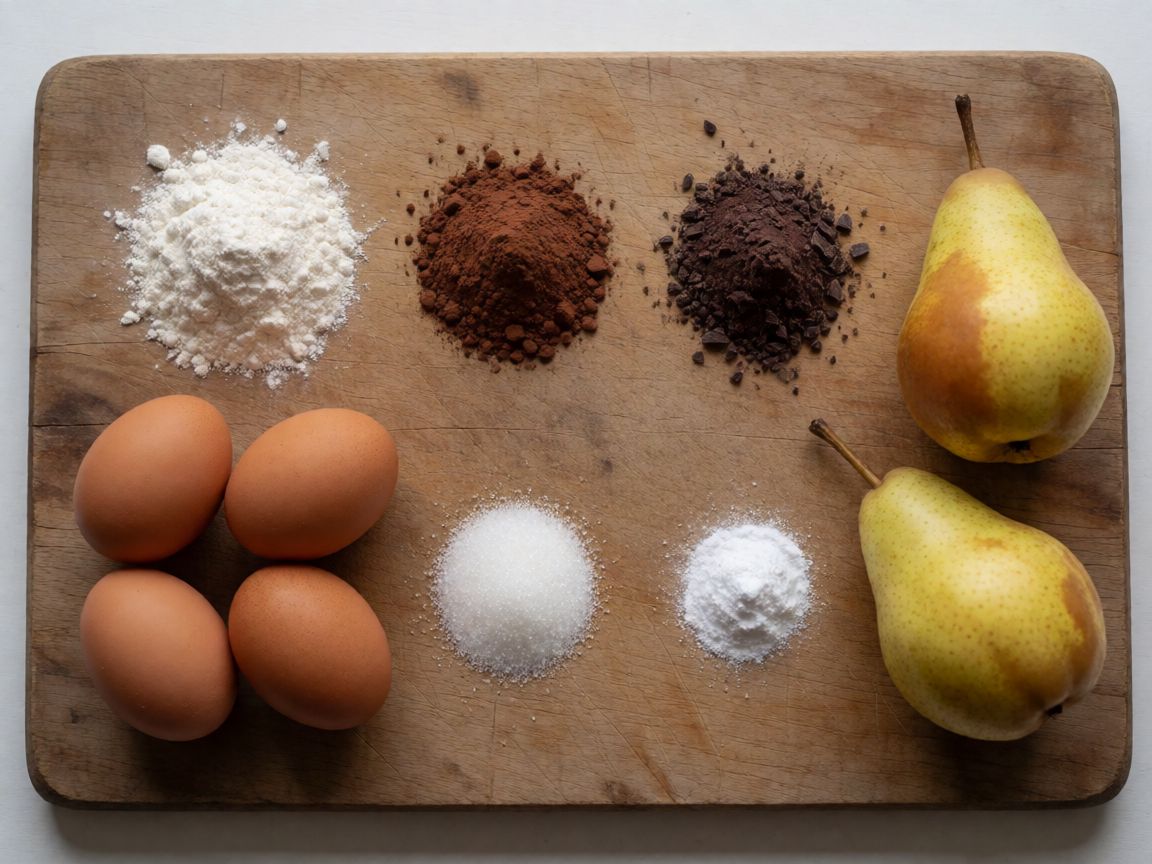
- 160 g Flour
- 20 g Cocoa powder
- 200 g Dark chocolate
- 4 pcs Eggs
- 120 g Sugar
- 140 g Vegetable oil
- 2 pcs Pear
- 16 g Baking powder
- 1 pinch Salt






Steps
Melt the dark chocolate in a bowl over a pan of simmering water (or in the microwave), then leave it to cool.
Using a mixer, whisk the eggs with the sugar until pale and fluffy.
3 minAdd the vegetable oil and keep whisking with the mixer.
Add the pinch of salt and the melted chocolate, and mix until smooth.
Sift the cocoa powder, flour and baking powder together.
Fold the dry ingredients into the batter and mix well until smooth.
Pour half the batter into a greased and flour-dusted 20-22 cm round tin.
Peel and chop the pears into pieces, setting half aside for decoration.
Cover with the rest of the batter and decorate the top with the remaining pear pieces.
Bake the cake for 50-55 minutes at 180°C fan.
53 minLeave the cake to cool, then carefully turn it out of the tin.
This is a dense, fudgy chocolate cake with soft, barely-cooked pear folded through the middle and scattered on top — not a light sponge, and that's the point. The oil instead of butter, the melted chocolate instead of just cocoa powder, the modest flour-to-wet ratio — all of it is built to keep the crumb heavy and moist rather than airy. What decides whether it works is restraint at the oven: pull it too late and the fudgy centre turns into something closer to brownie-gone-dry; pull it too early and the pear's water hasn't had time to set the structure around it, so the middle slumps when you cut it.
The pear is doing two jobs, not one. Buried in the batter, it releases moisture as it bakes and keeps the crumb from going dense-and-dry — chocolate cakes with a lot of melted chocolate and no butter can turn claggy without something wet working against them. On top, exposed to the oven's heat, the same pear dries and caramelises slightly at the edges, so you get a drier, almost roasted bite right next to a damp one a centimetre below. That contrast is the whole appeal — don't flatten it by burying all the fruit inside, or by slicing the top pieces so thin they just evaporate.
The eggs and sugar stage (step 2) is not decoration — whisking them "pale and fluffy" dissolves the sugar into the egg proteins and beats in air that becomes the only leavening this cake gets beyond the baking powder. Skip or rush this and the crumb will be denser than intended, because there's no second rise coming later to rescue it. Three minutes with a hand mixer is the lower bound; stop when the mixture has visibly lightened in colour and holds a ribbon off the whisk, not by the clock.
Dark chocolate, melted and cooled before it meets the eggs, is for flavour depth and for fat — cocoa powder alone gives you bitterness and colour but almost no fat, so the two together (chocolate for richness, cocoa for intensity without extra sugar) is doing a job neither can alone. Choose a dark chocolate you'd eat on its own — 60-70% cocoa solids is the usual range sold in UK supermarkets, labelled as "dark" or "70% cocoa." Don't reach for chocolate chips meant for baking; they're often stabilised to hold their shape in the oven rather than melt smoothly, and you'll fight a grainy sauce instead of a silky one. Let it cool before adding it to the eggs — pour it in hot and you'll partially cook the eggs on contact, and the batter will look curdled rather than glossy.
The oil is "vegetable oil" in the recipe, which really means: any oil with no smell of its own. Sunflower or rapeseed oil, both cheap and common on UK shelves, do the job invisibly. Olive oil will not — it has its own flavour and will fight the chocolate rather than support it, so save it for other cakes.
Flour, cocoa and baking powder get sifted together (step 5) for a reason that has nothing to do with lightness and everything to do with avoiding lumps of baking powder sitting undissolved in the finished cake — a small bitter pocket you'd bite into later. If you don't own a sieve, a fork and a bit of patient stirring through the dry mix does almost the same job; it's slower, not impossible.
Pears: ripe but still holding their shape when cut, not the soft, almost-liquid ripeness you'd want for eating raw with cheese. A pear that's too soft will collapse entirely into the batter and give you mush instead of pieces; one that's too hard won't soften enough in 53 minutes and you'll bite into something closer to raw fruit. Conference or Comice pears, widely sold in the UK, both work — firm-ripe is the only test that matters, not variety.
On the "medium heat" question that doesn't actually apply here, since this is baking, not stovetop work: the recipe gives you 180°C fan for 50-55 minutes, and that's a real, meaningful number because fan ovens circulate heat evenly around the tin — a conventional (non-fan) UK oven usually runs about 20°C hotter for the same effect, so if yours isn't a fan oven, you're looking closer to 200°C, same time as a starting point. Either way, 53 minutes is the lower bound the recipe found worked in one kitchen, not a guarantee in yours — check with a skewer through the centre, not the pear piece. It should come out with a few moist crumbs clinging, not wet batter, and not bone dry either; the first means it needs more time, the second means you've already dried it out.
Leave it to cool before turning it out (step 11) — not because of folklore, but because oil-based chocolate cakes are genuinely fragile while warm. The gluten structure hasn't fully set and the fat is still liquid; turn it out hot and it will likely break across the middle, right where the buried pear sits. Patience here is the difference between a cake and a cake-shaped collapse on your plate.