
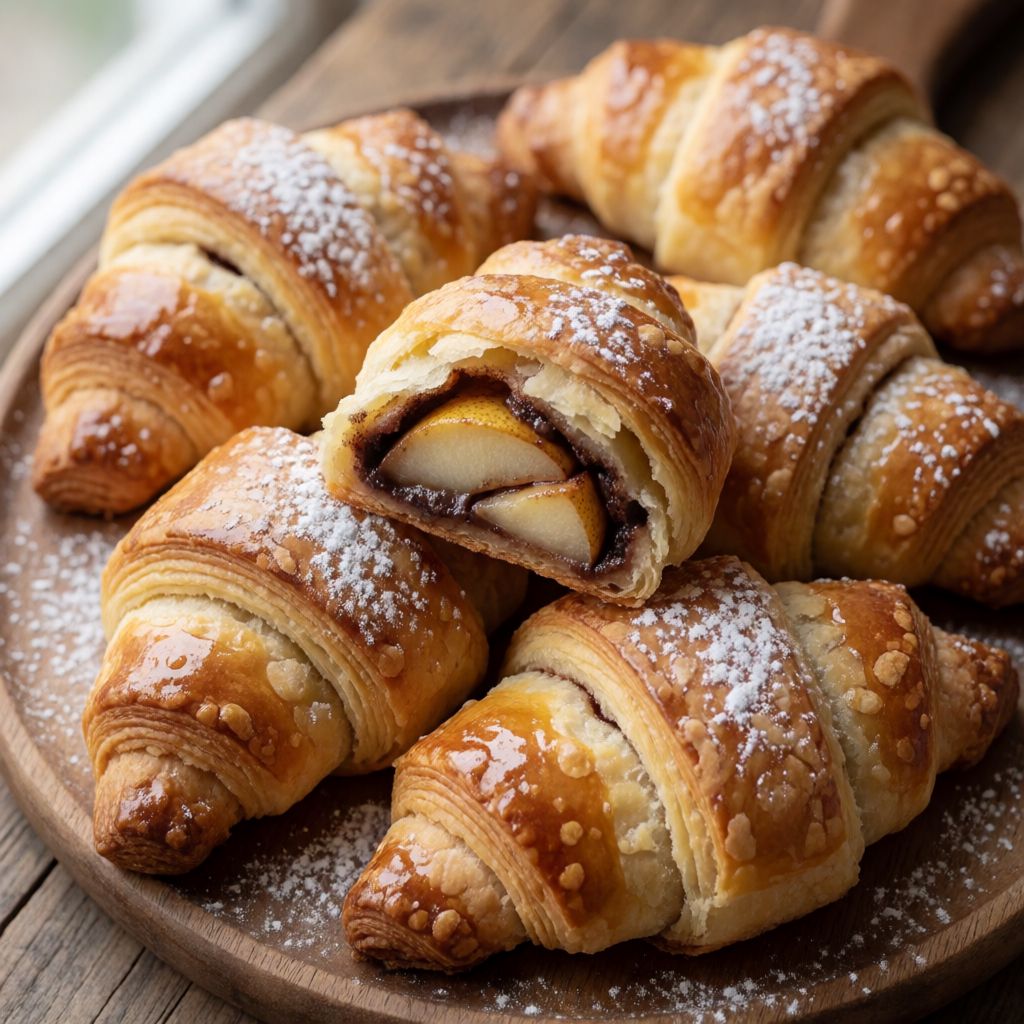
 AI photo
Pear and Nutella Crescent Pies
Flaky pastry crescents filled with pear and Nutella, baked until golden.
Labels are worked out automatically from the ingredients and can be wrong. Check the packaging if it matters to you.
Ingredients
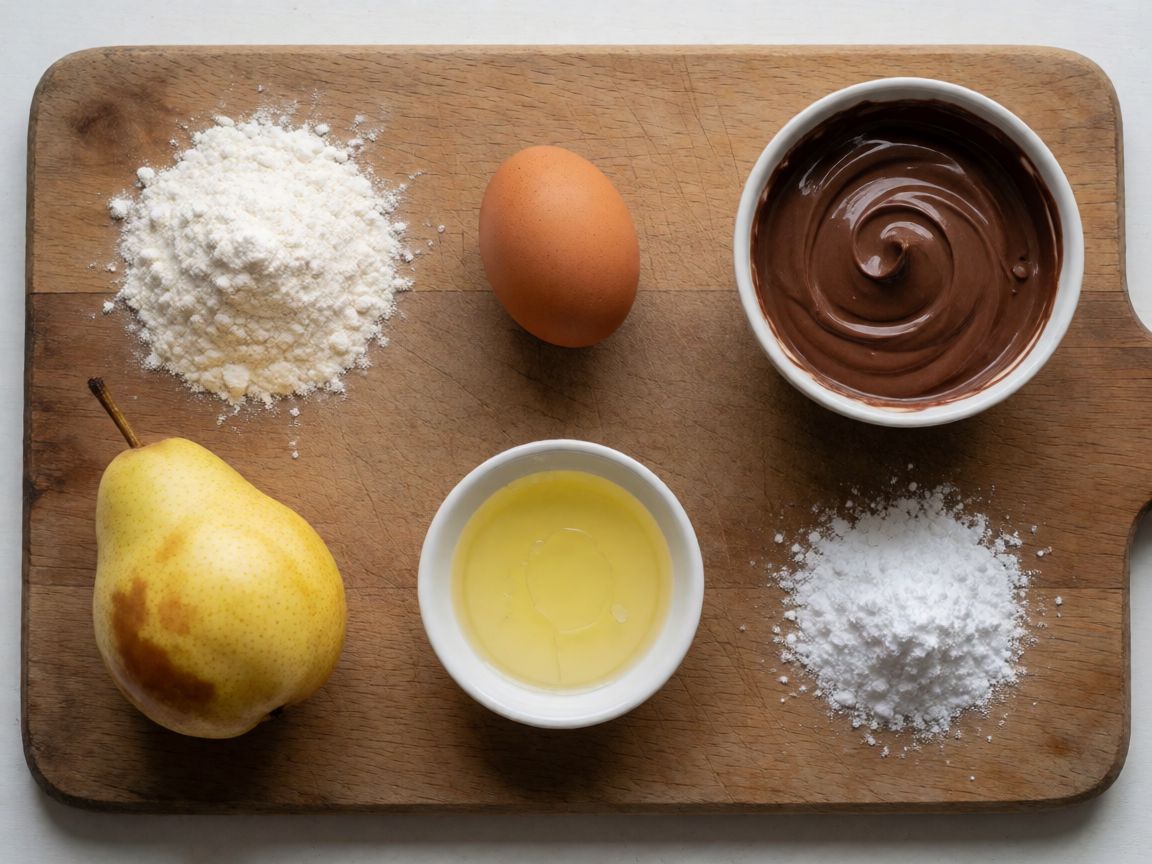
- 130 g Plain Flour
- 50 ml Water
- 40 ml Vegetable Oil
- 1 pcs Egg
- 1 pcs Egg White
- 1 pcs Pear
- Nutella to taste
- Icing Sugar for dusting







Steps
In a bowl, sift the flour and add the water. Whisk for a few seconds, then pour in the vegetable oil and whisk again.
Add the egg, mix, and knead the dough by hand until it forms a smooth, compact ball.
Cover the dough with cling film and leave it in the fridge for 20 minutes.
20 minRoll out the dough on a lightly floured surface with a rolling pin to about 1 cm thick.
Use a pastry cutter to cut out rounds.
Spread Nutella on only half of each round and place pieces of pear on top.
Fold the round in half and press the edges with a fork to seal the crescents tightly.
Brush the surface with beaten egg white and bake in a preheated fan oven at 180°C for about 20 minutes.
20 minRemove from the oven and dust with icing sugar.
Serve warm or cold.
This is a turnover, not a croissant — don't let the word "crescent" fool you into thinking of lamination and butter layers. The dough here is water, a little oil, egg, flour — stirred, not folded forty times in the fridge like real puff pastry. That's the whole point of it: no lamination, no resting for hours, no risk of the butter melting into the flour on a warm kitchen counter and ruining the layers. You get a pastry that's sturdy enough to hold a slippery filling and quick enough to make on a Tuesday evening.
What decides whether it works is not the oven, it's the seam. Nutella turns to syrup well before the crust is cooked through — sugar and fat liquefy fast, pastry sets slow. If the edge isn't pressed shut properly, that filling finds the gap and bleeds out onto the tray, and you're left scraping burnt sugar off a baking sheet instead of eating a pie. The fork-pressed edge isn't decoration, it's the only thing standing between a neat crescent and a puddle.
The egg white brushed on top does two jobs, not one. It gives you colour — a fan oven at 180°C for twenty minutes is not long, and bare dough won't brown much in that time on its own. And it sets into a thin, glassy skin before the pear underneath has a chance to weep its juice into the crust, so the top stays crisp instead of going tacky and pale.
Flour: plain, nothing stronger. Plain flour gives you a dough with enough structure to hold a shape but not so much gluten that it fights you when you fold it over the filling. Bread flour would make the dough elastic and springy — fine for bread, bad here, because a springy dough pulls back at the seam exactly when you need it to stay shut.
The water-and-oil mix whisked in before the egg goes in isn't fussy technique, it's about coating the flour's protein early with fat so it develops less gluten than if you'd just added water and started kneading. That's why the dough comes together smooth and "compact" rather than tough — the oil gets there first. Use any oil with no smell of its own: sunflower, rapeseed, groundnut. Olive oil will leave its taste in the crust, and you don't want pear and hazelnut chocolate arguing with olive on the way down.
The twenty minutes in the fridge isn't really about chilling, it's about the gluten you did form relaxing back down. Skip it and the dough shrinks back every time you roll it, or tears at the fold instead of bending. You'll feel the difference: rested dough rolls out and stays where you put it; unrested dough fights you back.
Egg does double duty — whole egg goes into the dough for richness and a bit of binding, and the leftover white goes on top as glaze. That's not a coincidence, that's just not wasting half an egg. If you're out of a spare white, a thin brush of milk will give you some colour, though not the same shine or seal.
Pear: pick one that's still a little firm, not the soft, perfumed kind that collapses into juice on a spoon. A ripe-to-mush pear will flood the inside of the pastry with liquid before the crust has set, and you'll get a soggy patch right where the filling sits. A firm pear, or a firm apple if that's what's in the fruit bowl, holds its shape and gives up its moisture slowly enough for the crust to cook around it instead of against a puddle.
Nutella is doing a job here beyond flavour — it needs to be thick enough that it doesn't run to the edges and sabotage your seal before the pastry's even gone into the oven. Any thick hazelnut-chocolate or similarly dense sweet spread will behave the same way; a thin chocolate sauce won't, it'll run and leak no matter how well you've pressed the fork marks in. Icing sugar comes on cold, after baking — it's there for looks and a bit of sweetness on the tongue, not a baking ingredient, because sugar dusted on before the oven would simply melt and catch. Good with tea, the way most things that fit in one hand are.