
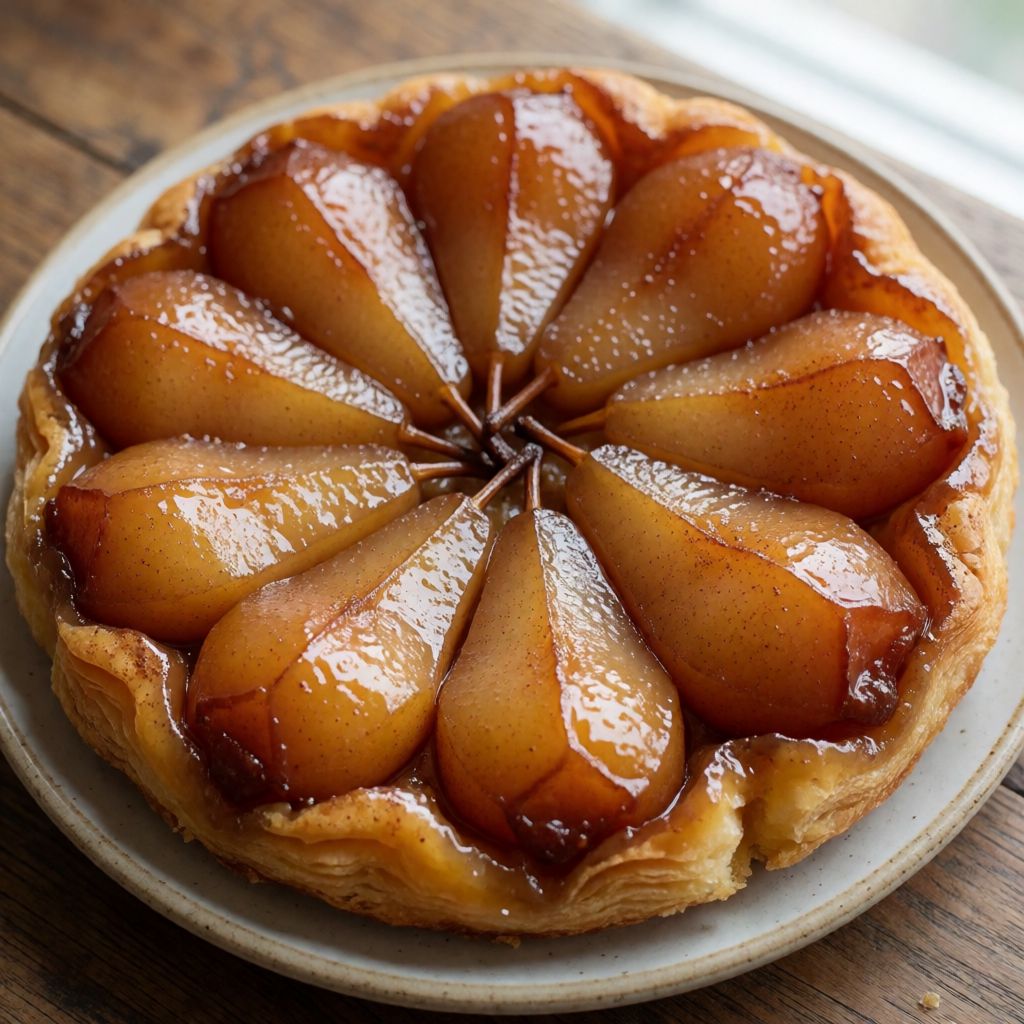
 AI photo
Pear and Cinnamon Tarte Tatin
A classic French tarte tatin with caramelised pears and a hint of cinnamon.
Labels are worked out automatically from the ingredients and can be wrong. Check the packaging if it matters to you.
Ingredients
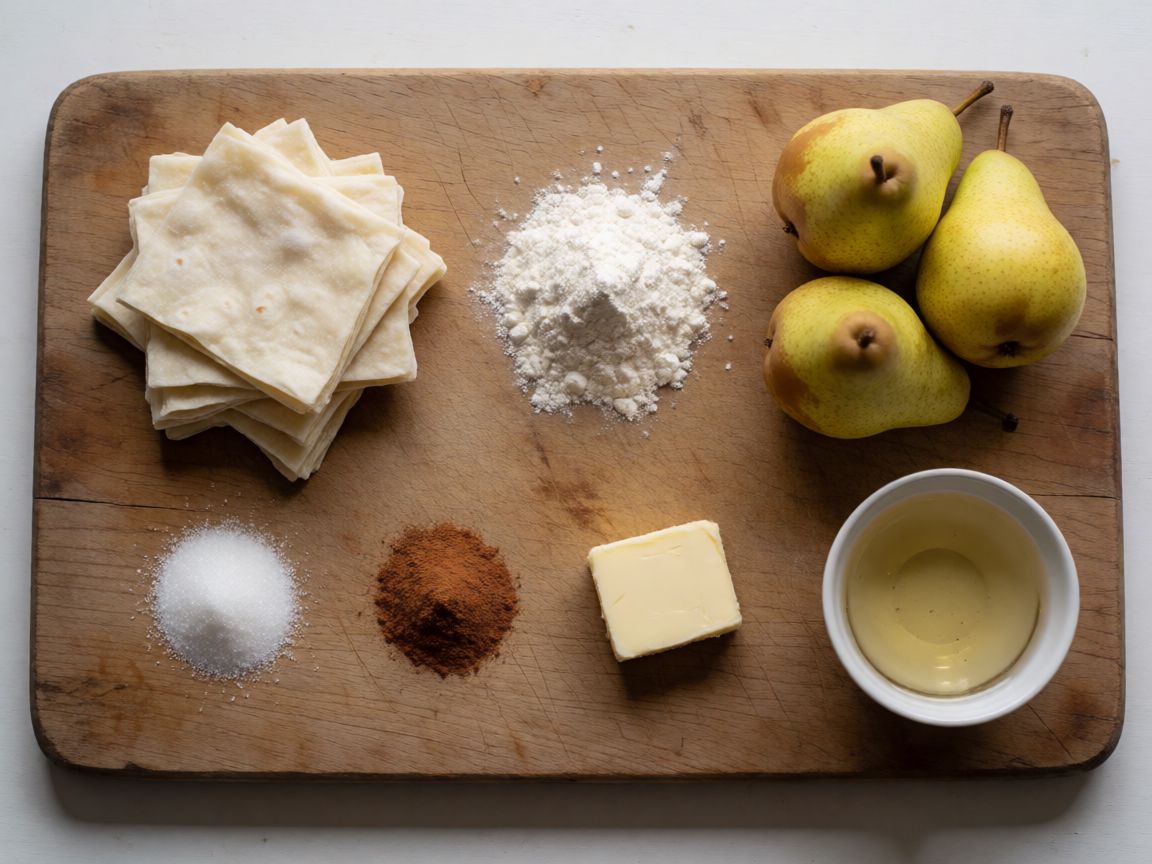
- 250-300 g Puff pastry
- Flour for dusting
- 3 pcs Pears
- Sugar to taste
- Cinnamon to taste
- 1 pcs Butter a knob, for frying the pears and greasing the tin
- 8 tbsp White wine





Steps
Melt the butter in a hot pan, add the peeled and sliced pears, and fry over high heat with the sugar and white wine until the pears caramelise.
Butter a 20–22 cm tin and generously sprinkle the base with sugar.
On a lightly floured surface, roll out the puff pastry.
Arrange the caramelised pears in an even layer in the tin and sprinkle with cinnamon.
Cover with the puff pastry, trimming off any excess.
Prick the pastry all over with a fork.
Bake at 250°C for 18 minutes.
18 minTurn the finished tart out onto a plate and serve.
A tarte Tatin is not one tart, it's two half-finished jobs that only become a tart when you flip the tin over at the end. In the pan you caramelise pears — sugar, butter, wine, hot and fast. In the oven you blast puff pastry with heat so the water trapped between its folded layers turns to steam and shoves them apart. Neither job touches the other until the very last moment. That's the whole mechanism, and it's also the whole risk: get the order wrong, do it as one slow bake from raw, and you get soggy pastry sitting under watery, pale fruit instead of a glazed top.
What decides whether it works is timing in two places. First, the pears must actually caramelise in the pan before they ever meet pastry — edges going from pale to amber, syrup thickening round them, a faint smell of toasted sugar instead of boiled fruit. Raw or half-done pears will weep liquid straight into the pastry while it bakes, and no amount of oven heat fixes a soaked base. Second, you need to turn the tart out while the caramel underneath is still warm and fluid, not set hard — wait too long and it glues itself to the tin like toffee to a tooth.
Some will tell you this tart was invented by accident, a clumsy Tatin sister dropping an apple tart and shoving it back in upside down to save the evening. Nice story, bad economics. Upside-down fruit tarts existed before the sisters' hotel — baking fruit under a pastry lid and flipping it was simply the safer way to handle juicy fruit without a soggy crust, long before anyone had a name for it. The sisters made it famous; they didn't invent the physics.
Pears: choose them ripe enough to taste of something but firm enough to hold a slice without collapsing — Conference or Comice work well in a British shop. Too ripe and they turn to mush the second sugar and heat hit them; too hard and they never caramelise properly, they just steam and stay raw-tasting under a sticky coating. If pears aren't to be had or aren't good, apples are the original choice here for a reason — Braeburn or a firm Cox hold their shape just as well and caramelise the same way. Quince, if you ever meet a decent one, does it beautifully too, just give it longer in the pan since it starts out harder.
Sugar and butter are the caramel, not a flavouring, so don't dress them up. Plain white sugar — caster or granulated — caramelises cleanly; brown sugar brings in molasses moisture that catches and burns faster than you'd like in a hot pan, and on the base of the tin it can scorch before the pastry's even cooked. Butter should be a proper dairy butter, not a spread — the milk solids in it are what give caramel its particular nutty, slightly savoury edge; margarine has none of that chemistry, it just melts and sits there.
The wine isn't for getting drunk off a pudding — a splash of dry white wine's acidity cuts the flat sweetness of straight caramel and helps the syrup reduce into something glossier rather than just thick sugar-water. No wine in the house, use a squeeze of lemon juice with a spoon of water; it won't have the same roundness, but it does the same acid job.
Cinnamon goes on after the pears are caramelised, not before — spice thrown into a pan at frying heat scorches fast and turns bitter, and bitterness doesn't cook back out. It's a small point, but it's the difference between a tart that smells warm and one that tastes faintly burnt no matter how good the pastry is.
Puff pastry: buy it ready-made and ready-rolled, all-butter if the packet says so — that's the version that actually tastes of something once baked, rather than just lifting. Don't reach for filo, it has no fat laminated into it and will turn to wet paper under fruit and syrup; don't reach for shortcrust either, it has no layers to puff and will sit there dense and flat. Prick it well before it goes in — this isn't decoration, it lets steam escape evenly instead of ballooning the whole sheet into one dome that lifts clean off the fruit.
The tin matters more than people think. Use a solid cake tin or an oven-proof frying pan with a metal handle — not a loose-bottomed tin, because the melted butter, sugar and pear juice will find that seam and leak straight through onto the floor of your oven, where it will burn and smoke before your pastry's even coloured. And don't go searching for a kazan substitute here — a domestic oven at full heat and an ordinary tin do this job fine; the trick was never about equipment, it's about which pan does which job, and when.